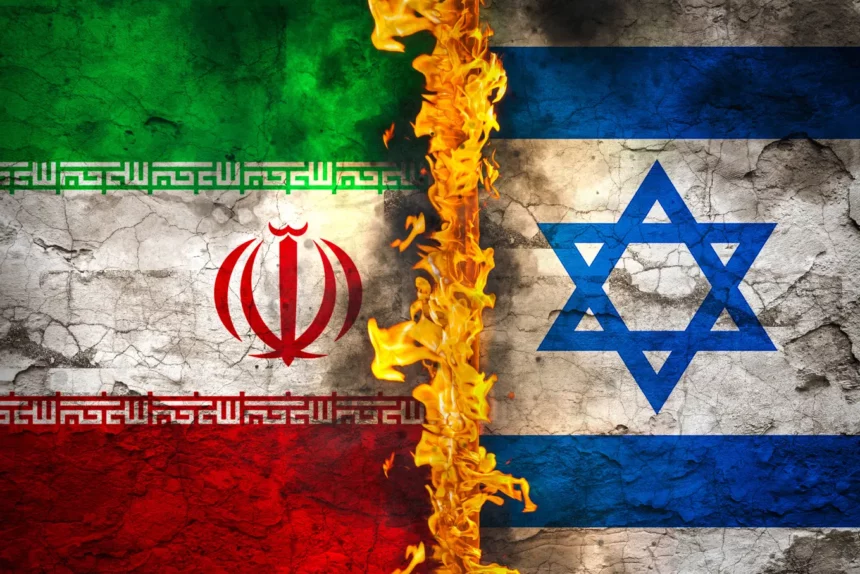
This policy, deeply rooted in Tehran’s geopolitical calculus, reflects its desire to avoid an all-out war while still pursuing its goals of undermining Israel. Recent reports suggest that this strategy is allegedly being reconsidered under new leadership, with a focus on targeting Israeli interests in neighboring countries, particularly in northern Iraq and Azerbaijan.
Iran’s proxy strategy: A historical context
Since the 1979 Islamic revolution, Iran has developed a network of proxy forces across the Middle East, including Hezbollah in Lebanon, various Shia militias in Iraq, and, more recently, support for Hamas and Islamic Jihad in Gaza. This strategy has allowed Iran to exert influence in the region without engaging in direct conflict with Israel or its allies. The benefits of this approach are clear: it allows Iran to maintain plausible deniability, reduce the risk of a direct military confrontation with a more technologically advanced Israel, and minimize domestic backlash from any military failures.
The assassination of Ismail Haniyeh, a key Hamas leader, on Iranian soil has thrown this strategy into sharp relief. The killing has not only embarrassed Tehran but has also exposed the limitations of its proxy strategy. Despite the extensive network of allies, Iran was unable to protect Haniyeh within its borders, leading to a significant blow to its regional prestige.
The Telegraph report: A shift in Iranian strategy?
According to a report by The Telegraph, Iran’s new President Masoud Pezeshkian is locked in a battle with the hardline Revolution Guard Corps (IRGC) over how to respond to Haniyeh’s assassination. The IRGC, which has historically supported a more aggressive stance against Israel, is reportedly pushing for direct strikes on Israeli cities and military bases. In contrast, Pezeshkian, who campaigned on a platform of diplomacy and dialogue, is advocating for a more measured response, targeting Israeli facilities in neighboring countries such as Iraq and Azerbaijan instead.
This proposed shift in strategy highlights a significant internal debate within Iran’s leadership. On one side, the IRGC sees the assassination as a direct challenge to Iran’s authority and is eager to retaliate in a manner that demonstrates its military capabilities. On the other side, Pezeshkian and his supporters are wary of escalating the conflict to a point where it could spiral out of control, potentially leading to a full-scale war with Israel.
Pezeshkian’s suggestion to target Israeli facilities in northern Iraq and Azerbaijan reflects a nuanced understanding of the regional dynamics. Israel has reportedly established intelligence and military outposts in these areas, which it uses to monitor Iranian activities and to carry out operations in the region. By focusing on these targets, Iran could achieve several objectives: it could strike back at Israel without directly attacking its territory, thereby reducing the risk of a broader conflict; it could send a message to Israel and its allies that Iranian influence extends beyond its borders; and it could strengthen its ties with neighboring countries by portraying itself as a defender of regional sovereignty.
However, this strategy is not without risks. Striking targets in Iraq or Azerbaijan could destabilize these countries and strain Iran’s relations with them. Moreover, it could provoke a response from Israel that would escalate the conflict in ways that Pezeshkian is trying to avoid. The IRGC, which is reportedly frustrated with Pezeshkian’s cautious approach, may view such risks as acceptable in the pursuit of its broader strategic goals.
Haniyeh’s assassination a blow to Iran’s prestige
The assassination of Ismail Haniyeh has not only exposed divisions within Iran’s leadership but has also dealt a significant blow to its regional standing. Haniyeh was a key figure in the Palestinian resistance against Israel and a central player in the ceasefire negotiations in Gaza. His death, especially on Iranian soil, has been perceived as a failure of Iran’s security apparatus and a sign of its vulnerability to Israeli intelligence operations.
This perception is particularly damaging given Iran’s efforts to position itself as a leader in the Muslim world and a champion of the Palestinian cause. The failure to protect Haniyeh undermines Iran’s claims to be a reliable ally and raises questions about its ability to influence events in Gaza and beyond. In this context, the assassination has not only weakened Iran’s position vis-à-vis Israel but has also emboldened its regional rivals, such as Turkey and Qatar, which have been key players in the Gaza ceasefire negotiations.
In the wake of Haniyeh’s assassination, Iran faces a difficult balancing act. On one hand, it needs to respond in a way that restores its credibility and deters further Israeli actions. On the other hand, it must avoid provoking a full-scale conflict that could have devastating consequences for the region and for Iran itself. The internal debate between Pezeshkian and the IRGC reflects this tension, with each side offering different approaches to the crisis.
The IRGC’s push for direct military action against Israel is motivated by a desire to demonstrate strength and to assert Iran’s regional power. However, Pezeshkian’s more cautious approach, which involves targeting Israeli facilities in neighboring countries, may ultimately prevail. This strategy allows Iran to retaliate in a way that is less likely to provoke a massive Israeli response while still sending a clear message that it will not tolerate attacks on its territory or its allies.
Azerbaijan’s position: Caught in the crossfire?
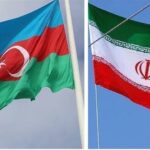
Azerbaijan, which has close ties with Israel, finds itself in a precarious position as tensions between Iran and Israel escalate. Reports have surfaced claiming that Israel has stationed military personnel in Azerbaijan, though these have been denied by Azerbaijani officials. The prospect of Iran targeting Israeli facilities in Azerbaijan raises the stakes for Baku, which has tried to balance its relationships with both Tehran and Tel Aviv.
Azerbaijan’s Media Development Agency (MEDIA) has categorically denied the presence of any foreign military contingent on its soil, condemning what it describes as disinformation spread by various media outlets. This denial highlights the delicate nature of Azerbaijan’s position, as it seeks to avoid being drawn into the conflict between its powerful neighbors.
Conclusion: A precarious balance
The assassination of Ismail Haniyeh has brought Iran’s strategic dilemmas into sharp focus. Tehran’s reluctance to engage in direct conflict with Israel, coupled with its desire to maintain regional influence, has led to an internal debate over how to respond. As Iran navigates this complex situation, the choices it makes will have significant implications not only for its relationship with Israel but also for the broader stability of the Middle East.
The decision to potentially target Israeli facilities in Iraq and Azerbaijan reflects a calculated attempt to balance retaliation with restraint, but it also carries significant risks. For Azerbaijan, the situation presents a diplomatic tightrope, as it seeks to manage its relations with both Iran and Israel while avoiding becoming a battleground in their ongoing conflict.
Fuad Muxtar-Agbabali is a distinguished journalist from Azerbaijan and has authored many white papers on International Affairs and political analysis focused in the regions of Europe and Southern Caucasus.