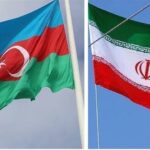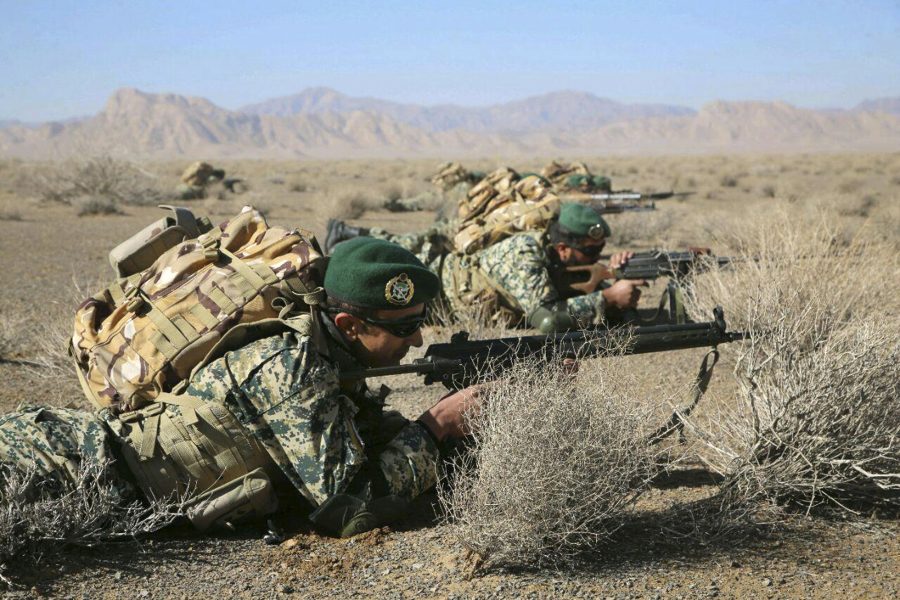
The extensive Iranian military maneuvers near Azerbaijan’s borders at the end of September were designed to intimidate the leadership in Baku, to deter it from curbing Iran’s illegal trade with Armenia and to force Azerbaijan to downgrade the country’s strategic relationship with Israel. In response, Israel should be careful not to make any commitments that cannot be fulfilled. However, Israel should alert Russia and others of the consequences to Iran of such threatening behavior.
The roots of Azeri-Iranian tensions
Iran’s hostility towards Azerbaijan began long before the latest crisis erupted. The tensions go back to the latter’s emergence as an independent nation (after the disintegration of the Soviet Union in 1991) and the fear in Tehran that this might revive Azeri nationalism within Iran’s borders. This fear was (and to some extent still is) fed by memories of the period during and immediately after World War Two, when Iran was carved into British and Soviet occupation zones.
The Soviets turned Iran’s northern regions into two autonomous Marxist national republics—one Azeri and the other Kurdish. The Soviet Union hoped to enshrine their independence (as Soviet dependencies) even after the war ended. It was only when the Truman administration sternly warned Stalin (backed by its nuclear monopoly, at the time) of the consequences that Stalin backed down and retreated from Iran.
A significant part of Iran’s population (often estimated at above 20 percent) has Azeri roots (as does Iranian Supreme Leader Ali Khamenei). In northwestern Iran there are still occasional expressions of separatist sentiment, salient enough to warrant close surveillance and repression by the Iranian authorities. Moreover, in the first round of the war over the Nagorno Karabakh province (or Artzach, as the Armenians call it), Tehran supported Armenian Christian forces against the Azeris. The latter are Muslims, and indeed some 60 percent or more of them are Shi’ites. However, their tolerant and liberal interpretation of Islam does not sit well with that of the mullah-based regime in Iran.
The Azeris lost a significant part of their territory in the first Nagorno-Karabakh war against Armenia. This was a war for control of a province largely populated by Armenians but annexed in the Soviet era to Azerbaijan. The struggle began even before the Soviet collapse and escalated into full-scale confrontation in 1993-1994. Following their defeat, Azeri leadership under Gaidar Aliev (father of the current president) turned to Israel for help. This resulted in a well-established relationship (although Azerbaijan has yet to open an embassy in Israel).
After the second Nagorno-Karabakh War in 2020, in which the tables were turned, much was made of Israel’s role (alongside that of Turkey) in changing the balance of power. This, in turn, fed Iranian suspicion and resentment, which also is based on Iran’s interpretation of the Israeli operational intelligence presence in Azerbaijan in recent years.
Iran’s campaign of intimidation
The Iranian military’s large-scale exercise last month near the border with Azerbaijan was perceived in Baku as an act of intimidation, and this was confirmed by the statements coming out of Iran. Tehran cast doubt on Aliyev’s political maturity (as compared with his late, highly experienced father); muttered darkly about “foreign influences” in Baku; and openly threatened to attack if such “influences” (i.e., the Israeli presence in Azerbaijan) persist.
Adding to the sense of crisis was the recent decision by Azerbaijan to end the smuggling of oil from Iran to Armenia in falsely identified vehicles, activity which violates Western sanctions against Iran. This may well have been interpreted in Tehran as a provocation, possibly instigated by “external influences”—and thus as one more reason to bring pressure to bear on Baku. However, this alone is insufficient reason for such dramatic measures by Iran.
The overt flexing of Iran’s muscles is indeed part of a broader pattern. Iran engages widely in violence by proxy, via the Houthis in Yemen, Hezbollah in Lebanon and Palestinian Islamic Jihad in Gaza. Occasionally it also acts directly, as in this case.
As tensions rise over Iran’s nuclear program, Tehran apparently hopes to intimidate countries in the region and warn them against offering any assistance to Israel and other forces aligned against the Iranian regime. Ultimately, Iran seeks to frustrate what they suspect to be Israel’s plans and to deter Israeli leadership from acting against Iran.
Thus, the implications of Iranian pressure on Azerbaijan extend well beyond the confines of the southern Caucasus. It adds to a growing list of points of friction where the Iranian regime is overtly seeking to test the limits of international, Western and ultimately Israeli (and Arab) responses.
What can be done?
Israel must tread carefully in this complex region, where ancient hatreds often dominate. Overt statements should be avoided. While the existing understandings with the Azeri government should be upheld and discreet intelligence sharing should continue, it would be unwise for Israel to make any commitments that cannot be realized, and which may exacerbate regional tensions.
At the same time, at the diplomatic level and as part of a broader discussion on Iran’s intentions and actions, Israel cannot ignore the Iranian pattern of intimidation. This should be one of the focal points in Israel’s ongoing effort to alert the U.S. administration and its Western allies to the escalating danger inherent in leaving Iranian actions unanswered.
Moreover, the West is not the only relevant interlocutor. Russia, with which Israel has open and effective channels of communication, may have its own issues with the Azeri leadership. Russia is not likely to view with equanimity a foreign power threatening military action against any part of what the Russians refer to as the “near abroad” (meaning, the former Soviet space). Nor will Turkey, which offered Azerbaijan active support in the war of 2020, accept Iranian aggressive behavior. With all necessary caution, this is a point to be raised in the context of Turkey’s attempt to patch up relations with key Arab players who share Israel’s concerns about Iran.
Ultimately, Iran is unlikely to risk a confrontation with a well-armed neighbor, in difficult terrain and with unforeseeable consequences. But the way Tehran now uses military intimidation, as well as terror by proxy and other means of threatening regional players, must become a factor in the formulation of Western policy towards Iran in this decisive period.
Eram Lerman is vice president of the Jerusalem Institute for Strategic Studies. He was deputy director for foreign policy and international affairs at the National Security Council in the Israeli Prime Minister’s Office. He held senior posts in IDF Military Intelligence for more than 20 years and teaches in the Middle East Studies program at Shalem College in Jerusalem.
Jewish News Syndicate