Ongoing military operations in the region and the threat of further escalation are forcing states neighboring Iran to take collective steps aimed at strengthening their security. According to various estimates, more than ten countries in the region have already been targeted by Iranian attacks, and this process is continuing. The situation remains particularly dangerous and unpredictable in the Persian Gulf states, which are subjected daily to missile strikes and drone attacks. The growing damage is estimated in the billions of dollars. The situation is further aggravated by the blockade of the Strait of Hormuz.
Iran justifies its actions as a response to external aggression, invoking its right to self-defense and presenting the strikes as a forced reaction to attacks by the United States and Israel. However, for its neighbors, the situation is becoming increasingly critical, and they are demanding a halt to aggressive actions against their critical infrastructure. While Tehran seeks to raise the cost of the conflict for its adversaries—demonstrating that pressure on Iran will inevitably destabilize the entire region, including the Persian Gulf states and global energy routes—regional countries are increasingly urging Iran to stop and are threatening retaliatory measures, which could expand the geography of the conflict. Whereas before the war most of these states had strongly urged the United States to reconsider its plans regarding a war with Iran, they are now compelled to intensify coordination both among themselves and with the United States in order to reduce the scale of damage inflicted on them by Iran.
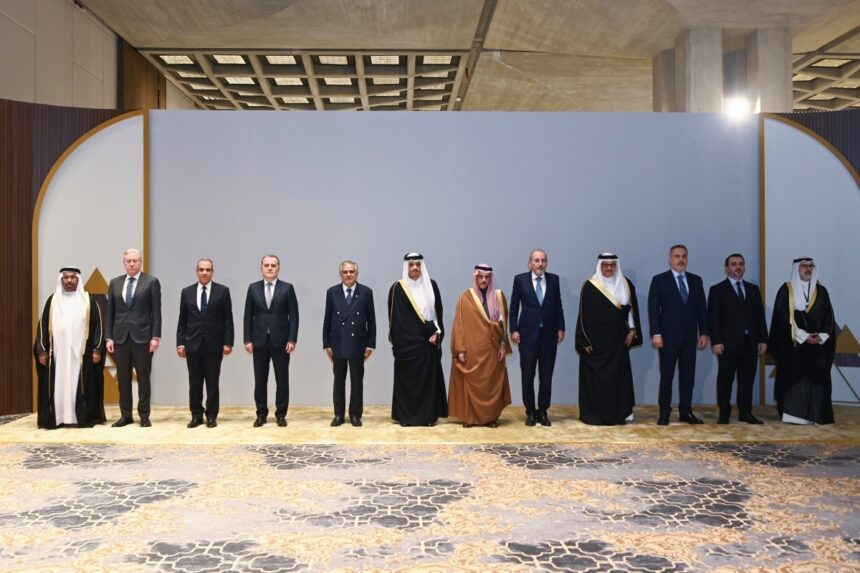
Against this backdrop, the consultative meeting of foreign ministers of Arab and Islamic countries held on March 18 in Riyadh is particularly indicative. The participants strongly condemned Iran’s missile and drone strikes against countries in the region, stating that such actions cannot be justified under any circumstances. The document also reaffirmed the right of states to self-defense in accordance with Article 51 of the UN Charter.
The parties called on Iran to immediately cease attacks and comply with international law and the principles of good neighborliness. It was noted that the future of relations with Tehran will depend on its willingness to respect the sovereignty of states and refrain from interfering in their internal affairs.
It is important to note that many of these countries already possess legal and treaty-based frameworks that provide concrete mechanisms for collective responses to external threats. These include, in particular, the Shusha Declaration between Azerbaijan and Turkey, agreements within the Gulf Cooperation Council, and the recently signed military cooperation treaty between Saudi Arabia and Pakistan. The existence of such mechanisms increases the likelihood of a shift from political statements to practical actions in the event of further escalation.
Under these conditions, the further development of the situation will depend on whether the conflict can be contained within its current limits or escalates to a new level. It is already evident that regional states are increasingly coordinating their actions and are prepared, if necessary, to move from statements to concrete steps. This means that new strikes on their infrastructure may provoke not a limited but a broader response. Much in this situation depends on Tehran and its willingness to reconsider its strategy.
At the same time, it is important to take into account that each country in the region is forming its own set of grievances against Iran based on specific incidents. For example, Azerbaijan’s Foreign Minister Jeyhun Bayramov recalled that on March 5, drones launched from Iranian territory struck infrastructure in the Nakhchivan Autonomous Republic. As a result, four civilians were injured and significant damage was inflicted on critical infrastructure, including Nakhchivan International Airport.
The minister stressed that Azerbaijan responded promptly and decisively to the incident, reaffirming its commitment to protecting its sovereignty, territorial integrity, and the security of its citizens by all lawful means. At the same time, Baku expects that the guarantees announced by the Iranian side regarding a comprehensive investigation will be fulfilled and that measures will be taken to prevent such incidents in the future.
Overall, according to Bayramov, the situation requires urgent attention, as developments in the region are already going beyond a local conflict and are taking on the characteristics of a broader Middle Eastern crisis.
Gradually, the conflict is ceasing to be local and is beginning to affect the very foundations of the region’s functioning—energy, transport, and the economy. In any case, sooner or later the active phase will end, and Iran will have to rebuild relations with its neighbors under new conditions. However, if the current dynamics persist, there is a risk that the situation will evolve into a prolonged confrontation with an expanding geography and rising costs—primarily for Iran itself. Whether Tehran is ready to act responsibly in light of these consequences will become clear in the near future.
Ilgar Velizade