The 2020 Nagorno-Karabakh war between Azerbaijan and Armenia had profound repercussions for Iran’s influence and policies in the South Caucasus. Tehran neither impacted the trajectory of the conflict nor exerted significant diplomatic influence in ceasefire negotiations and the ensuing peace agreement.
Though Iran was the most relevant regional power in the conflict, bordering both Armenia and Azerbaijan, it was sidelined by Turkey and Russia. Tehran was obliged to align with Ankara and Moscow in supporting Baku’s territorial conquests, revealing a significant departure from its traditional pro-Armenia stance.
But Azerbaijan did not reciprocate Iran’s good faith. According to Iranian officials, Baku knowingly isolated Tehran in Nagorno-Karabakh’s reconstruction, while prioritising Israel and Arab and European countries.
Backed by mighty military powers such as Turkey, Israel and Pakistan, Azerbaijan felt it could flex its muscles against Iran’s regional power projection. Last month, Baku hosted a joint military drill with Ankara and Islamabad, aiming to further strengthen ties among the three countries and to bolster counterterrorism efforts.
The joint drill contradicts the provisions of the Convention on the Legal Status of the Caspian Sea, which bans the “presence in the Caspian Sea of armed forces not belonging to the Parties” (Azerbaijan, Iran, Kazakhstan, the Russian Federation and Turkmenistan). On the margins of the drill, Baku tacitly challenged Iran’s connectivity with Armenia by disrupting Iranian trucks transiting a road that passes through Azerbaijan’s newly captured territories. Azerbaijan set up checkpoints, began charging fees to Iranian trucks, and even detained two Iranian truckers.
Bigger picture
Unlike Azerbaijan’s attempt to depict recent incidents as routine procedure, Tehran sees this new, assertive Azerbaijan in a bigger picture, where Baku plays the anti-Iran “puppet” role for other regional powers hostile to Iran, such as Israel.
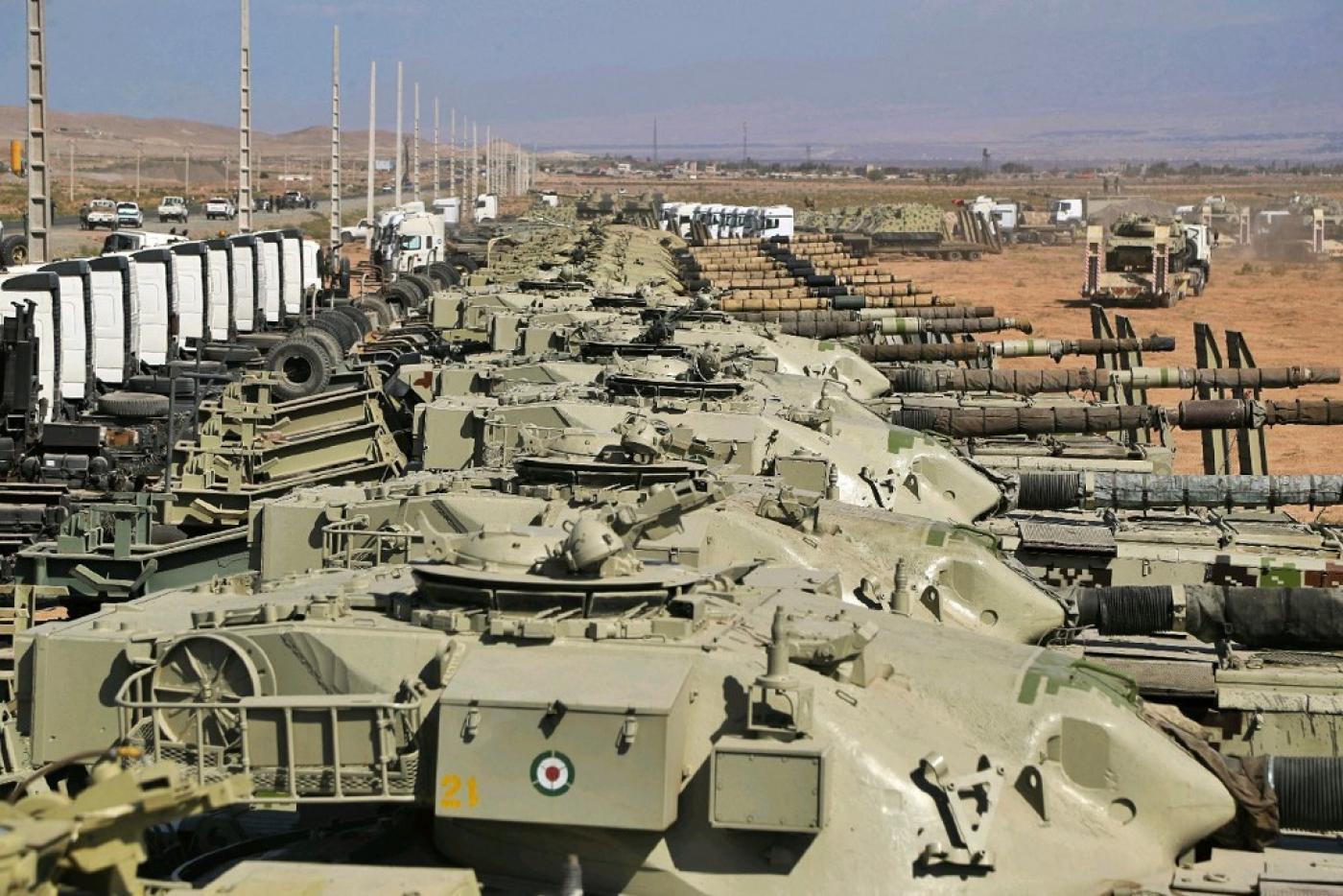
Tehran initially tasked the Revolutionary Guard Corps with deploying equipment and troops across the country’s northwestern border. But this was just a small part of Iran’s grand plan to intimidate Baku. Days later, Tehran launched its own military drill near the Azerbaijani border, saying “we will never tolerate the presence of the fake Zionist regime” near the Iranian border, nor “any changes in the regional borders and geopolitics”.
This rare move, alongside hawkish comments by Iranian officials, suggests that Tehran is indeed concerned about the potential for grave geopolitical changes near its borders.
Iran’s Kayhan newspaper, a publication close to hardliners, claimed that based on a Turkish-American plan, Armenia’s “western-oriented president”, in “collusion” with Baku, “intends to concede Armenia’s Syunik province to Azerbaijan”. This is the only conceivable reason for Iran’s outrage at Azerbaijan.
Syunik province separates the rest of Azerbaijan from the Nakhchivan Autonomous Republic exclave, and constitutes the Armenian border with Iran. The 2020 peace deal between Azerbaijan and Armenia guaranteed Azerbaijan a corridor to connect Nakhchivan to the rest of Azerbaijan via Syunik province. Previously, all connections were made through Iran in the south or Turkey in the west.
Baku is apparently not satisfied with this plan, and maintains an ambitious goal to take all of Syunik province, which could put Iran in a disadvantageous geopolitical position. Tehran would lose its connection to Armenia and convenient access to the region, while being compelled to deal with a newly emboldened regional power that is heavily backed by Iran’s arch-enemy, Israel.
Territorial adventurism
From Iran’s point of view, it is Tel Aviv that provokes Baku to take a belligerent policy against Tehran and to challenge the geopolitical status quo. The title Tehran has chosen for its ongoing drills in the country’s northwest drives this point home: Fatehan-e Khaybar is a callback to the Battle of Khaybar in the year 628, in which the Prophet Mohammed confronted the Jews of the Khaybar region, who were inciting Arabian tribes against the Muslims of Medina.
Supreme Leader Ayatollah Ali Khamenei recently warned Azerbaijan against aligning with Israel, noting: “Those who think that their security will be ensured by relying on foreigners should know that they will pay a hefty price.”
The type and scale of military equipment stationed at the border suggests that Iran intends to deter Baku from territorial adventurism, but Tehran ultimately wants to avoid an armed clash. If the situation deteriorates and Azerbaijan opts not to address Tehran’s concerns and warnings, Iran may cross the border to push preemptive deterrence from Armenian soil. A key factor at that point would be the extent to which Azerbaijan’s allies, primarily Turkey, would be prepared to support Baku and participate in a direct confrontation with Iran.
Meanwhile, Iran seems determined not to step back without affirming its national security red lines, establishing a credible level of deterrence, and asserting its undeniable regional role, which has been somewhat tarnished amid the recent security developments in the South Caucasus.
Fardin Eftekhari Fardin Eftekhari is a PhD candidate in the Department of Regional Studies at the University of Tehran. His research interests focus on Iranian national security and foreign policymaking.
Middle East Eye