In an opinion dated Monday, 7 August 2023, a former prosecutor of the International Criminal Court (ICC), Luis Moreno Ocampo, has claimed that a genocide is unfolding in the region of Nagorno-Karabakh within Azerbaijan (‘the Moreno Ocampo Opinion’ or ‘the Opinion’).
This is an extremely serious accusation to make. It is one with potentially far-reaching consequences, especially at this time. I have therefore been asked by Azerbaijan to provide a legal assessment of the Moreno Ocampo Opinion as an independent expert. My full assessment will be published soon. However, it is vitally important that provocative allegations, without any firm basis in international law, are not allowed to hinder the peace negotiations presently underway between Azerbaijan and Armenia, and to stir tensions on the ground.
As has been widely supported by the international community, the governments of both Armenia and Azerbaijan are committed to a settlement on the basis of the two nation’s internationally recognised borders, bringing to an end the more than 30-year running dispute over the Karabakh region.
For these reasons, it necessary to emphasise the following key observations about the Moreno Ocampo Opinion right away. I do so as the allegations made in the Moreno Ocampo Opinion are on their face unsubstantiated and manifestly lacking any credibility. The Opinion does not meet the exacting hallmarks of an impartial and rigorous expert analysis, which is essential for reporting of this kind, particularly when the circumstances are complex and sensitive. There is no basis for claiming that a genocide is currently being perpetrated in Nagorno-Karabakh. This is a groundless and very dangerous allegation which should not be taken seriously by any of the parties involved and the international community more generally. There are certain fundamental shortcomings in the Opinion which I highlight below.
First, as Mr Moreno Ocampo made clear on the X platform (formerly known as Twitter) on 30 July 2023, his Opinion was produced at the request of an individual to whom he refers as the ‘President of Artsakh’. He is the purported head of the ethnic Armenian breakaway entity in Nagorno-Karabakh. The unlawful establishment of that entity by military force in the 1990s, with the support of Armenia, entailed the expulsion of hundreds of thousands of Azeris. In the decades since, the entity has survived, despite its isolation by the international community, due to the support of the Armenian government. But in 2020, Azerbaijan regained a portion of the territory
concerned after a 44-day conflict. Since then, the Armenian government has expressly recognised that Nagorno-Karabakh is indeed Azerbaijan, consistently with international law. The illegal ‘Artsakh’ entity has therefore lost its patron. It is disappointing that a champion of international law such as Mr Moreno Ocampo has contributed to what appears to be an effort by this weakened administration to regain lost ground in Armenian politics. It is questionable that, in his eagerness to do so, Mr Moreno Ocampo was content to produce his Opinion in just a week and to pre-empt his analysis by posting hashtags: ‘#StopArmenianGenocideinArtsakh’ and ‘StopArmenianGenocide2023’.
This is not the methodology of an independent and fair-minded expert. Rather it serves to politicise the legal and factual issues, and use them for political ends, which is to be regretted.
Second, the Moreno Ocampo Opinion is strikingly unsubstantiated. There is no evidence identified in support of the key elements of genocide. It is all very well to set out the definition of genocide in the Opinion, but that takes the matter no further in the absence of any evidential foundation.
As the International Court of Justice (ICJ) explained in Croatia v Serbia, ‘genocide contains two constituent elements: the physical element, namely the act perpetrated or actus reus, and the mental element, or mens rea’.
Taking the physical element first, Mr Moreno Ocampo’s view is apparently that this is present because Azerbaijan is ‘blockading’ the Lachin Corridor – a mountain road that connects Nagorno-Karabakh and Armenia – and thereby depriving the ethnic Armenian inhabitants of Nagorno-Karabakh of the necessities of life. The Opinion suggests that this ‘fact’ has been found by the International Court of Justice in the proceedings between Armenia and Azerbaijan concerning the International Convention on the Elimination of All Forms of Racial Discrimination. Even putting to one side that these cases (one brought by Azerbaijan against Armenia and the other brought by Armenia against Azerbaijan) are not about genocide at all, it is misleading to suggest that the Court has found as a fact that there is any such blockade by Azerbaijan.
The Court’s most recent pronouncements can be found in its order of 6 July 2023 in the case brought by Armenia. That order was given in response to an allegation by Armenia that Azerbaijan was significantly impeding traffic along the Lachin corridor by establishing military checkpoints. The order noted the factual inconsistencies in Armenia’s case and concluded that the Court could not find that anything had changed on the ground to justify a modification to the order that it had already made about the Lachin corridor.
In that earlier order, what the Court said about the circumstances on the ground as of February 2023 was simply that ‘since 12 December 2022, the connection between Nagorno-Karabakh and Armenia via the Lachin Corridor ha[d] been disrupted’ and it was therefore for Azerbaijan to ‘take all measures at its disposal to ensure unimpeded movement of persons, vehicles and cargo along the Lachin Corridor in both directions’. The Court has not made specific findings as to either the protests to which the Moreno Ocampo Opinion refers (which Armenia has explained to the Court are no longer taking place) or the checkpoint that it discusses. The Court has not pronounced on whether either Armenia or Azerbaijan has complied with the orders that it has made in the proceedings between them.
The Moreno Ocampo Opinion thus completely misrepresents the ICJ proceedings.
Turning to the mental element, the Moreno Ocampo Opinion seeks to ‘deduc[e]’ – that is, infer – its existence on the basis of the very matters on which the ICJ has not definitively pronounced. That is plainly an inappropriate way in which to seek to establish whether there is the specific intent required for genocide, namely the ‘intent to destroy, in whole or in part, a national, ethnical, racial or religious group as such’ (as the Court explained in Croatia v Serbia). And even if the Court had made the sort of findings that the Opinion assumes, the existence of the specific intent is not the only ‘reasonable inference’ that could be drawn from them and so the Opinion’s conclusion in this regard would be unsupportable in light of the judgment in Croatia v Serbia.
There is no evidence to substantiate a defining element of genocide, which has a high threshold as a matter of international law – the specific intent to physically destroy the group in whole or in part. The references in the Opinion do not address this cornerstone requirement. It is reckless for an expert to make accusations of genocide without any proof.
Third, the Moreno Ocampo Opinion makes inflammatory statements about the alleged individual criminal responsibility of the President of Azerbaijan without any proper consideration of his relationship with the alleged facts on the ground (which, as set out above, remain entirely uncertain and have not been addressed in the Opinion). This is highly irresponsible. There is no basis at all to impugn the Head of State, and instead it intimates the true intention behind the release of this Opinion.
In any event, Azerbaijan is not party to the Rome Statute and has not accepted the jurisdiction of the International Criminal Court as to its territory – which includes Nagorno-Karabakh, as the Opinion implicitly accepts.
Fourth, the Opinion is patently selective in the ‘facts’ to which is refers. It does not, for example, address Azerbaijan’s offer of an alternative route (the ‘Aghdam- Khankandi route’) to supply the ethnic Armenian inhabitants of Nagorno-Karabakh, although this is plainly relevant to whether ‘conditions of life calculated to bring about [the] physical destruction’ of those inhabitants are being ‘[d]eliberately inflicted’ by Azerbaijan, as the Opinion suggests.
Relevant factual circumstances that plainly undermine the Opinion’s conclusions are conveniently glossed over and not mentioned. The Opinion thus falls far short of being a balanced and comprehensive expert report.
Fifth, the Moreno Ocampo Opinion is incomplete and inaccurate in its analysis. It is accordingly essential that it is closely and carefully scrutinised. Its stridency cannot be permitted to drive an unjustified wedge between the peace-seeking governments of Armenia and Azerbaijan. Instead, its publication should spur all parties and the international community to redouble their efforts to promote a lasting peace in accordance with international law.
For all these reasons, the parties in the region and the international community should guard against the purported findings and recommendations of the Moreno Ocampo Opinion. My full assessment will be published shortly.
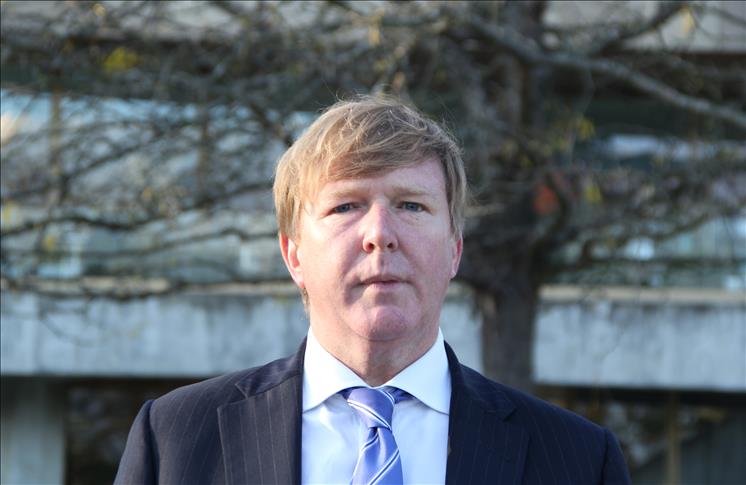
Rodney Dixon KC