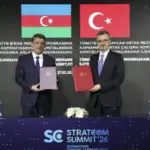
The collapse of the USSR in 1991 resulted in the emergence of 15 independent countries; three out of them namely Armenia, Azerbaijan and Georgia, comprise a well-defined geographic region, known as the South Caucasus to most and trans-Caucasus / Zakavkaze to Russians. India deals with this region as part of Eurasia, as it lies on the cross-roads of Europe and Asia.
Historically, the medieval history of the South Caucasus was marked by subjugation by the then regional powers: Ottoman Empire (Turkey), Persian Empire (Iran) and imperial Russia, before it was incorporated into the then evolving USSR in 1921 following the Russian Revolution of 1917. Subsequent to the disintegration of the USSR the region has been witnessing a tug of war for influence between major players including the USA/Europe and Russia. In recent years Turkey has gained some foothold, while China also has acquired some interest -largely economic. The American and European interests in the region are ideological (consolidation of Western values), economic (Caspian Sea energy) and strategic. Russia’s prime interests are security (to keep the region as part of the post-Soviet space under its influence) and to some extent economic (particularly in Armenia where it has made huge investments and has established its military base). Turkey is keen to be acknowledged as an important player in the region.
India’s Footprints, Policy and Interests in the region
Based on literary and architectural evidences, India’s footprints in the region can be traced back at least to 149 BC when Hindu colonies were established in Pagan Armenia. Interaction through the Silk Road/Route trade connections was extensive. Armenians, Georgians and Azerbaijanis had all enjoyed the patronage of the Mughal Empire. Between the three communities the Armenian merchants were arguably the most visible and prosperous community in medieval India and enjoyed the confidence of both the Mughals and the English rulers of India. The Churches, cathedrals and the educational institutes which they built have survived till date in various cities in India to reflect their glorious past.
In modern times, India was quick in recognising the independence of Armenia, Georgia and Azerbaijan and establishing diplomatic relations in 1992. However, for next several years the region was not on India’s radar partly due to its focus on Russia and Central Asia and partly due to turbulent and unstable situation in the region, which stabilised only around 1995. Thirty years later, the level of India’s political understanding with these three countries is uneven. The foreign policy orientations of these countries, certain bilateral and extraneous factors are cumulatively responsible for this scenario; this is elaborated as follows.
Foreign policy factor: in the initial phase of independence, each of the three countries had opted to acquire European identity. At present, only Georgia remains fully committed to its complete integration with the Euro-Atlantic structures, particularly EU and NATO. It began to seriously reach out to India only from 2010 onwards. Azerbaijan is clearly interested only in economic cooperation but not in political, economic or social integration with the West. Armenia is stuck in between the West and Russia, and has endeavoured to follow a policy of multi-engagement almost from the beginning including with India. Armenia’s dependence on Russia, however, remains heavy if not complete.
The bilateral and extraneous factors: it is widely believed that India’s decision to slow-peddle relations with Georgia for several years was in deference to the sensitivities of Russia who fought a war with Georgia in August 2008 over Georgia’s break-away territories (Abkhazia and South Ossetia), leading to Russian recognition of these territories as independent countries.
Azerbaijan’s close proximity with Pakistan on whose behalf Azerbaijan has repeatedly promoted Pakistan’s narrative on Kashmir is a constant irritant from India’s perspective. India has by and large adopted a balanced position on Azerbaijan’s territorial dispute with Armenia over Nagorno-Karabakh – an enclave which is predominantly inhabited by Armenians but was created as an autonomous region on the territory of Azerbaijan during the formation of the USSR. The two countries have fought three wars in last thirty years.
The net result is that India does not have a uniform pan-South Caucasus policy on the lines of its Look East policy or Connect Central Asia policy etc. It deals with each country separately on merits.
India’s Interests in the Region
India’s interests in the region are not at par with those of other global players. Yet The region’s importance cannot be ignored; its geographic location is important as a viable corridor for India’s connectivity with Russia and Europe through Central Asia and Iran. Armenia and Azerbaijan are members of International North South Transport Corridor (INSTC). India supports Armenia’s proposal to include Chabahar Port in INSTC. The region has the potential to meet some of India’s requirements of raw material and technology, including oil and gas, minerals and even gold and natural uranium at some stage.
Current Status in Brief
Undoubtedly, Armenia is relatively the closest partner of India in South Caucasus. Armenia is the only country in this region with which India has a Treaty relationship and has received as many as three Heads of State from Armenia while there have been two visits from India at the level of Vice President. Fresh impetus to political interaction was provided by PM Modi’s meeting with his Armenian counterpart in New York in September 2019, which was followed later by External Affairs Minister’s visit to Yerevan in 2022. Armenia is the largest recipient of India’s development assistance. Armenia publicly endorses India’s position on the resolution of the Kashmir issue on bilateral basis and supports India’s bid for permanent seat in expanded UN Security Council.
In contrast there has not been a single visit at the level of Head of State/ Government/Vice President between India and Georgia and Azerbaijan. Political interaction with these two countries is by and large confined to institutional mechanisms such as Foreign Office consultation/ Inter-Governmental Commissions at senior officials levels, except that India signalled its intention to engage Georgia at higher political levels when India’s External Affairs Minister visited Georgia in 2020.
Meanwhile, the focus remains on trade and investments which interestingly has not been influenced by the levels of political relations and is driven largely by the private sector. The government on its part has endeavoured to create enabling legal framework by signing agreements such as Avoidance of Double Taxation, Bilateral Investment Protection with Armenia, negotiating a Free Trade Agreement with Georgia. India’s assessment is that bilateral trade with Armenia is bound to benefit once a Free Trade Agreement (FTA) between India and the Eurasian Economic Union (EAEU), currently under negotiations is concluded. In recent years there have been important breakthrough agreements on defence supplies from India to Armenia.
India’s ONGC Videsh Limited has made investments in Azerbaijan’s energy sector; India’s crude oil imports from Azerbaijan in 2021 were worth $584 million. India’s pharmaceutical industry has established a foothold in Azerbaijan.
Way Forward: India should continue to focus on expanding areas of cooperation with Armenia and include new areas such as seismic science which is an area of Armenia’s strength. Some incremental progress in ties with Georgia is called for. India may consider responding to Georgia’s repeated requests for an Indian Embassy in Tbilisi or at least a Consulate. Air connectivity is absolutely essential to promote trade and tourism with this region. Private sector should explore the possibilities offered by global tenders floated by World Bank etc for projects in Armenia and Georgia and also by the special trading arrangements which Armenia and Georgia have with USA and EU. In short, while the government focuses on the creation of enabling political environment for enhanced trade and investments, the private initiative should be the torch bearer in this sector.
Amb Achal Malhotra