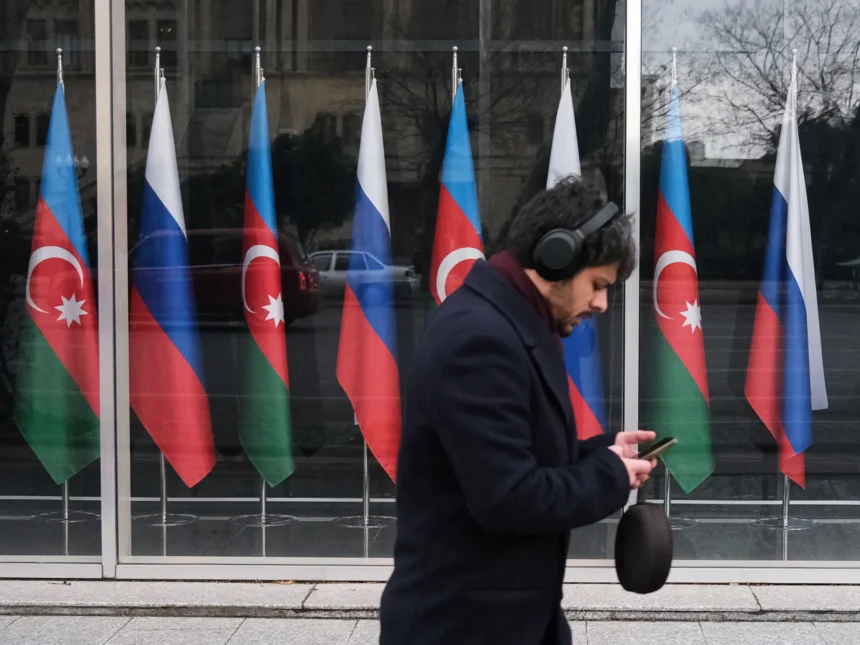
It can be said with confidence that there will be no return to the situation before the crash of the AZAL plane, which was shot down by the Russian Armed Forces. Due to the inadequate reaction of Russia’s leadership, relations have degraded. At the moment, a transformation of relations is underway — the framework of a new normal is being formed.
What was before?
There was political dialogue at the highest and senior levels. The leaders met several times a year, spoke on the phone promptly, and coordinated bilateral agenda issues.
The foreign policy approaches of Azerbaijan and Russia largely coincided, and both sides refrained from actions in international arenas that could cause irritation.
The economic component can be divided into three directions: trade turnover and implementation of strategic projects (North–South, energy). A separate element was mutual investments.
Military-technical cooperation was an important part of the relationship, but after February 2022 it became impossible due to the absence of subject matter.
The humanitarian component — Russians in Azerbaijan and Azerbaijanis in Russia, the Russian language — added emotionality to the relationship.
What could there be?
Today, there is no political dialogue at the highest level. In the past six months, the leaders greeted each other only once. High-level dialogue took place at the level of deputy prime ministers at a meeting of the intergovernmental commission. It is precisely at this level that the degree of degradation of relations is fixed, and the new framework of the new normal begins to form.
On October 7 is the birthday of the Russian president, and traditionally the President of Azerbaijan calls to congratulate. We will see how it goes this year.
At the end of the year, there will be another CIS summit in Russia. The plane crash last year happened exactly on the day of such a summit. It seems that President Ilham Aliyev’s participation in the summit will depend on Russia’s actions.
Foreign policy approaches in the new conditions will not coincide by default. The place and role of the northern vector in Azerbaijan’s foreign policy has already given way to all others. There may be no interaction with the new leadership of the Russian parliament, with all ties going through the foreign ministries.
The economy should take the leading role in the new conditions, since there are interests and mutual benefits here. However, the persecution of Azerbaijanis in Russia on an ethnic basis will by default hit trade turnover between the countries. This is Russia’s choice, and Azerbaijan will react. For now, this can be stopped, thereby making the economy the main component of the relationship.
Both Moscow and Baku are interested in strategic projects. Therefore, they are not going to abandon them. President Ilham Aliyev recently mentioned that the North–South could also pass through the Zangezur corridor.
The humanitarian sphere has degraded the most. Too much damage has been done to restore it. There will be no Rossotrudnichestvo or Sputnik in Baku. Russia’s anti-migrant policy complicates relations with neighbors. To fix the situation, it is important to release the detained citizens of Azerbaijan and Russia.
The new normal will have to ensure the autonomy of various spheres of relations. This is a very difficult task, but there is no other way. Otherwise, in any incident we will again observe degradation.
By the end of the year, there will be clarity on the plane crash issue — either Moscow will make decisions in line with Baku’s fair expectations and close the root cause of the crisis, or it will continue to deny responsibility, which will lead to international legal proceedings.
Thus, the new normal in Azerbaijan–Russia relations may consist of continuing economic relations with a low level of political dialogue and foreign policy overlaps. The humanitarian sphere, which previously played a strengthening role, today is a source of escalation and risk generation.
The extent to which the relevant structures can ensure the autonomy of the economy from politics and humanitarian risks will determine how effective and sustainable the new normal will be. The main thing is to create the framework of normality and fix a new level of expectations from each other.
Farhad Mammadov, political analyst, director of the Center for Studies of the South Caucasus (CSSC)
Telegram channel @mneniyefm