Violations of these norms lead to accountability for the resulting unlawful circumstances and necessitate reparation for the damages incurred. In this context, the question of Armenia’s responsibility to compensate for its aggression and occupation of Azerbaijani territories is particularly pertinent and should be examined through the lens of international legal principles.
Historical context of compensation in international relations
The concept of reparation for damages has long been a crucial aspect of international relations, traditionally associated with economic and trade disputes in which one state sought redress for harm inflicted upon its commercial representatives in another state. However, as international law has evolved and modern norms have been established, the obligations of states to provide compensation have significantly broadened. These now encompass instances of aggression, military occupation, and destruction resulting from unlawful state actions.
History is filled with instances where states have invoked the issue of reparations to justify military interventions or interference in the internal affairs of other nations. In the 20th century, the international community worked diligently to develop legal frameworks aimed at preventing such abuses. In 1928, the Permanent Court of International Justice established the principle that a state is obligated to provide reparations and restore conditions to their status before any unlawful actions occurred. This principle remains foundational in the practice of international reparations today.
Armenia’s military aggression: A breach of international law
Armenia’s military aggression against Azerbaijan constitutes a clear violation of fundamental international legal principles. The infringement of Azerbaijan’s sovereignty, the invasion by Armenian forces, and the occupation of Azerbaijani territories are well-documented acts of aggression. Following the 44-day war in 2020, Azerbaijan regained control over its territories, while Armenia was compelled to acknowledge its defeat. This acknowledgment also entails Armenia’s acceptance of its responsibility for breaching international obligations and inflicting substantial damage upon Azerbaijan.
The illegal occupation of Azerbaijan’s sovereign territories by Armenia creates a clear obligation for Armenia to compensate for the damage caused. Over an extended period, Armenia systematically destroyed the infrastructure, cultural heritage, and ecology of these areas, which can be characterized as a “scorched earth” policy. This approach was designed to impede the return of Azerbaijanis to their ancestral lands, constituting a violation of international humanitarian law.
Extent of destruction and moral damage
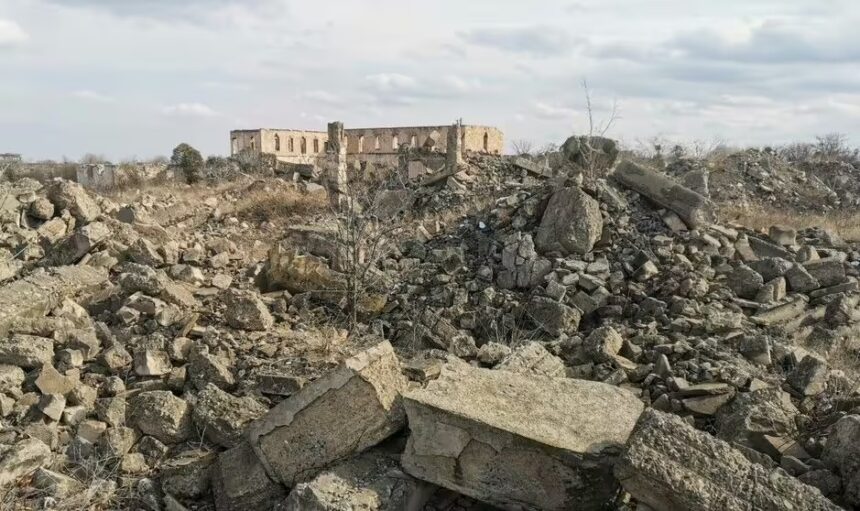
Following the liberation of these territories, Azerbaijan faced an alarming level of destruction. Towns and villages that were once home to thousands of residents lay in ruins. Homes, schools, hospitals, mosques, and cultural monuments were obliterated. This level of devastation recalls the brutality and lawlessness of medieval conquests.
International law explicitly prohibits the destruction of private property, cultural and historical sites, as well as environmental damage in occupied territories. As the occupying power, Armenia was obligated to uphold these legal norms and safeguard the cultural and historical heritage of the areas it occupied. Unfortunately, the evidence suggests the opposite: the destruction was systematically planned and executed to erase any trace of Azerbaijani presence in history.
Armenia’s liability for damages and forms of reparation
Under international law, Armenia is clearly liable to compensate for the damage inflicted during its occupation of Azerbaijani territories. This reparation encompasses both material and moral dimensions. Material damage includes the destruction of buildings, infrastructure, cultural artifacts, and natural resources. Assessments conducted shortly after the conclusion of the Patriotic War revealed that the extent of this devastation is comparable to that seen in countries ravaged during the world wars.
Moral reparation involves issuing formal apologies to the Azerbaijani people and renouncing any territorial claims. This aspect is crucial for fostering peace and reconciliation between the two nations.
Possible reparation mechanisms
Historical precedents from the 20th century demonstrate that, following peace agreements, defeated aggressors are often required to compensate for the damage they caused. In negotiating a peaceful settlement with Armenia, it is crucial to include a claim for reparation in the discussions. The specifics regarding the amounts and forms of reparation should be clearly outlined in the agreement.
- International Reparation Fund: If Armenia is unable to fully compensate for the damages, an international fund could be established, financed by Armenia’s allies. This fund would serve as a mechanism to provide reparation to Azerbaijan.
- Property Concessions: As an alternative to monetary compensation, Armenia might consider making property concessions to Azerbaijan. This could include granting sovereign rights to utilize natural resources or designating certain territories for joint management.
Conclusion
Armenia’s accountability for the damages inflicted on Azerbaijan is firmly grounded in international law. Acknowledging this responsibility and fulfilling compensation obligations are crucial steps toward restoring justice and fostering lasting peace. The international community plays a vital role in supporting these objectives, and implementing legal mechanisms for compensation can be pivotal in facilitating negotiations and shaping the future of the region.
Matanat Nasibova
Caliber.Az