There was no other way: unlike many modern countries whose politicians have long forgotten what sovereignty is, obediently following superpowers, Baku did not forget that the primary goal of the state is to protect the interests of its people.
Therefore, after the failure of all negotiations, the war for the liberation of lands occupied by Armenian extremists became inevitable, following from the imperative of the country’s sovereignty. Azerbaijanis never intended to accept the creeping transformation of part of their country into a new “Kosovo,” nor the entire South Caucasus as a space ruled by the cannibalistic “law of the jungle.”
In the recent history of Armenian territorial claims, we see inaccuracies in the terms used by journalists, politicians, and the political public, starting with the description of the situation in terms of separatism and secessionism with many caveats. This inaccuracy is readily supported by revanchist circles, as it allows Armenian nationalists to manipulate the discourse for their purposes. Meanwhile, as Confucius noted, “if names are not correct, then words have no basis. If words have no basis, then affairs cannot be carried out.” He made this observation not on some abstract topic, but while explaining the principles of state governance.
Thus, the very concept of “separatism” is not entirely appropriate in relation to the events in Azerbaijani Karabakh from 1987 to 2023. The concept of “separatism” presupposes the existence of some dissatisfaction among the population of a given area regarding their situation. Of course, the population of the former Nagorno-Karabakh Autonomous Oblast (NKAO) of Azerbaijan, of all nationalities, including Armenians, was dissatisfied with many things at the end of the 1980s, just as the populations of other regions of Azerbaijan were. However, the issues at hand were not local “Karabakh” concerns. Essentially, the discussion initially revolved around Armenian territorial expansion in the Caucasus and nothing more.
This was evident not only in the rhetoric of Armenian nationalists since the late 1980s, who all called for the so-called “miatsum,” or the territorial expansion of Armenia, but also in their actions throughout the conflict. From the very beginning, their ambitions were not confined to the lands of the former NKAO; rather, they sought a broader agenda of territorial claims. This pattern was consistently reflected in the practices of Armenian nationalists from start to finish. All efforts to seize and subsequently occupy Azerbaijani lands were conducted in close coordination with Armenia and the Armenian diaspora in Russia and the West.
As recent archival documents reveal, the Armenian leadership quietly encouraged the actions of the “miatsum” supporters in the late 1980s, driven by a clear desire to seize the flow of resources from Azerbaijani Karabakh—specifically, resources needed for producing highly demanded goods in Armenia for an expanding export market that could bring foreign currency to Yerevan. Simultaneously, interest in the Armenian “miatsum” “startup” was shown by General Secretary Gorbachev, who sought to undermine the authority of his opponents in the union republics. This is the tragic reality of Karabakh during that time. Discussions about “ancient culture” and “unique heritage” served merely as a musical backdrop, under which ordinary Armenians were encouraged to protect the interests of the powerful and wealthy.
In any case, the structures of the Karabakh separatists have always been part of the Armenian state apparatus—the armed formations were integrated into the Armenian armed forces, and civilians automatically received Armenian passports. Even Western media sympathetic to Armenian nationalists, such as the BBC, acknowledged this. The BBC stated, “The Republic of Armenia and the self-proclaimed Nagorno-Karabakh Republic are closely integrated—at least militarily, they effectively constitute a single entity.”
Initially, the Gorbachev team, which governed the Soviet Union, supported the “Karabakh project,” albeit with certain interruptions. Thus, the “proud Armenian fighters” were unable to go beyond Kremlin flags until 1991, and by that time, the moment had passed. In Khankendi, a mafia-like structure emerged, involving Armenian security forces, for which significant figures in the Armenian establishment found an important role—as a “black hole” for shadow economic dealings and a source of resources used to assert their positions in internal Armenian political conflicts.
Pashinyan’s previous reincarnation
It may be starting to fade from memory, but Nikol Pashinyan, despite his loud campaign against the “Karabakh mafia” in Armenian politics, had no objection to the continued occupation of Azerbaijani lands or even to further territorial expansion until 2020. Of course, everyone remembers his visit to Khankendi in the summer of 2019, where he made his emphatic declarations ranging from “Artsakh is Armenia, period!” to “Miatsum!” However, some important details have already been forgotten.
Literally, just before the start of the war to restore territorial integrity in the summer of 2020, Baku noted a trend of radicalization among Armenian leadership. Inspired by the initial successes of his tentative reorientation of Armenia towards the West, Pashinyan began to explore the possibility of setting new goals. For instance, on August 10, 2020, he published a message on the occasion of the 100th anniversary of the Treaty of Sèvres, prompted by a conference on the topic organized by some ultra-radical groups within the Armenian diaspora.
It is worth recalling that the Treaty of Sèvres—essentially an agreement to dismember Turkey—was imposed on the decaying sultanate of the Ottoman Empire in 1920 by the Allied Powers, with the involvement of Armenian and Greek nationalists. Protests against it marked the beginning of Turkey’s war for independence. The treaty is so odious that even the former Allied Powers, Britain and France, tried to avoid mentioning it later on. But not Pashinyan. In his message, he boldly declared, “The Treaty of Sevres is a historical fact. It remains so to this day. What is the benefit that we can draw from that document? Why is it still in the focus of our attention?… Article 89, the Treaty of Sevres reaffirmed our nation’s indisputable historical association with the Armenian Highland… Although the Treaty of Sevres was never implemented, it continues to be a historical fact, which reflects our long journey to restore our independent statehood. We are bound by duty to remember it, realize its importance and follow its message.”
To a clear-minded individual, the Treaty of Sèvres indeed appears as a symbol—but a symbol of imperialist greed and the willingness of nationalists to serve superpowers in hopes of securing a piece of the spoils. On November 10, 2020, Pashinyan underwent an ideological transformation. However, this change did not stem from a personal realization of the futility of territorial conquests, chauvinism, colonialism, and expansionism. Instead, it was prompted by the resolute actions of the Azerbaijani people, whose instruments—namely, the government, the army, and diplomacy—were actively working to restore the territorial integrity of their homeland.
War with a serious adversary
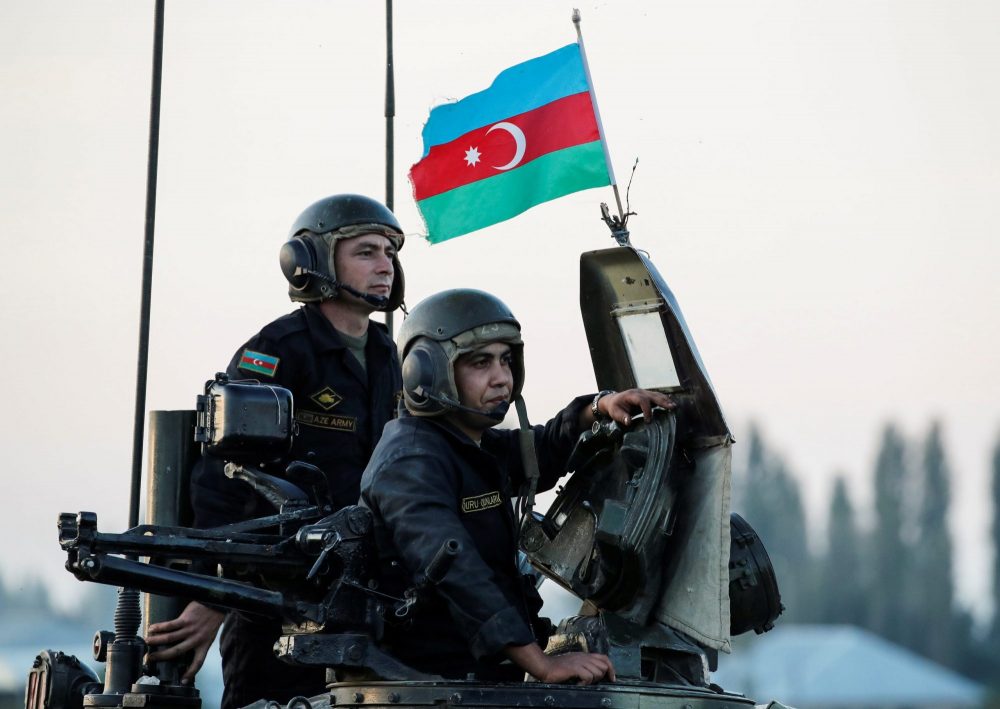
During the liberation of Karabakh, the Azerbaijani army had to confront not just poorly equipped bands of separatists. It faced and defeated substantial combat formations responsible for carrying out the expansionist plans of Armenian nationalists, which relied on a broad network of international support, including the significant business interests of the Armenian diaspora, foreign allies, and, of course, all government structures of the Republic of Armenia.
First and foremost, the Azerbaijani army faced the armed forces of Armenia. No matter how much the Armenian elites may lament their situation now, as of 2020, they were not in such dire straits. Until recently, Armenia had the opportunity to receive weapons and supplies from Russia and the (CSTO)—regardless of what the Armenian leadership might claim today. Yes, after coming to power, Pashinyan significantly weakened these ties, but this weakening only began in the last few years before the war.
Therefore, in 2020, Karabakh was not a den of mythical bandit-fedayins but rather the positions of a modern army equipped with a genuine arsenal. Consider this: Azerbaijani military assessments indicate that during the 2020 war, they destroyed 287 enemy tanks (79 of which were captured); 69 infantry fighting vehicles (47 captured); 315 artillery pieces of various calibres (37 captured); 63 mortars; 97 Grad multiple rocket launchers; 2 Uragan rocket launchers; 4 Smerch rocket launchers; 1 TOS system; 2 Elbrus operational-tactical missile systems; 1 Tochka-U tactical missile system; 40 Osa surface-to-air missile systems; 5 Tor systems; 4 Kub systems; 1 Krug system; 14 Zastava systems; 7 S-300 systems; 2 S-125 systems; 1 Oborona radar station; 1 Nebo-M radar station; 5 Su-25 aircraft; 28 self-propelled artillery units (Akatsiya and Gvozdika, with 5 captured); and 252 trucks (270 captured). This does not include the weapons that remained with the separatists after 2020 and were destroyed or captured in 2023.
Moreover, until the end of the 2010s, Armenia, thanks to Russia and the CSTO, had excellent opportunities for training, exchanging experiences, obtaining intelligence, and so on, which it utilized for territorial expansion. For instance, the commander of the occupying forces in 2020, Mikael Arzumanyan, studied at a Russian military academy in the late 2000s (likely named after Frunze), while his predecessor, Jalal Harutyunyan, graduated with honors from the Russian Mikhailov Artillery Academy.
In other words, Armenian nationalists had ample opportunities to wage a long and hard fight, but they surrendered very quickly—a fact that Pashinyan regularly reminds them of. Of course, the very act of seizing another’s territory worked against them. Few Armenians succumbed to propaganda and went to settle in the lands conquered from their neighbouring nation, while around ten thousand became deserters instead of participating in the 2020 war for the continued occupation of those lands.
In addition, Armenian nationalists were significantly hindered by their racism towards non-Armenians—they even made a point of not distinguishing between neighbouring Turkic peoples. They could not comprehend the obvious: that their victories in the first war were fleeting and temporary, achieved only through external forces and the inhuman brutality of their thugs, rather than through any unique military talents of their own. Let’s recall how shamelessly and cynically Serzh Sargsyan recounted this to Thomas de Waal: “Before Khojaly, the Azerbaijanis thought that they were joking with us, they thought that the Armenians were people who could not raise their hand against the civilian population. We were able to break that [stereotype]. And that’s what happened.”
Having believed their own bloody tales, Armenian nationalists carelessly neglected fortifications and constantly sought out either mythical Turks or mythical Syrians, who were supposedly fighting alongside them in Karabakh.
However, a solid and confident victory was achieved in 2020 thanks to the determination, heroism, and military skill of the Azerbaijani forces. Over 2,900 of them lost their lives in the Patriotic War, fighting for the rights of their people and the unity of the country. It is to them, and not to the international community, that the Azerbaijani people—and indeed the entire South Caucasus—are grateful for eliminating the consequences of the aggressive actions of Armenian nationalists, aided by superpowers, in a peculiar Armenian version of “Drang nach Osten”—the colonial “Push to the East.”
Currently, the Azerbaijani government does not allow external forces or the international community to manipulate the outcomes of the war for the restoration of territorial integrity, as the cost was very high. To prevent the possibility of a repeat of such events, the Azerbaijani government insists on the maximum dismantling of even the ideological infrastructure of revanchism in Armenia and beyond its borders.
Serhey Bohdan
Caliber.Az