The burning of the Azerbaijani flag at the opening ceremony of the European Weightlifting Championships in Yerevan. Armenia has once again been caught helping Russia bypass sanctions.
Three events, each of them outrageous on their own, but together they simply diagnose an extremely sad situation for Armenia, dangerous for its neighbours, but even more so for the Armenian state itself, and for Europe.
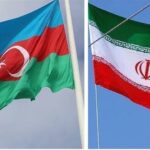
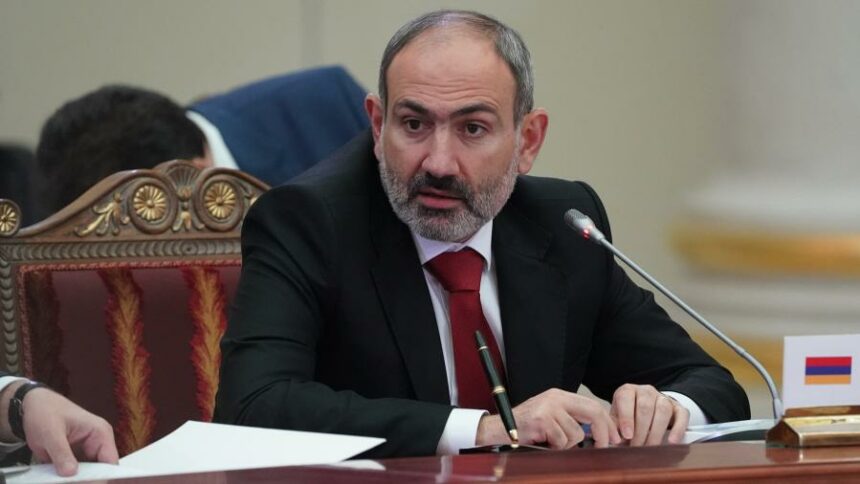
On 11 April, Armenian military units for the first time used Iranian-made drones to attack the Azerbaijan Army. Apparently, the same drones used by the Russians in Ukraine. Following the incident, Armenian Prime Minister Nikol Pashinyan made claims of treachery within the Armenian army.
Pashinyan said that during the hostilities there were high-ranking Armenian military who ordered to surrender positions, sowed panic, etc. “Are these people recruited agents? I do not assert, but draw an analytical conclusion. In other words, they should have received an order from above, but I did not give this order. So they must have another “leader” from whom they received the order,” the Armenian newspaper Hraparak quotes him as saying.
These words are a bad omen for Armenian statehood. Firstly, the head of the country should not engage in drawing such “analytical conclusions”. He either declares directly something about the combat effectiveness of his army, or keeps his views private.
What does it mean: “I do not assert, but draw an analytical conclusion”? If the head of state does come to the conclusion that the army is not subordinate to him, it should lead to immediate suspension of the commanding officers – because the state cannot tolerate an army on its territory that is subordinate to someone else. Thirdly, Pashinyan is actually talking about the loss of sovereignty by Armenia.
This is perhaps not surprising. For years, the Armenian authorities have been handing out chunks of sovereignty to Russia, Iran, the warlords of Karabakh, France, EU missions, loudmouths from the Armenian diaspora, and fugitive oligarchs with a shady past.
But this loss of sovereignty is alarming. It means that a country in conflict cannot fight and, what is more important, cannot make peace. The loss of sovereignty is the evidence of an inability to negotiate.
A good example can be found with the Israeli President and Nobel Peace Prize winner Shimon Peres, who explained why Israel managed to make peace with Egypt and Jordan, but failed to make peace with the Palestinians and Lebanon. Egypt and Jordan have one government, one army, and one security system. You can negotiate and reach an agreement with them.
But in Lebanon and amongst the Palestinians there is no unity of command. Terrorist organisations obey no one except their sponsors: Iran that arms the Lebanese Hezbollah, the Palestinian Islamic Jihad, and Hamas. Now Armenia joins the club by declaring that its security is the security of Iran.
In other words, Armenia, which is gradually ceding its sovereignty and right to self-government piece by piece, is not only losing its ability to defend itself, but is also not ready to coexist peacefully with its neighbours.
Pashinyan’s complaints about the army not obeying him have provoked a backlash of attacks. So, for example, an article “Pashinyan’s Moses’ Disease” was published in the Golos Armenii (“Voice of Armenia”) newspaper, which was then picked up by many websites. As follows from the title, Pashinyan is accused of megalomania and a messiah complex: that he, using any pretext, continues to “purposefully discredit and destroy the command of law enforcement agencies.” Why did the head of government think that he should control the army? At the end of the article, Pashinyan is threatened with beheading if “Western masters don’t save him at the very last moment, a second before the consciousness is completely turned off.”
Armenian entrepreneurs are also dissatisfied with Pashinyan. During the visit of the Prime Minister of Armenia to Germany, he was warned about the unacceptability of aiding Russia in circumventing sanctions. In 2021 Armenia’s exports to the Russian Federation amounted to $840 million, but in 2022 it reached $2.4 billion, tripling in one year. Last year, 10 times more mobile phones were brought into Armenia than the year before. A large number of American companies refuse to supply microchips to Armenia, because they understand that they will end up in the Russian Federation for missile production.
Upon returning to Armenia, Pashinyan called the chairman of the Central Bank, members of the government, and experts to discuss which measures should be taken. Airport security guards are now supposed to prevent passengers travelling to Russia from bringing microchips and parts required for high-tech industry on board. It is obvious that Armenia’s fulfilment of the commitments it has made hits the pockets of those who are already used to profits from smuggling forbidden goods. Businessmen are perplexed why the Prime Minister of Armenia, without trying to find an alternative solution, immediately obeyed the demands of Western partners. It is clear that they will be looking for solutions themselves — without worrying about Armenia falling under secondary sanctions.
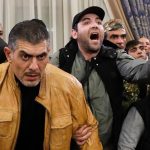
The last event that could not fail to attract the attention not only of political analysts but also of sports fans occurred on 14 April when the flag of Azerbaijan was publicly burnt at the opening ceremony of the European Weightlifting Championship in the capital of Armenia, Yerevan. It was burnt by an officially accredited person of the hosting party—the designer of the event and the chief stylist of the Public Television of Armenia, the channel that was broadcasting the event. Flag burner Aram Nikolyan is not a random troublemaker. He was seated in the front row. The security guards did not react to him, as he was one of the organisers. He managed to walk up to the girl who carried the flag of Azerbaijan (her outfit and placement had been chosen by himself), take it from her and set it on fire. The security guards of the event did not respond in any way to what was going on.
No criminal case has been opened against Aram Nikolyan; the law enforcement agency of Armenia sees nothing wrong in such behaviour. The arsonist was greeted as a hero after a swift release from the police station. Politicians, public figures, tens of thousands of social network users see him as a role model. Azerbaijani athletes left the championship, since the Armenian state cannot control events on its own territory—even if it is covered by central TV channels, and the opening of the championship is attended by the head of the Armenian government and the first lady, whose outfits were also designed by the flag burner Nikolyan.
How should the West deal today with Armenia, which has become a puppet in the hands of Russian and Iranian puppeteers? In its current state this country is a threat to the entire region where Europe gets alternative energy resources instead of genocidal Russia. The West should stop treating the conflict in the region as a clash between Armenia and Azerbaijan.
This is a conflict between a Russian-Iranian puppet against a country on which the energy security of Europe depends. It is time for Europe to decide and to take sides.
James Wilson