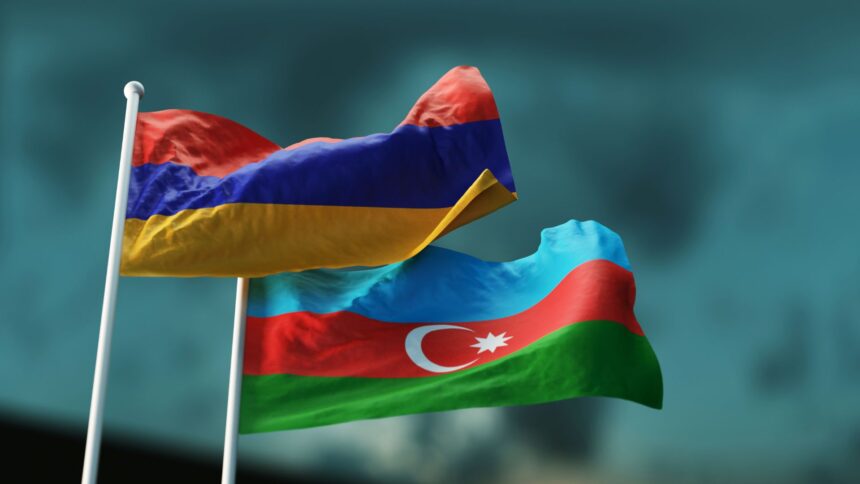
When the USSR disintegrated at the end of 1991, the Kremlin manufactured or indirectly supported ethnic conflicts throughout the territory of the Soviet Union. In each case the former Soviet army transformed into the new Russian army, and its intervention was decisive in giving victory to separatists and pro-Russian proxies. Russia continues to financially and militarily support separatist enclaves in Eurasia.
In Moldova, the former Soviet and Russian army intervened in support of separatists who defeated the central government. Russia manufactured a frozen conflict in the Transnistria which continues to host Russian military bases and a lawless separatist enclave. Russia seeks to militarily intervene and remove Moldova’s pro-Western leaders.
In Georgia, the Russian army and Chechen mercenaries defeated the Georgian central government. South Ossetia and Abkhazia were ethnically cleansed of their Georgian inhabitants, and they became lawless frozen conflicts. In 2008, after Russia invaded Georgia, the Kremlin recognised the ‘independence’ of Abkhazia and South Ossetia. The two Georgian provinces have been ethnically cleansed of Georgians and have been de facto annexed by Russia.
In Azerbaijan, Soviet and then Russian forces assisted Armenia in defeating the central government, intervening militarily in Baku and Sumgait where they killed 150 Azerbaijani civilians.
Unlike in Moldova and Georgia, where Russia created proxy entities under its control, Armenia occupied a fifth of Azerbaijan territory, including the Karabakh region.
Breaking the deadlock
The Moldovan and Georgian frozen conflicts remain unresolved. Azerbaijan is the only case in Eurasia which has resolved the three-decade old conflict through patient diplomacy, transforming itself into an energy power and building up military alliances with Israel and Turkey.
Decades of negotiations under the auspices of the Organisation for Security and Co-operation in Europe (OSCE) proved fruitless in Azerbaijan, as in Moldova and Georgia. The US lost interest in the region while France increasingly sided with Armenia.
The deadlock changed in three ways. First through military means, second through a decline in Russian influence, and third through greater involvement by the European Union.
First the military. In 2020, after a brief conflict in 2016 and skirmishes over the next four years, the Second Karabakh War broke out. The war was relatively brief, lasting only forty-four days, and leading to Armenia’s military defeat.
Population sizes, Armenia with 2.8 million people and Azerbaijan with 10 million, were not decisive factors; after all, Armenia defeated Azerbaijan in the early 1990s. The key factor was the two very different militaries. Armenia continues to possess a Soviet or Russian military force, using Russian military equipment and with its officers trained in Russia.
The 2020 Second Karabakh War and the Russian-Ukrainian war since 2022 have highlighted the very poor quality of Russian military equipment and Russian military training. In contrast, Azerbaijan’s army was outfitted with Israeli, Turkish, and other Western military equipment and its officers were trained in military academies in NATO member states.
Azerbaijan’s military victory returned the bulk of the land it had lost in the early 1990s, in the First Karabakh War. A trilateral peace agreement between both parties brokered by Russia introduced so-called Russian ‘peacekeeping’ forces. Russia has used its so-called ‘peacekeeping’ forces to freeze conflicts indefinitely, making them into a de facto permanent military base.
Not surprisingly, neither side was satisfied by the Russian ‘peacekeeping’ forces. Armenia had hoped they would defend its last remaining enclave in Karabakh. Meanwhile, Azerbaijan believed Russian ‘peacekeepers’ should facilitate the de-militarisation of Karabakh and the dismantling of separatist institutions that had become illegal under the trilateral agreement.
Armenia did not withdraw its forces from Karabakh or dismantle the enclave’s separatist institutions, two steps to be taken in the trilateral peace agreement. Russian ‘peacekeepers’ turned a blind eye to Yerevan supplying military equipment and rotating troops to Karabakh. Azerbaijan applied pressure on the enclave by blockading the Lachin corridor connecting Karabakh and Armenia.
Peace, finally
In September 2023, conflict between the three parties, Armenia, Azerbaijan, and Russian ‘peacekeepers,’ came to a head. A 24-hour offensive by Azerbaijan, dubbed an ‘anti-terrorist operation,’ recaptured Karabakh. The enclaves’ Armenian inhabitants, after decades of nationalist propaganda, ignored Baku’s guarantee of minority rights and moved to Armenia.
This year, the final stage in the long-drawn-out drama is ending. In March, Yerevan agreed to villages it still controlled returning to Azerbaijan. After long refusing to countenance this step, Armenia has agreed to sign a peace treaty with Azerbaijan with their border based on the republican boundaries that existed in the USSR.
The growing role of the EU as an honest broker bringing Armenia and Azerbaijan into a negotiated settlement grew at the same time as Russia’s influence declined. Russia’s full-scale invasion of Ukraine reduced the Kremlin’s influence throughout Eurasia. Of the fourteen former Soviet republics, other than Russia, only one—Belarus—has supported the Kremlin at the UN and in other international organisations.
Russia withdrew its ‘peacekeeping’ forces in April-May for three reasons. Firstly, both sides were critical of the passivity of Russian ‘peacekeepers’ in either defending the Karabakh separatist enclave (Armenia) or in not implementing the trilateral agreement’s demilitarisation and dismantling of the Karabakh separatist structures (Azerbaijan).
Secondly, Azerbaijan had completed the return of all its internationally recognised territory in the First Karabakh War in 2020, in the ‘anti-terrorist operation’ in Karabakh in 2023, and this year in negotiating the return of four villages.
Thirdly, Russia’s massive losses in military equipment, including 3,000 tanks, and over 450,000 casualties in its war against Ukraine. These losses have led the Kremlin to withdraw its forces from frozen conflicts in Eurasia and recruit mercenaries from Africa, Syria, India, and Nepal for use in its war against Ukraine.
After 32 years, Armenia and Azerbaijan are set to sign a peace agreement that will bring peace to the most bitter conflict that emerged in the dying days of the USSR. This was achieved by four factors coming together. First, Azerbaijan investing in Western military equipment and training; second a colour revolution bringing Western-leaning Armenian Prime Minister Nikol Pashinyan to power; third the Kremlin’s war against Ukraine speeding up Russia’s decline as a great power; and finally, the EU replacing Russia as the power broker in the South Caucasus.
Dr Taras Kuzio is a professor of political science at the National University of Kyiv Mohyla Academy and author of the book Genocide and Fascism: Russia’s War Against Ukrainians.