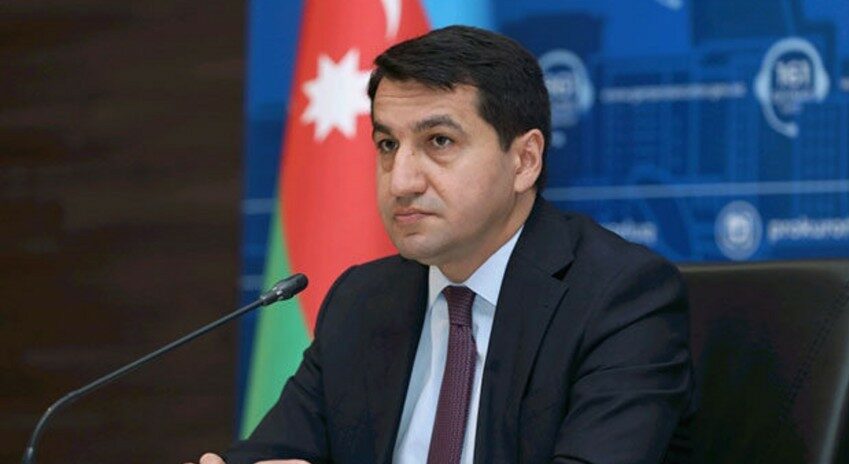
Mr. Hajiyev, according to Reuters, on Dec. 19, you said that the conflict between Armenia and Azerbaijan was over after 35 years. Azerbaijan is now pursuing the strategy of “winning the peace”. They also said that a peace treaty is not rocket science. By when can a peace treaty with Armenia realistically be concluded?
After the end of the Second Karabakh War in 2020, it was Azerbaijan who initiated the peace negotiations with Armenia by submitting the five basic principles in accordance with the well-known norms of international law, which, among other, include the mutual respect for the sovereignty and territorial integrity, mutual confirmation of the absence of territorial claims against each other, and establishment of the diplomatic relations.
Azerbaijan has been negotiating with Armenia in good faith in different venues to achieve a long-awaited peace in the region. We really believe there is a historic chance to reach a peace treaty and we should not to miss this opportunity. Significant progress has been achieved with regard to the text of the peace treaty, however there are still a few pending issues.
Recently both countries astonished the world with positive agenda. I refer to the landmark joint statement of the Azerbaijani President’s Office and the Armenian Prime Minister’s Office on December 7, as a result of which 34 soldiers were released as part of the mutual exchange deal. Furthermore, Azerbaijan has supported the Armenian candidature for Eastern European Group COP Bureau, while Armenia has supported Azerbaijan’s candidacy to host COP29. This shows that Azerbaijan and Armenia are capable of conducting direct bilateral talks without mediators.
If the agenda is so positive, by when do you realistically expect a signed peace treaty?
After the 19-20 September antiterror operation and the full restoration of sovereignty of Azerbaijan, the main source of tension between Azerbaijan and Armenia-the Karabakh issue-is completely taken off the table. So, at the moment, we see no serious obstacle to the conclusion of a peace treaty. Now we observe the calmest days in last 30 years between two countries. There are even no incidents of skirmishes as both army returned to their barracks. And the recent informal meeting between the President of Azerbaijan and the Prime Minister of Armenia in St. Petersburg was also held in a positive vein. But it is a bit difficult to talk about specific timelines, as further negotiations are still needed between Armenia and Azerbaijan to finalize the process. To be honest, I don’t think that it would appropriate to put strict timeline and thus to work under time pressure.
Are both countries prepared to conclude a peace treaty without a final settlement of the border demarcation and the so-called Zangazur corridor?
Border delimitation is technical and time-consuming long process, while peace treaty is not a rocket science and is just based on mutual acceptance of norms and principles of international law in interstate relations. In our view, the peace treaty should not be held hostage by the border delimitation.
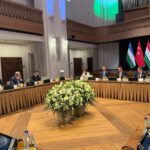
Although the negotiations on the peace agreement and the delimitation and demarcation of the border are taking place in parallel, they are being conducted in two different formats. So far, the delimitation commissions of both countries have met five times to discuss the basics of the process. The last meeting took place this November on the Azerbaijani-Armenian border. During this meeting, the two sides agreed to start work on reaching an agreement on the draft regulation on the joint activities of the commission on demarcation of the state border and border security issues between Armenia and Azerbaijan and to intensify the meetings between the commissions. We also regard this agreement as a positive sign, not least because it was reached in a bilateral format.
On December 6, President Aliyev called for “easy access” from Azerbaijan to the exclave of Nakhchivan. There should be no “checks and interferences” there. This is Azerbaijan’s legitimate right. Does this mean a transportation link without customs and border controls? To which provision of applicable international law does the statement that this claim is Azerbaijan’s legitimate right refer?
Nakhchivan region of Azerbaijan is under blockade for 30 years. In the Trilateral Declaration of 10 November 2020, Armenia undertook obligation to guarantee the security of transport links between the western regions of the Republic of Azerbaijan and its Nakhchivan Autonomous Republic in order to organize unimpeded movement of citizens, vehicles and goods in both directions. President Ilham Aliyev referred to this commitment.
Azerbaijan is interested in creating the proper connection to Nakhchivan, however, despite its commitment, Armenia impedes this process for already 3 years. Therefore, Azerbaijan has already reached an agreement with Iran on an alternative route through Iranian territory. We do not intend to keep waiting for the Armenian side to become ready to realize its own commitment and take every opportunity to diversify our communication routes.
You mean Article 9 of the Armenian-Azerbaijani-Russian ceasefire agreement: “The Republic of Armenia guarantees the security of transport links between the western regions of the Republic of Azerbaijan and the Nakhchivan Autonomous Republic in order to ensure the unimpeded movement of citizens, vehicles and cargo in both directions.” Does Azerbaijan interpret this article to mean that Armenia will waive customs and border controls?
The short answer to your question is yes. That is why the document contains language about “unimpeded” movement of passengers and cargo. This is a signed commitment by Armenia. However, it should be clarified that we expect customs and border controls to be waived only when the goods are transported from the mainland Azerbaijan to its Nakhchivan Autonomous Republic. But when the goods are transported from Azerbaijan to the third country, of course, applicable customs and border control will be ensured by Armenia.
The quoted Article 9 also states: “Transportation control is carried out by the bodies of the border service of the FSB of Russia.” In the meantime, Russian-Armenian relations have cooled considerably. From an Azerbaijani perspective: Is the clause from 2020 still relevant for you?
I don’t want to comment on Russian-Armenian relations. What I want to highlight is that there are undeniable physical facts on the ground. First of all, Armenia is a member of the CSTO and the EAEU. Second, Armenia’s border is protected by Russian FSB border guard troops. The Trilateral Declaration specifically refers to FSB forces as well. But my role here is not to speak as advocate of one particular border troops on the ground. Our concern is that we can’t leave Azerbaijani cargo and passengers just to the mercy of Armenian law enforcement agencies. And our concerns are well grounded. This year Azerbaijani flag was burned in weightlifting event held in Yerevan in the presence of Armenian Prime Minister. Internet is full of footages how an Azerbaijan soldier lost in foggy weather was brutally beaten in Armenia.
But important thing is whether Armenia is truly interested in this project or not. Once good willingness is on place could be found through creative thinking. There is no need to invent bicycle. The route through Armenia is Yerevan’s commitment and they should honor it. In other words, Pacta sunt servanda.
International practice, humanitarian principles also demand from Armenia to stop blockading Nakhchivan from mainland Azerbaijan proper. So far, we don’t see any engagement from Armenia. On the contrary, Armenia by initiating “The Crossroad of peace” project, tries to deviate from its commitment deriving from the Trilateral Declaration and to falsely present itself as a party that vehemently supports regional unblocking. But in reality, it is Armenia that still hinders the opening of communication in the region.
When you say “a transportation link through the far south of Armenia” – do you mean the old Soviet route along the Armenian-Iranian border or a corridor further north?
We are referring to the shortest route, which should run along the railroad that was in operation during the Soviet period and even in the first years of independence of our countries – the last freight train passed along this route in 1992. While Armenia says to be interested in restoring this railroad connection, but they oppose the construction of a parallel highway, offering Azerbaijan instead a long, inconvenient and weather-prone northern route. It once more demonstrates that Armenia is reluctant to open transportation links.
How do you intend to prevent such a transportation corridor from restricting Armenian sovereignty and Armenian-Iranian connectivity?
We do not see the transportation through Armenian territory as a threat to both Armenian sovereignty and Armenian-Iranian connectivity. This is because a transportation link from Azerbaijan to Nakhchivan – through the far south of Armenia – will not affect the trade route between Armenia and Iran. The two routes intersect without blocking each other. It is always possible to find acceptable modalities if there is the political will to do so. The term “corridor” should not frighten Armenia, as it is widely used in the context of transport routes. This transportation link will not deprive Armenia from its border with Iran. This route will not cut Armenia into two pieces either. Regretfully, here we see the widespread slander campaign against my country, especially in some Western media.
The Armenian Prime Minister Nikol Pashinyan has made the proposal to establish several east-west connections between Azerbaijan and Nakhchivan or Turkey on Armenian territory. What is Baku’s position on this?
Due to the illegal occupation by Armenia of Azerbaijani territory recognized under international law – Karabakh and Eastern Zangazur – Armenia has not been included in the main energy and connectivity projects of our region. For many years Armenia self-isolated itself. Within the framework of the process of normalization of relations between Azerbaijan and Armenia, various projects for opening regional communications can also be discussed.
The commissioning of the transportation link across the Armenian territory to Nakhchivan would play an important role in the inclusion of Armenia in the Middle Corridor project. But Armenia should finally make it clear – what it wants.
Isn’t there a risk that the demand for a Zangazur Corridor without customs and border controls will delay the realization of the Middle Corridor? Wouldn’t such a policy risk turning interested parties from China to Europe against Azerbaijan?
Azerbaijan has waited almost 3 years for Armenia to fulfill its obligations to enable the transport connection to Nakhchivan. Azerbaijan expected facilitated passage and we are ready to look at the models like Kaliningrad. We have also invited World Customs Organization to share their know-how and standards. However, Azerbaijan never puts all its eggs in one basket, which is why we have been working on alternative solutions in parallel. We are also increasing the capacity of Baku-Tbilisi-Kars railway up to 5 million tons per year. Together with our Iranian partners, we are building an alternative route to Nakhchivan via Iranian territory. The fact that Yerevan will stay in this case outside the new regional connectivity project will only be due to its own policy.
Let me also make it clear that the realization of the transport project via Iran does mean that the route through Armenia is taken off the table. We are ready to work with Armenia to this end. It is always better to have more alternatives. The transportation link to Nakhchivan through Armenia will not affect its sovereignty. Hysteria around this topic is completely unsubstantiated.
In the Nagorno-Karabakh conflict, the borders under international law have been restored, but deep humanitarian wounds remain. The Parliamentary Assembly of the Council of Europe (PACE) has called on Azerbaijan to “create a climate of trust and the material conditions” for the return of the ethnic Armenian population of Nagorno-Karabakh – including active steps by Azerbaijan to encourage and empower them. What steps does the government in Baku plan to take in response to this call?
Immediately after the 23-hour anti-terrorist operation against the Armenian armed forces in the Karabakh region of Azerbaijan, our country created a portal for the reintegration of the Armenian residents of Karabakh into the Azerbaijani state. It has been publicized through a press release by the Azerbaijani Presidential Administration, widely reported in regional media.
To Azerbaijan’s pride, not a single case of violence against civilians was recorded during and after the lightning anti-terrorist operation as confirmed by three UN missions and ICRC. Azerbaijan demonstrated to the whole world how to conduct military operation without harming civilians.
In other words, all conditions were created for the civilian population to stay where they were. Nevertheless, most of Armenian residents decided to leave Karabakh. They simply don’t to live under the Azerbaijani flag and citizenship, which was the reason for their decision to depart. Mainly because of ethnic hatred against Azerbaijanis. By the way, twenty years ago, former Armenian president Robert Kocharian in his statement at the Parliamentary Assembly of the Council of Europe that you referred to, talked about “ethnic incompatibility between Armenians and Azerbaijanis”. PACE officials stated that “Since its creation the Council of Europe has never heard the phrase “ethnic incompatibility”.
Most of Armenian residents were frightened that Azerbaijan would possibly seek revenge for what Armenians committed during the First Karabakh War, but it was not our intention. Azerbaijan never targets the civilian population. So, Azerbaijan provided secure passage through Lachin road to Armenia. A very small part of Armenian residents decided to stay to live in Karabakh, and their needs are being met currently. The reintegration portal continues to operate.
At the same time, it is disturbing that Armenia denies the right of return to hundreds of thousands of Azerbaijanis, who were massively expelled from their places of compact residence in Armenia as a result of ethnic cleansing. The Prime Minister of Armenia has called them a “threat to Armenia’s national security”, which is totally unacceptable. One cannot proclaim an “era of peace” on the one hand and on the other hand call Azerbaijani refugees who want to return and live in their historical homeland “a threat to the national security of the country”.
The Western Azerbaijan Community that represents Azerbaijani refugees expelled from Armenia, always emphasizes that it fully respects the sovereignty and territorial integrity of Armenia. Their goal is just a peaceful return to their native lands in Armenia.
You mentioned humanitarian wounds. Indeed, the Karabakh conflict has become a tragedy for Azerbaijani people. More than a million Azerbaijanis became refugees and IDPs. Fates of hundreds of thousands of people were broken. Still the fate of about four thousand Azerbaijanis remain unknown. In Azerbaijan, we have parents that bequeath photos of missing sons to be put on their own tombstones as a moral consolation. You yourself were in the region and could see what the occupation has turned Azerbaijani towns and villages into. Once flourishing cities were completely destroyed and they simply no longer exist. Instead, the Armenian occupiers left us a deadly legacy of more than a million mines without accurate mine maps. Can you imagine that in the 21st century Azerbaijanis become a victim of mine explosions in their own sovereign territory? Clearing the territories of mines, restoring infrastructure, creating living and working conditions and returning the population is a huge task that Azerbaijanis are now facing.
Another humanitarian wound is the deliberate destruction of our cultural heritage sites, mosques, cemeteries. Our mosques were used as stables for pigs and cows. By doing so, Armenia tried to erase the traces of Azerbaijani people.
You have said that both countries are capable of conducting productive negotiations without mediators. In your experience, which format is the most effective: Azerbaijani-Armenian negotiations, the 3+3 format with neighbors Iran, Russia and Turkey, or negotiations with Western participation, be it the US or the EU?
Each format has its own advantages, and it would not be correct to compare their effectiveness. At various stages, different formats have allowed us to move forward, and we are grateful to all the mediators who have been involved. The venue is not important for us. Most important is the outcome. We are for result-oriented negotiations. In principle, we are not against the honest facilitation, but our preference is direct talks. Today, work on the text of the peace treaty is being carried out directly between Baku and Yerevan.