Judging by the emphasis the Iranian establishment places on this method in its policy toward Azerbaijan, one can conclude that Tehran rejects established norms. It also demonstrates that the export of the Islamic Revolution remains a central element of its foreign policy.
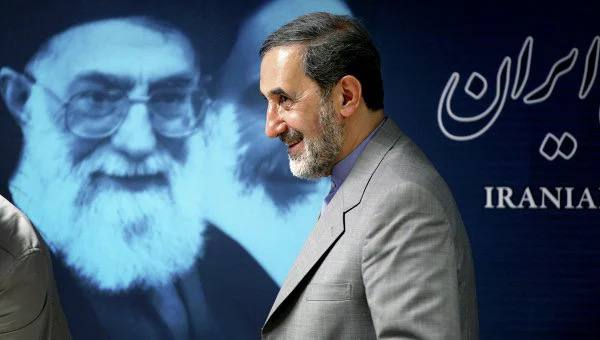
The well-known adviser to Iran’s Supreme Leader, Ali Akbar Velayati, decided to stir up a new commotion out of nothing. Commenting on an issue that has no relevance to Iranian policy or bilateral relations, he once again lashed out at Azerbaijan. On the occasion of a reception in Baku for Israeli rabbis, the former foreign minister of Iran expressed deep regret, although the event had no connection either to his country or to Baku–Tehran relations.
The diplomat’s reaction and statements raise not only bewilderment but also many questions. Here is what he said: “This is an unprecedented violation, considered anti-Islamic and offensive to the dignity of Shiites worldwide… The people of Azerbaijan will undoubtedly oppose such a move.”
If one is to speak of violations, it is unclear to which code or set of rules Baku allegedly ran counter. Secondly, why should a meeting of religious leaders be considered “anti-Islamic and offensive”? Thirdly, why should the Azerbaijani people oppose an event that fully corresponds to the tolerant way of life embedded in their society?
Every year, events devoted to intercivilizational dialogue and the Alliance of Civilizations are held in Baku and other cities of the country. As part of important UN programs, they resonate with the aspirations of both religious and secular institutions. Is Velayati really unaware of the role Baku plays internationally in strengthening trust and expanding the boundaries of dialogue?
In his strange—if not contrived—revelations to the NOURNEWS agency, the adviser to Iran’s leader began interpreting events on another country’s agenda from his clerical pulpit. This is not only outrageous but also politically dangerous, because his statements clearly reveal an incitement trend aimed at undermining the internal stability of a neighboring state. And not only that. With the other edge of his provocative remarks, the retired diplomat also seeks to pit Azerbaijan against other countries of the Islamic world.
“The news of a meeting of Zionist rabbis in a Shiite Muslim country,” he said, “is extremely unexpected and regrettable… This is the first instance of such a violation by the government of Azerbaijan, and it is an anti-Islamic act that undermines the dignity of Shiites worldwide.” To say that Mr. Velayati’s logic is inconsistent is to say nothing at all. By what right does a representative of Iran classify a Jewish religious event as “anti-Islamic,” artificially inflating a sense of tragedy? After all, no one has vested the Iranian leadership with such far-reaching authority to speak on behalf of the global Shiite ummah.
Velayati, along with Iran’s clerical leadership, acts as a self-appointed spokesman—something that hardly does them credit. At the very least, it is irresponsible and unethical.
“Apparently,” continued the adviser, “the purpose of this summit is to expand the Abraham Accords and include Azerbaijan and other Muslim countries of Central Asia. The peoples of this region have supported the Ahl al-Bayt of Imam Ali (peace be upon him) for centuries.” Again, the adviser assumes the role of unsolicited advocate of third parties, assigning himself special functions.
Whether or not other countries join the Abraham Accords is for their political elites to decide, not Tehran. Crude interference in the internal affairs of independent states will bring Iran not geopolitical dividends, but new problems.
The author of such absurd conclusions should know that for religious institutions and societies of Central Asian countries, values and concepts such as Ahl al-Bayt or the heritage of Imam Ali are not the same as for peoples of states that follow the Shiite branch of Islam. In this context, discernment is needed—something the adviser to the head of the Islamic Republic plainly lacks.
Countries around the world, including post-Soviet states, being sovereign and secular entities, determine their own political, spiritual, and educational priorities. Attempts to pass wishful thinking as reality have repeatedly harmed Iran’s relations with external players. The Islamic Republic has been embroiled in countless scandals over interference in the internal affairs of neighbors and other states. Apparently, the numerous failures in its foreign policy have taught Iranian politicians, ideologues, and clerics nothing.
The adviser to Iran’s Supreme Leader then goes even further, appearing as a falsifier and displaying remarkable hypocrisy. Here is how he interprets the history of the region’s peoples: “The only people in history who, after separating from Iran and falling under royal occupation, preserved their commitment to Islam and sought to return to Iran by appealing to scholars were the people of Azerbaijan. The inhabitants of Azerbaijan, Arran, and the Caucasus will surely be dissatisfied with these anti-Islamic actions that contradict their beliefs regarding the Ahl al-Bayt.”
Velayati’s pseudo-historical claim contains blatant falsehood. After the end of the Russo-Iranian war of 1826–1828, the people of Azerbaijan never expressed any desire to return to the past, because its brightest minds saw their mission in realizing the idea of self-determination. The founding fathers of the Republic fulfilled the dream of generations, despite enormous hardships and the intrigues of ill-wishers.
As for the moral and spiritual foundations of the Azerbaijani people, here too the matter is only about the right to sovereign choice. That choice has been realized, and no guides are needed to shape their convictions. Mr. Velayati claims that the meeting of Israeli rabbis in Baku is “an illogical, anti-Islamic and inhumane step that will ultimately harm Azerbaijan and lead to nothing.” The author of this pompous thought is divorced from reality and has no truthful understanding of the moral values of other peoples.
Observation of the course of Azerbaijani-Iranian relations reveals one characteristic trend: as soon as ties begin to normalize, imperatives aimed at undermining them immediately emerge. The same has happened this time. The reason lies in the strange dichotomy of Iran’s foreign policy.
It demonstrates the split personality of the political system of the Islamic Republic, when from one center at least two mutually exclusive narratives are voiced simultaneously. An Iranian representative pompously warns of dangers to Islam from other religious teachings. But since these words come from a diplomat with influence on Iran’s Supreme Leader, has he forgotten one very curious fact?
In the autumn of 1998, the UN General Assembly unanimously adopted a resolution proposed by the president of the Islamic Republic of Iran, Mohammad Khatami, which was based on the idea of a Dialogue of Civilizations. The UN designated 2001 as the Year of Dialogue among Civilizations. The initiative drew enormous attention from the Western world, academic circles, and the media, as an important and timely example of using soft power to address complex international issues and disputes.
It is strange that the concept of reconciliation of civilizations, once advanced by a former Iranian president, is now being decisively rejected in his own country. Could this not be the very reason for the political recklessness so often displayed by certain figures within Iran’s ruling elite?
Magsud Salimov
Translated from minval.az