By using this site, you agree to the Privacy Policy and Terms of Use.
Accept
Azemedia new logo
  • Home
  • Opinion
  • News
    • Economy
    • Energy
    • Climate and Ecology
  • Diaspora
  • Interview
  • Science
  • Logistics-Transport
  • History
  • Defense
Aze.MediaAze.Media
Font ResizerAa
Search
  • News
  • Economy
  • Climate and Ecology
  • Energy
  • Opinion
  • Culture
  • Gender
  • Interview
  • Science
  • Logistics-Transport
  • History
  • Defense
  • Karabakh
  • Diaspora
  • Who we are
Follow US
© 2021 Aze.Media – Daily Digest
Aze.Media > Opinion > From resistance to acceptance of new realities: Moscow and Tehran adapt to changing conditions
Opinion

From resistance to acceptance of new realities: Moscow and Tehran adapt to changing conditions

An important instrument of adaptation for both Moscow and Tehran is the regional 3+3 format, which, notably, was also proposed by President Ilham Aliyev.

AzeMedia
By AzeMedia Published August 16, 2025 1.3k Views 7 Min Read
128262f9 70ad 34df a970 5a01ac7c842b 850

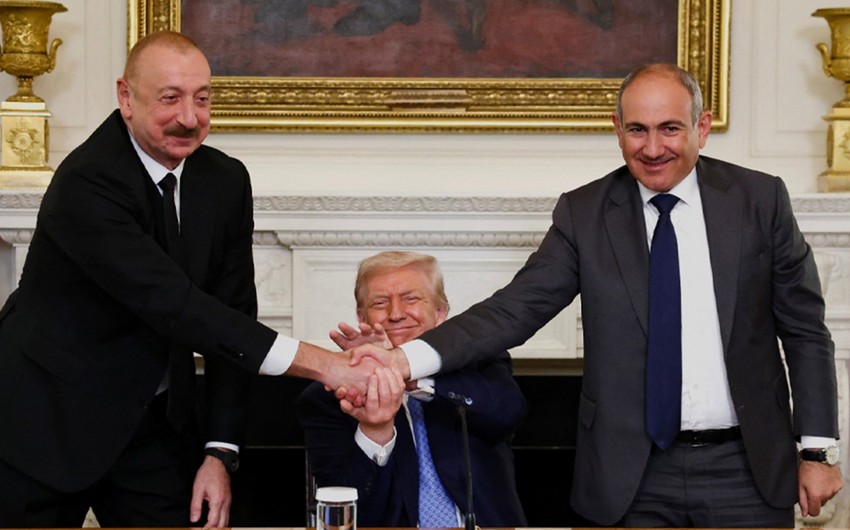
Following the signing on August 8 in Washington of a peace agreement between Armenia and Azerbaijan — brokered by the United States and providing for the creation of a transport corridor through Zangezur, or the so-called “Trump Route” — the regional configuration of the South Caucasus began to change rapidly.

It is important to stress, however, that the very appearance of this document and the possibility of discussing such ambitious projects became reality only thanks to Azerbaijan’s victory in the 44-day war and Baku’s carefully calibrated political and diplomatic moves, which in recent years have fundamentally reshaped the region’s strategic architecture. Without these shifts, neither Yerevan, nor Washington, nor other external actors would have been able to advance such initiatives, and the positions of Iran and Russia would have remained rigid.

Iran, which initially took an extremely hard line, viewing the project as a direct threat to its geo-economic interests and an attempt to push it off the region’s transit map, has been forced to adjust its stance. Azerbaijan’s victory and the entrenchment of new realities in Washington made a return to the old status quo impossible.

Already on August 9, Igor Khovaev, special envoy of the Russian Foreign Ministry, arrived in Tehran, where he met with Iran’s foreign minister, Abbas Araghchi. In official statements, Araghchi stressed Iran’s unwavering commitment to a peaceful settlement and the importance of ensuring that new projects respect the Islamic Republic’s “red lines.” According to him, the Armenian side managed to convince Tehran that the section of the future route would remain under Armenia’s sovereignty, while the road itself would be built by an American company registered in Armenia and operating under its laws. In effect, Iran agreed to accept the new rules of the game, shifting its emphasis from confrontation to an attempt to integrate into the process.

Russia is showing a similar dynamic. Initial caution, stemming from concerns over the weakening of its own position, has given way to a careful but nonetheless clear recognition of reality. Deputy Prime Minister Aleksei Overchuk has already stated that Moscow is prepared to support Armenia in implementing the “Trump Route” if the authorities in Yerevan consider the project beneficial. Moreover, he emphasized that the signing of the document in Washington could provide Armenia with “greater security guarantees.” This statement was particularly notable given that Russia itself had long claimed the role of Armenia’s primary security guarantor. Effectively, Moscow indirectly acknowledged the limits of its influence and the need to reckon with the new realities created by Azerbaijan’s victory. Made on the eve of the U.S.–Russia presidential meeting in Alaska, the statement could also be seen as a diplomatic nod to Washington.

An important instrument of adaptation for both Moscow and Tehran is the regional 3+3 format, which, notably, was also proposed by President Ilham Aliyev. Once viewed as an alternative to Western mediation, it is now increasingly seen as a way to embed the U.S. initiative into a broader regional framework, thereby minimizing losses. For Iran, participation in 3+3 is a chance to maintain its status as a significant player in security and transit architecture despite shifts in traditional routes. For Russia, it is a way to remain politically involved, even as U.S. influence in the region grows.

Thus, the Washington accords represent not only a new stage in Armenian-Azerbaijani relations but also a catalyst for the transformation of approaches taken by such key regional powers as Iran and Russia. Yet the foundation for this transformation was laid earlier: it was Azerbaijan’s victory in the 44-day war and its deft diplomatic strategy that made Baku the main architect of the new regional reality. Other players are left with no choice but to adapt to the conditions created by Azerbaijan and to search for formats that allow them to retain at least part of their previous influence.

Ultimately, what only a few years ago seemed impossible — U.S. participation in shaping agreements, Iran’s and Russia’s recognition of the new situation, and Yerevan’s readiness to compromise — became possible solely due to Azerbaijan’s decisive shift in the balance of power. This victory, consolidated through diplomacy, has become the point of no return defining the future of the South Caucasus.

Ilgar Velizade
You Might Also Like

Turkey-Azerbaijan alliance strained by opposing stances on Israel

Caspian escalation raises stakes for Central Asia

Dialogue amid escalation

Diaspora activism and the limits of external influence in the Armenia–Azerbaijan peace process

The ‘Azerbaijani Way’: Three lessons from Baku to Jerusalem

AzeMedia August 16, 2025 August 16, 2025

New articles

69ca6321ec2b869ca6321ec2b9177487132969ca6321ec2b669ca6321ec2b7
Baku Initiative Group calls on UN member states to take practical steps on slavery resolution
News March 30, 2026
7YNXnb05zWpwunxmQWNmwxfqd6tq6osklTkNbHWo
Azerbaijan evacuated over 3,000 people from Iran to date
News March 30, 2026
Bildschirmfoto 2026 03 30 um 11.14.38
Turkey-Azerbaijan alliance strained by opposing stances on Israel
Opinion March 29, 2026
Screenshot
President Ilham Aliyev completely, directionally turned his country around – Steve Witkoff
News March 28, 2026
69c778d12350869c778d123509177468027369c778d12350669c778d123507
Azerbaijani oil price exceeds $124
News March 28, 2026
QJ9m9qaUTjKho4NQMQ4PTfRb7ykBAWVDMnL2UsSf
FAO offers Azerbaijan to develop five-year fisheries development plan
News March 28, 2026
577c9b7a tcxj78bkp11yulvvjs6gr
Türkiye and Azerbaijan sign media cooperation pact at STRATCOM summit
News March 28, 2026
Hebh8szaaaaquql
Hikmet Hajiyev attends meeting of assistants to heads of OTS
News March 27, 2026
1774618948147017258 1200x630
Foreign Ministers of Azerbaijan and Armenia hold telephone conversation
News March 27, 2026
17745979704581237642 1200x630
Another shipment of Russian humanitarian aid for Iran crosses the border
News March 27, 2026

You Might Also Like

Bildschirmfoto 2026 03 30 um 11.14.38

Turkey-Azerbaijan alliance strained by opposing stances on Israel

March 29, 2026 7 Min Read
Image Mar 25 2026 02 25 03 PM

Caspian escalation raises stakes for Central Asia

March 25, 2026 9 Min Read
148898 AAfileIranAzerbaijan

Dialogue amid escalation

March 24, 2026 6 Min Read
Azerbaijan armenia border shootouts scaled e1717316787977 1536x862

Diaspora activism and the limits of external influence in the Armenia–Azerbaijan peace process

March 23, 2026 8 Min Read
655215

The ‘Azerbaijani Way’: Three lessons from Baku to Jerusalem

March 21, 2026 10 Min Read
BneGeneric Caspian Sea ariel

War reaches the Caspian: Central Asia faces growing regional risk

March 20, 2026 9 Min Read
EyJrZXkiOiJpbWFnZXMvaXJhbi1yZWZ1Z2Vlcy1hcm1lbmlhLTIwMjYtR2V0dHlJbWFnZXMtMjI2NDkzMjMxNGVkaXRlZC5qcGcifQ==

Iran’s northern neighbors are facing fallout from the war, too

March 20, 2026 13 Min Read
Armenian Protesters Gather Rally

Deception in the guise of peace: revanchism prepares a new blow for Armenia

March 20, 2026 6 Min Read

Useful links

426082d1 a9e4 4ac5 95d4 4e84024eb314 pojkz91103g6zqfh8kiacu662b2tn9znit7ssu9ekg
Ab65ed96 2f4a 4220 91ac f70a6daaf659 pojkz67iflcc0wjkp1aencvsa5gq06ogif9cd0dl34
96e40a2b 5fed 4332 83c6 60e4a89fd4d0 pojkz836t9ewo4gue23nscepgx7gfkvx6okbbkasqo
759bde00 a375 4fa1 bedc f8e9580ceeca pq8mvb9kwubqf6bcadpkq5mz16nayr162k3j2084cg
aze-media-logo-ag1

We are a unique political and socio-cultural digest offering exclusive materials, translations from Azerbaijani media, and reprints of articles from around the world about Azerbaijan.

  • Privacy Policy
  • Terms and Conditions
  • Cookies Policy

Email: editor@aze.media

© 2021 Aze.Media – Daily Digest
aze-media-logo1 aze-media-logo-ag1
Welcome Back!

Sign in to your account

Lost your password?