By using this site, you agree to the Privacy Policy and Terms of Use.
Accept
Azemedia new logo
  • Home
  • Opinion
  • News
    • Economy
    • Energy
    • Climate and Ecology
  • Diaspora
  • Interview
  • Science
  • Logistics-Transport
  • History
  • Defense
Aze.MediaAze.Media
Font ResizerAa
Search
  • News
  • Economy
  • Climate and Ecology
  • Energy
  • Opinion
  • Culture
  • Gender
  • Interview
  • Science
  • Logistics-Transport
  • History
  • Defense
  • Karabakh
  • Diaspora
  • Who we are
Follow US
© 2021 Aze.Media – Daily Digest
Aze.Media > Logistics-Transport > From pathway to highway in Eurasia
Logistics-Transport

From pathway to highway in Eurasia

To realize the full trade potential of the Middle Corridor, the existing parts of the route must be revamped and new investments for a future-proof transport route are needed.

AzeMedia
By AzeMedia Published June 9, 2023 974 Views 7 Min Read
Responsive big webp h5Ca1YGp1D6puuTTc6gk wm3hbbSQlwJiVbZi9zJJ0
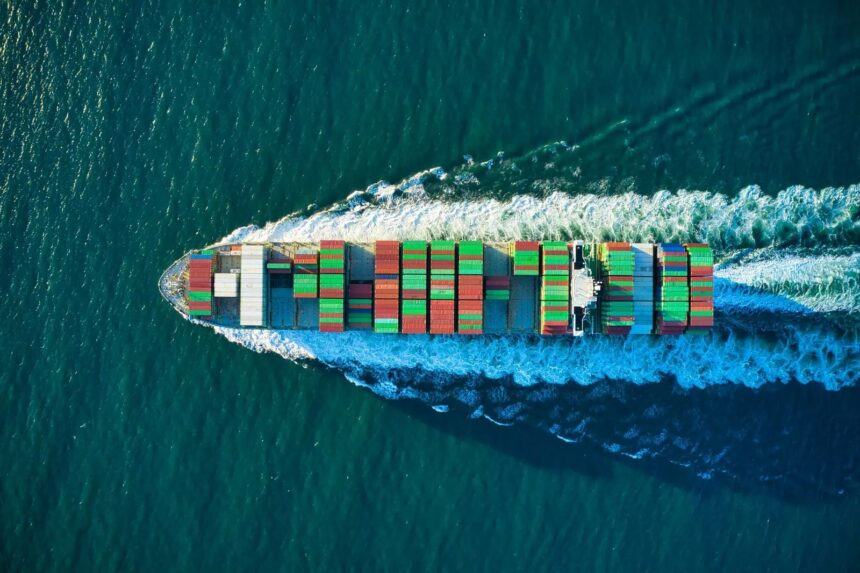
Image: Photo by Venti Views on Unsplash
2,500 kilometres – a drive from Astana to Almaty and back (or from Madrid to Copenhagen) – is the average distance that can be saved by using the Middle Corridor to transport goods from China to Europe and vice versa, when compared to the Northern Corridor cutting through Russia. The Middle Corridor has been an important economic artery through Eurasia for millennia, facilitating commerce and fostering cultural exchange.

Countries along the corridor and businesses engaged in trade between Europe and Asia have reason to be excited about the opportunities that the Middle Corridor presents. After all, trade between China and Europe is valued at $600 billion a year. Cutting through Central Asia, the Caspian Sea – the largest lake on the largest continental landmass on earth – and the South Caucasus, the Middle Corridor is the shortest route from China’s Pacific coast to Europe.

This route has the potential to reduce journey times by several days. Freight transported from Shanghai to Europe could take 10 days along the Middle Corridor, compared to up to 20 days on the Northern Corridor or 45 to 60 days by sea. Apart from its time-saving benefits, the Middle Corridor could also boost trade among transit countries, strengthen regional integration and promote economic diversification.

The Middle Corridor grows in popularity

The numbers speak for themselves. In 2022, the route saw record growth, with the volume of cargo transportation increasing by two and a half times to 1.5 million tons. In the first quarter of this year, the volume of railway freight increased by over 60% to 433,000 tons. While these numbers and developments are highly encouraging, one needs to highlight that trade through the Middle Corridor currently represents less than 10% of total cargo transported via the Northern Corridor.

To realize the full trade potential of the Middle Corridor, the existing parts of the route must be revamped and new investments for a future-proof transport route are needed. Leaders from the public and private sectors need to work together to address limitations in terms of soft and hard infrastructures and place a special focus on green and digital transitions.

An appetite for investment

The appetite in the countries on the corridor for these investments is clearly there and important steps have been taken to leverage the route’s potential. At the ministerial meeting on Trans-Caspian connectivity in Aktau in November 2022, participants signed a roadmap to increase the throughput capacity of the Middle Corridor to 10 million tons per year by 2025. At the same time, effective public-private partnerships are being forged with European logistics companies, such as Denmark’s Mærsk, Austria’s Rail Cargo Group, Finland’s Nurminen Logistics and the Dutch Rail Bridge Cargo, all taking actions aimed at increasing cargo turnover along the route.

It is critical that the intended upgrades on the corridor’s physical infrastructure make use of the digital and green transitions.

For the largest transport segment along the Middle Corridor railways are the main means of transport. As both the public and the private sectors aim to expand and rehabilitate the railway infrastructure, it is crucial that these railway connections are electrified to ensure a net-zero rail network. For the shipping of cargo through the Caspian Sea, increased investment in clean energy technologies and associated infrastructure will be essential to decarbonise shipping. With its Getting to Zero Coalition, the World Economic Forum is working with around 200 stakeholders from across the shipping and fuels value chain towards the aim of net-zero shipping.

Soft infrastructure also needs to be addressed. Customs procedures will need to be harmonised and simplified to make the route more attractive for new partners. Taking advantage of the digital transition will be key here. The introduction of electronic queues at checkpoints and seaports to reduce waiting times at borders or the introduction of electronic transit documents are examples of the removal of non-tariff barriers. It is a promising sign that representatives from the Middle Corridor countries are already aiming to ease these barriers to trade.

The opportunities are immense and the will from public and private actors is clear. It is time to move the Middle Corridor from pathway to highway.

Mirek Dušek

Bildschirmfoto 2023-06-15 um 19.39.01

You Might Also Like

Azerbaijan bolsters role as regional aviation hub with National Airspace Strategy

Azerbaijan at the crossroads of global routes: a reliable transit hub

The Iran conflict is stress-testing Central Asia’s southern corridors

Heydar Aliyev International Airport achieves another milestone in global rankings

Why Central Asia cares about the Middle Corridor–South Caucasus TRIPP route

AzeMedia June 23, 2023 June 9, 2023

New articles

148898 AAfileIranAzerbaijan
Iran’s Caspian signaling and the boundaries of regional alignment
Opinion April 1, 2026
Tumblr 7785d4993072edee15c5f76f97426150 cbc66783
No talks with revanchists: what Armenians will have to pay for
Opinion April 1, 2026
FzXmfsHpncSf7mjEilSDOohDU3PyMoxbiG63JOjQ
ING Group: Azerbaijan’s external economic position remains very strong
News April 1, 2026
69ca6321ec2b869ca6321ec2b9177487132969ca6321ec2b669ca6321ec2b7
Baku Initiative Group calls on UN member states to take practical steps on slavery resolution
News March 30, 2026
7YNXnb05zWpwunxmQWNmwxfqd6tq6osklTkNbHWo
Azerbaijan evacuated over 3,000 people from Iran to date
News March 30, 2026
Bildschirmfoto 2026 03 30 um 11.14.38
Turkey-Azerbaijan alliance strained by opposing stances on Israel
Opinion March 29, 2026
Screenshot
President Ilham Aliyev completely, directionally turned his country around – Steve Witkoff
News March 28, 2026
69c778d12350869c778d123509177468027369c778d12350669c778d123507
Azerbaijani oil price exceeds $124
News March 28, 2026
QJ9m9qaUTjKho4NQMQ4PTfRb7ykBAWVDMnL2UsSf
FAO offers Azerbaijan to develop five-year fisheries development plan
News March 28, 2026
577c9b7a tcxj78bkp11yulvvjs6gr
Türkiye and Azerbaijan sign media cooperation pact at STRATCOM summit
News March 28, 2026

You Might Also Like

BGi9AMqMIbMwYcNq9KJhFhRcksaeqyd2lZDzfwYh

Azerbaijan bolsters role as regional aviation hub with National Airspace Strategy

March 27, 2026 9 Min Read
69c56a595a9be69c56a595a9bf177454549769c56a595a9ba69c56a595a9bd

Azerbaijan at the crossroads of global routes: a reliable transit hub

March 26, 2026 12 Min Read
Image TCA Aleksandr Potolitsyn 260326 2 1.jpeg.png

The Iran conflict is stress-testing Central Asia’s southern corridors

March 26, 2026 13 Min Read
Img 5402jpg

Heydar Aliyev International Airport achieves another milestone in global rankings

March 22, 2026 2 Min Read
309503

Why Central Asia cares about the Middle Corridor–South Caucasus TRIPP route

March 17, 2026 12 Min Read
Middle Corridor

The Middle Corridor could replace the Strait of Hormuz for container transport

March 16, 2026 4 Min Read
Cctn5IAF ممر القوقاز 860x645

South Caucasus emerges as key corridor reshaping energy routes between Asia and Europe

March 16, 2026 3 Min Read
WhatsApp Image 2026 03 02 at 12.06.38

Azerbaijan — the region’s key transit hub in times of war

March 2, 2026 5 Min Read

Useful links

426082d1 a9e4 4ac5 95d4 4e84024eb314 pojkz91103g6zqfh8kiacu662b2tn9znit7ssu9ekg
Ab65ed96 2f4a 4220 91ac f70a6daaf659 pojkz67iflcc0wjkp1aencvsa5gq06ogif9cd0dl34
96e40a2b 5fed 4332 83c6 60e4a89fd4d0 pojkz836t9ewo4gue23nscepgx7gfkvx6okbbkasqo
759bde00 a375 4fa1 bedc f8e9580ceeca pq8mvb9kwubqf6bcadpkq5mz16nayr162k3j2084cg
aze-media-logo-ag1

We are a unique political and socio-cultural digest offering exclusive materials, translations from Azerbaijani media, and reprints of articles from around the world about Azerbaijan.

  • Privacy Policy
  • Terms and Conditions
  • Cookies Policy

Email: editor@aze.media

© 2021 Aze.Media – Daily Digest
aze-media-logo1 aze-media-logo-ag1
Welcome Back!

Sign in to your account

Lost your password?