Over the past five to six years, Azerbaijan’s gravitation towards east has manifested in various formats, including Organization of Turkic States (OTS), Shanghai Cooperation Organization (SCO), Economic Cooperation Organization (ECO), as well as strategic partnerships with China, Vietnam and other Asian states. Whereas in the 1990s, Azerbaijan devoted most of its foreign policy endeavors to European institutions, the subsequent geopolitical events and especially the former conflict with Armenia prompted Baku diversify its portfolio.
Central Asian states are natural partners for Baku. In addition to historical, religious, linguistic and cultural ties, Azerbaijan shares a common history within the former Soviet Union. Beyond these links, the countries are increasingly connected through emerging geo-economic projects, particularly in energy, transport, and regional infrastructure development. These multifaceted connections, reinforced by geopolitical imperatives – such as the need to balance global powers and secure regional stability – have paved the way for deeper and more sustained cooperation between Azerbaijan and the Central Asian states. Azerbaijan’s active participation in the C5 summits of Central Asian leaders in recent years exemplifies this trend.
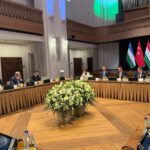
Azerbaijan was invited to the C5 summit for the first time when it was held in Dushanbe, Tajikistan on 14-15 September 2023. President Ilham Aliyev took part as the guest of honor at this consultative meeting. This was followed by the second consultative meeting in Kazakhstan on 9 August 2024, where Azerbaijan again attended as the guest of honor. Azerbaijan’s participation at the meeting for the second consecutive year underscored not only the urgency of deeper cooperation within Central Asia but also the increasing significance of the South Caucasus as a strategic gateway connecting the region to European markets.
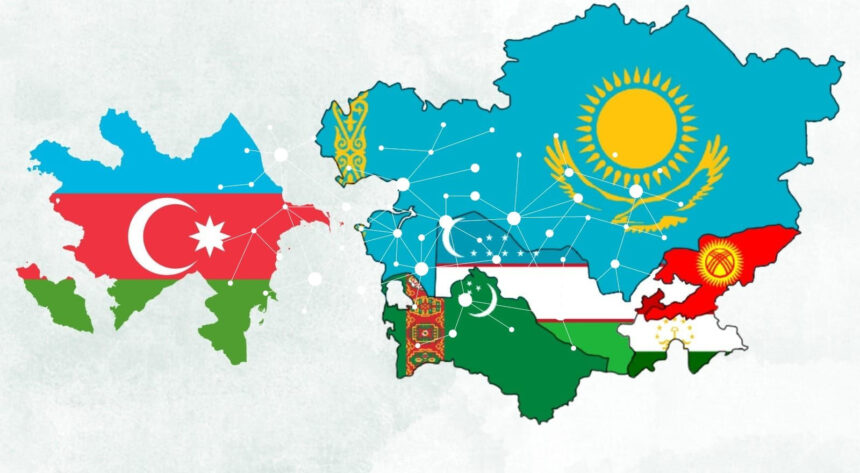
Now, official Baku ponders about serving not merely as a distinguished partner to the five Central Asian republics, but as the sixth node that transforms “5+1” into a six‑state platform for shared prosperity and strategic resilience.
Azerbaijan’s introduction of the “5+1” concept underlines its positioning as an integral complement to the five Central Asian republics – Kazakhstan, Uzbekistan, Turkmenistan, Kyrgyzstan, and Tajikistan – by leveraging its strategic geography and economic infrastructure. Anchored on the Caspian’s western shores, Baku offers vital transit corridors—through rail, road, and maritime networks – that serve as lifelines connecting these landlocked nations to Black Sea and Mediterranean ports. In doing so, Azerbaijan has positioned itself as a strategic “gateway,” enabling Central Asia not only to expand its market access but also to diversify transit routes beyond the constraints of Russian infrastructure.
Azerbaijan’s collaboration with Central Asia reflects a shrewd geopolitical calculation. Since the early 2000s, Baku has avoided alignment with either the Russo‑centric space or Western blocs, instead cultivating autonomy through pragmatic partnerships. Central Asia – linked via shared heritage and geopolitical interests – has emerged as an ideal strategic partner, enabling mutual diversification in security, energy, and economic spheres.
Central Asia itself is gravitating toward institutionalized cohesion – through formats like regular summit consultative mechanisms, ministerial dialogues, and trilateral arrangements, including the Trans‑Caspian cooperation among Azerbaijan, Kazakhstan, and Uzbekistan as well as the recent summit between Azerbaijan, Turkmenistan and Uzbekistan. By expanding such collaborative frameworks, Azerbaijan demonstrates that it is no longer C5+1 but rather six-states platform which is setting the stage for a more robust, economic integration with geopolitical autonomy.
Quite a volume was written in the recent years about the Turkic unity. Within the Organization of Turkic States (OTS), Azerbaijan already plays a central role – utilizing its geostrategic location, economic capabilities, and political dynamism to support connectivity and multilateralism. The OTS, with five full members – Azerbaijan, Kazakhstan, Kyrgyzstan, Türkiye, and Uzbekistan – has been steadily institutionalizing high‑level cooperation across politics, economy, security, and culture, and now aspires toward the “Turkic World Vision 2040”.
Azerbaijan has also developed ties with Tajikistan, the only non-Turkic speaking country in Central Asia. As a Persian-speaking nation with deep historical and cultural linkages to both the broader Persianate world and the Turkic space, Tajikistan requires a nuanced approach in the “5+1” dialogue. Baku has managed this skillfully, focusing on pragmatic interests such as connectivity, trade, and energy, rather than purely cultural rhetoric. In recent years, joint initiatives in logistics, agriculture, and energy have gained traction. For instance, enhanced collaboration in the Lapis Lazuli Corridor and Baku International Sea Trade Port facilities has opened opportunities for Tajik exporters to diversify and stabilize their trade flows.
Moreover, Azerbaijan’s soft-power engagement with Tajikistan is gradually expanding. Academic exchanges, joint research projects, and cultural programs signal a willingness to integrate Tajikistan into a broader Eurasian connectivity network without pressuring it to conform strictly to the Turkic unity narrative. This pragmatic flexibility underscores Azerbaijan’s ability to build bridges beyond identity politics, ensuring that the evolving six-state platform remains inclusive and adaptive to the region’s diverse historical and linguistic realities.
Much of progress within C5+1 framework has been driven by increased cooperation among Central Asian states. The regional cooperation had previously been hindered by Kyrgyz-Tajik border conflict, Kazakhstan-Uzbekistan rivalry, and Turkmenistan’s isolationism or more formally its policy of neutrality. However, all three factors have changed. Kazakhstan and Uzbekistan signed an important agreement on cooperation in December 2022, Tajikistan and Kyrgyzstan resolved border dispute in March 2025, and Turkmenistan, while preserving neutrality status, has pursued more active regional engagement.
In the meantime, beyond the Caspian region, Russian invasion of Ukraine, conflicts in the Middle East, the US-China competition have made the Central Asian states and Azerbaijan seek greater understanding on intraregional trade and cooperation. These factors were compounded by the Russian subtle threat against Caspian states’ territorial integrity, independence and ethnic identity.
In the 1990s, Azerbaijan, a landlocked country, made two pivotal decisions. First, then-president Heydar Aliyev sought to integrate the country’s economy with that of the West through greater partnership with Western companies. This culminated in the signing of a so-called “Contract of Century” in 1994. Second, he prioritized routing oil and gas pipelines via Türkiye to European directions. These steps enabled Azerbaijan to achieve greater geopolitical autonomy as compared to Kazakhstan and Turkmenistan, which remained dependent on the Russian energy network. The incumbent leader Ilham Aliyev, while continuing the Europe-focused energy policy, has also initiated a strategic pivot towards East.
Today, Azerbaijan’s investments in the Middle Corridor and trans-Caspian transport infrastructure offer Central Asia crucial access to European and Turkish markets, bypassing traditional dependency routes.
In addition to transport, energy cooperation has become a cornerstone of Azerbaijan’s growing engagement with the Central Asian republics. In January 2025, Azerbaijan, Uzbekistan, and Kazakhstan signed a memorandum of understanding to deepen collaboration in the fields of energy transit, renewable energy development, and technological exchange. Beyond hydrocarbons, this partnership emphasizes joint research on renewables and investment in solar and wind technologies, supporting the region’s gradual transition toward a low-carbon economy. This synergy not only enhances regional energy security but also positions the emerging six-state format as a credible energy hub bridging East and West.
Azerbaijan’s six-states concept is more than a rhetorical device – it embodies a strategic vision of regional leadership, anchoring Central Asia into a broader Eurasian framework. To realize this transformation, however, stakeholders must move beyond bilateral symbolism and invest in institutional mechanisms, shared initiatives, and infrastructure – allowing the six states to become greater than the sum of their parts. Azerbaijan stands ready, not as an outsider linking to Central Asia, but as an intrinsic partner transforming traversing lines into a unified regional pathway.