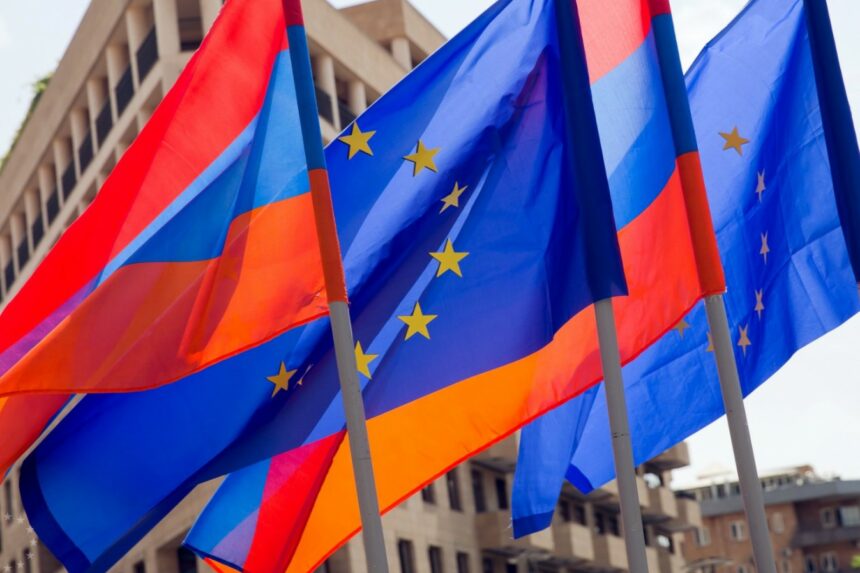
According to the European Council press release, the mission is to contribute to stability in the border areas of Armenia and ensure an environment conducive to normalization efforts between Yerevan and Baku.
The Ministry of Foreign Affairs of Azerbaijan has already cautioned in its statement that “in a series of consultations held at various levels with EU representatives, it has been communicated by Azerbaijan that engagement of EU in Armenia through a mission must not serve as a pretext for Armenia to evade fulfilment of undertaken commitments”, stressing that “exploitation of such a presence of the EU against the already existing dialogue mechanisms is detrimental and must be avoided.”
Those familiar with the diplomatic speak are well aware that such wording appears in official documents when there is a real risk of disruption of political dialogue.
Indeed, after the Prague talks there were many statements to the effect that the EU mission to the South Caucasus would be a short-term one, and its staff would be assessing the situation only in Armenia. The course of the negotiations and especially the actions of France, however, leave no doubt that although the mission was called short-term and “temporary”, its main objective was not prompt monitoring of the situation in the region but rather a long-term “penetration” into the South Caucasus, making the “short-term” mission permanent. In full keeping with the Soviet political humor, “nothing is more permanent than the temporary”. And the EU Council’s decision to send a “long-term” mission to Armenia confirmed this once again.
It is also clear that the plans to deploy a “long-term” mission are unacceptable for Azerbaijan, and this was brought to the attention of the EU leadership even during the Prague meeting. First of all, our country was and is for the delimitation and demarcation of borders, but not for cosmetic measures like “short-term missions” and “long-term missions”, etc. Azerbaijan and Armenia need a full-fledged peace agreement, rather than a show of activity by the international bureaucracy with all kinds of “short-term”, “long-term”, “monitoring” or other missions, which will enable Yerevan to continue “skipping” the implementation of specific agreements, drag out the process of border delimitation and demarcation and freeze the conflict status of the region. And this is very much “Eurodoping” for local revanchists.
What is even more unacceptable for Azerbaijan is that the comb of the “French rooster” is sticking out too obviously behind this whole game. As it is being kicked out of its former African colonies, its traditional sphere of interest (just recently Burkina Faso authorities ordered the French contingent to leave the country within a month), official Paris is making neocolonialist plans for the South Caucasus. Where its main “proxy”, favorite and “little sister” is Armenia. Let’s be realistic: the very decision to send a long-term mission to Armenia already contradicts the results of the EU-brokered negotiations and especially the Prague meeting. Once again, in Prague, the parties were talking about a short-term, one-off mission.
With this background, sending the EU mission will escalate tensions rather than stabilize the situation. Not to mention that such unilateral and ill-advised, putting it mildly, steps by the EU jeopardize the mediation mission of President of the European Council Charles Michel.
Another point. Obviously, many in the European Union consider a mission to Armenia as part of a bigger game. Sending an EU mission to Armenia, a member country of the CSTO and the EAEU, is a clear dig” at Russia. And it is quite possible that certain groups in the West consider this mission as part of the plans to squeeze Russia out of Armenia and out of the region in general. After the events in Ukraine, these games in the South Caucasus are another humiliation for Russia. Even if we take Ukraine out of the equation, Russia is losing effective leverage over even a country like Armenia. And the West is quite successfully making another move to “encircle” Russia along its borders. Perhaps this is where we should look for the roots of the concern over the “EU mission” articulated by Russian Foreign Minister Sergey Lavrov, who said that it would not contribute to stabilization. Finally, the fact that the EU is taking its time to publish the text of the decision to send the mission to the EU gives some food for thought. Many experts believe that there are paragraphs in the text that would cause Moscow’s understandable irritation. This is why they are keeping it secret as best they can.
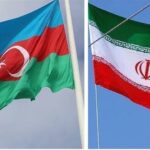
Iran’s silence is all the more curious. Iran regularly looks for the presence of mythical “third forces” in Azerbaijan, but while European observers are being deployed in Armenia, just outside of the Iranian border, it arranges another series of “cuddles” with Yerevan, starting with the visit of Anna Hakobyan and ending with the “twinning” of Tehran and Yerevan. Against the background of the EU’s decision to recognize Iran’s IRGC as a terrorist organization, this friendship looks particularly risqué.
But it appears that Europe, and Paris in particular, assesses the regional agenda solely based on the World War I scenario.