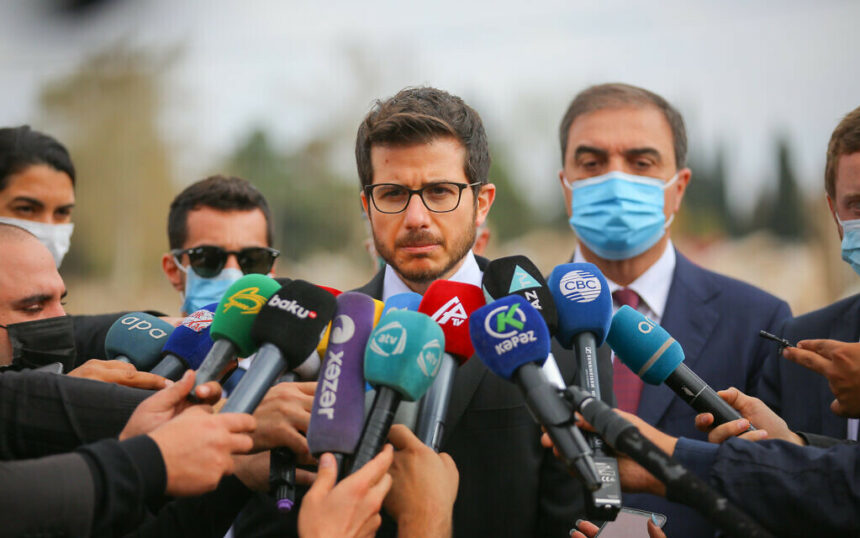
In an era when the shadow war between Jerusalem and Tehran risks coming out of the shadows, Iran’s neighbor to the north, Azerbaijan is upgrading its relations with the Jewish state.
In late December, Azerbaijan — which already has close security ties with Israel — announced the appointment of its first-ever ambassador to Israel, just over a month after the Azeri parliament voted to open an embassy in Tel Aviv in 2023. The role will be filled by Azerbaijan’s Deputy Education Minister Mukhtar Mammadov. Azerbaijan is the first Shi’ite Muslim country to take such a definitive step.
Coinciding with the announcement, Azerbaijani long-time President Ilham Aliyev stated in a letter to Prime Minister Binyamin Netanyahu, “We attach special importance to Azerbaijan-Israel relations.”
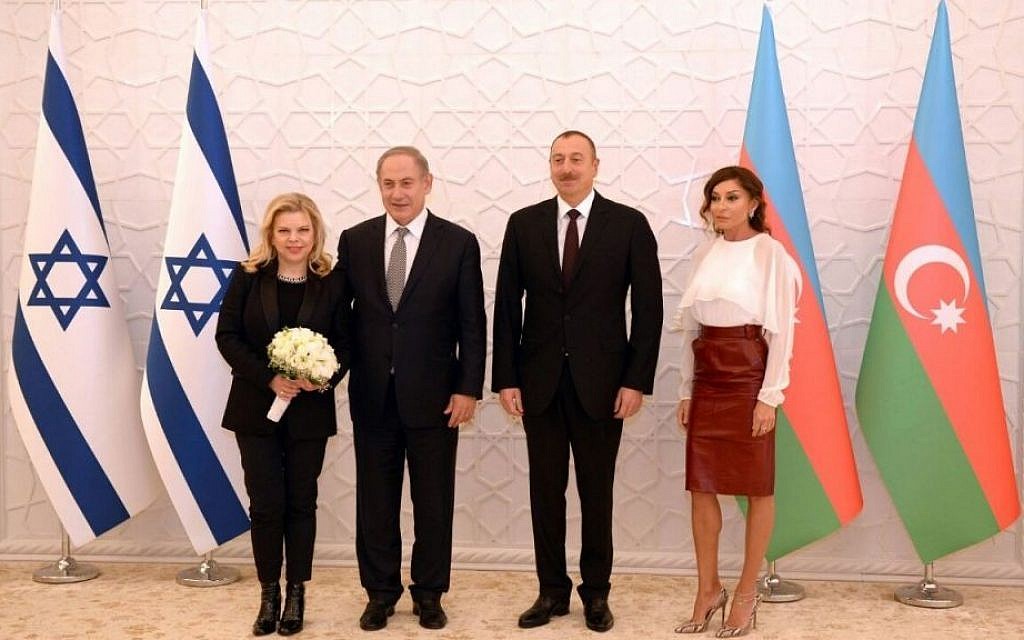
Many people in both countries say the Azeri embassy opening is long overdue given the extent of bilateral relations and Israel’s steadfast support for Azerbaijan in its long-simmering conflict with its neighbor and arch-nemesis, Armenia.
The Jewish state — where some 50,000 to 70,000 former Azeri Jews now live — also continues to be one of the top suppliers of arms to Azerbaijan. It’s no secret that Israel, by way of drones and artificial intelligence, is helping in the demining of the Karabakh region, where the Armenians planted an estimated 1 million mines before the 2020 war.
Sandwiched between Russia and Georgia to the north and Iran to the south, with Armenia to the west and the Caspian Sea to the east, Azerbaijan sits in a complex region with deeply-rooted history. It’s home to 10 million people, including 8,000 to 20,000 Jews, making it one of the largest Jewish communities in the Muslim world. (Exact numbers for the Jewish community are difficult to pinpoint, as many Azeri Jews live abroad in Russia or Israel part-time.)
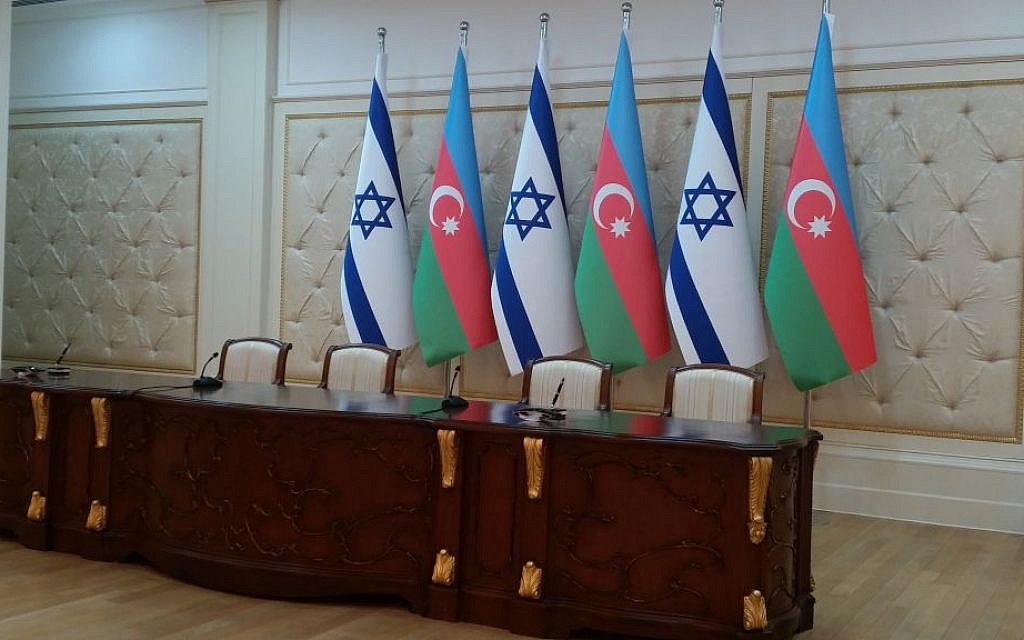
Unlike their counterparts in other Diaspora communities, Jews in the oil-rich, secular country have never experienced hostility or persecution. Today they continue to live without fear of antisemitism or threats to their safety, as reflected in the total absence of security measures at their synagogues, day schools and other community institutions. Local Jewish leaders insist such protection is unnecessary in the former Soviet republic.
But the country also faces fierce criticism on the world stage for its lack of democratic freedoms, amid allegations of rampant human rights abuses and media censorship. The authoritarian Aliyev family has led the country since 1993, and current president Ilham Aliyev succeeded his father Heydar Aliyev after the latter’s death in 2003 in an election widely seen as fraudulent.
Azerbaijan ranks 9/100 on a Freedom House democracy index — 10 spots below Russia, which ranks 19/100 on the same index, and Reporters Without Borders places the country near the bottom of its list for media freedom, at 154/180, just one spot above Russia.
At home, Israel is criticized by its 5,000- to 6,000-strong Armenian community for its close relationship with Azerbaijan, as well as its refusal to officially recognize the Armenian genocide perpetrated by the Turks in 1915-1916.
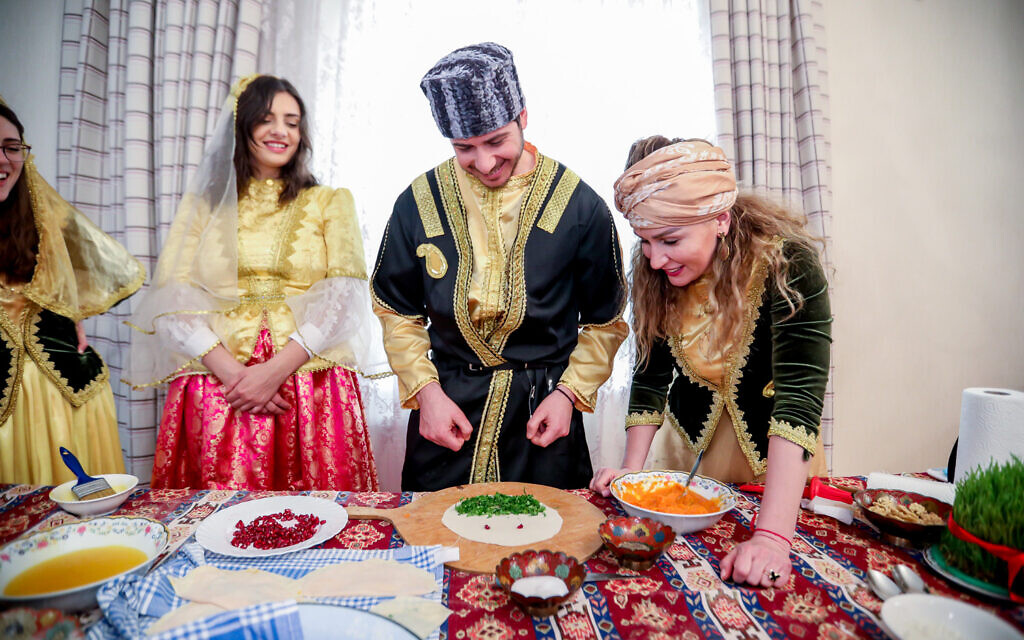
Still, Israel’s ambassador to Azerbaijan, George Deek, warmly welcomed his host country’s decision to improve diplomatic relations with Jerusalem, especially at a time when bilateral trade, tourism and cultural and scientific ties are growing. Significantly, for many years, Baku has supplied Israel with approximately 40% of its oil needs.
When he began his current position in 2019, the now-38-year-old Deek was Israel’s youngest and first Arab Christian ambassador. Noting that he’s the Israeli diplomat situated the closest to Tehran, Deek takes pride in Israel’s positive standing in Azerbaijan, citing a survey commissioned by his embassy last spring showing that over 70 percent of respondents said they had a very or somewhat favorable view of Israel.
But the proximity to Tehran comes with its dangers: Last summer, Iran’s ambassador in Baku publicly threatened to “bury” the Israeli ambassador.
Born in Jaffa, Deek was an attorney in Tel Aviv specializing in international law before joining Israel’s foreign service in 2008. He has been a voice defending Israel abroad in Hebrew, Arabic and English, starting with his first foreign posting as deputy chief of mission to Nigeria from 2009 to 2012. He then served as deputy ambassador to Norway from 2012 to 2015, and later was an adviser to the Israeli Foreign Ministry’s director general.
Speaking in his seventh-floor office in Israel’s embassy situated next to the Hyatt Regency Hotel in Baku, Deek told The Times of Israel that the importance of his diplomatic mission goes beyond its symbolic value.
“If you don’t have an embassy on the ground, it limits what you can achieve and the level of engagement,” said Deek.
The following interview has been edited for clarity and length.
The Times of Israel: When you meet Azeris and they discover you’re an Arab Christian, what kind of reactions do you get?
George Deek: Naturally, it’s surprising and confusing for most Azeris. The sense of surprise is great for helping me explain about the diversity of Israeli society. But frankly, at this point, I’ve stopped correcting them because it gets tiring. It’s still funny when on December 24, they still wish me a Happy Hanukkah rather than Merry Christmas.
As an Israeli Christian, what’s your perspective on the Armenian community — which consists mainly of fellow Israeli Christians — and the challenges they face in Israel, both in connection with the Jerusalem-Baku relationship and with other non-related issues?
I have deep sympathy for the Armenian community in Israel, and specifically in Jaffa, where I grew up. We share the same faith and many cultural traditions. Many of my friends from school and from youth movements are Armenian. I had teachers who influenced me immensely who are Armenian, and I consider them as close friends.
As an Arab and an Israeli, I am always deeply frustrated when I see others treat the Arab-Israeli conflict as a zero-sum game, where you have to pick sides. I know firsthand that there are real people with real lives here, it’s not a game. For that reason, I’m also very saddened when such an approach is applied to the conflict in the South Caucasus. It’s not a zero-sum game, and wanting better relations between Israel and Azerbaijan isn’t aimed against anyone. On the contrary, we wish to see the day that Armenian and Azerbaijani children will once again enjoy peace and prosperity living side by side as good neighbors.
How did Azeris react to the announcement about opening an embassy in Israel?
The public reaction in Azerbaijan to such a historic decision has been extremely positive, as expected. High-level political figures in the country told me it’s the first time they’ve seen such emotional reactions to a decision to open an embassy. According to one survey, an overwhelming majority of the people — 80% to be exact — supported the resolution by the National Assembly. I think Azeris also felt it’s long overdue.
Have Israeli-Azeri bilateral ties changed over the past five years?
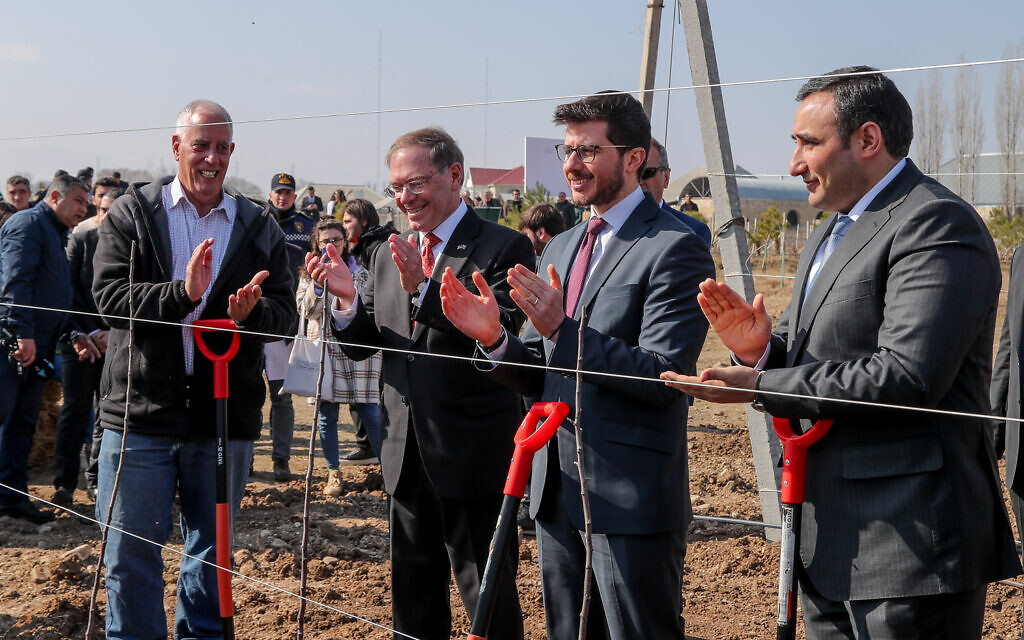
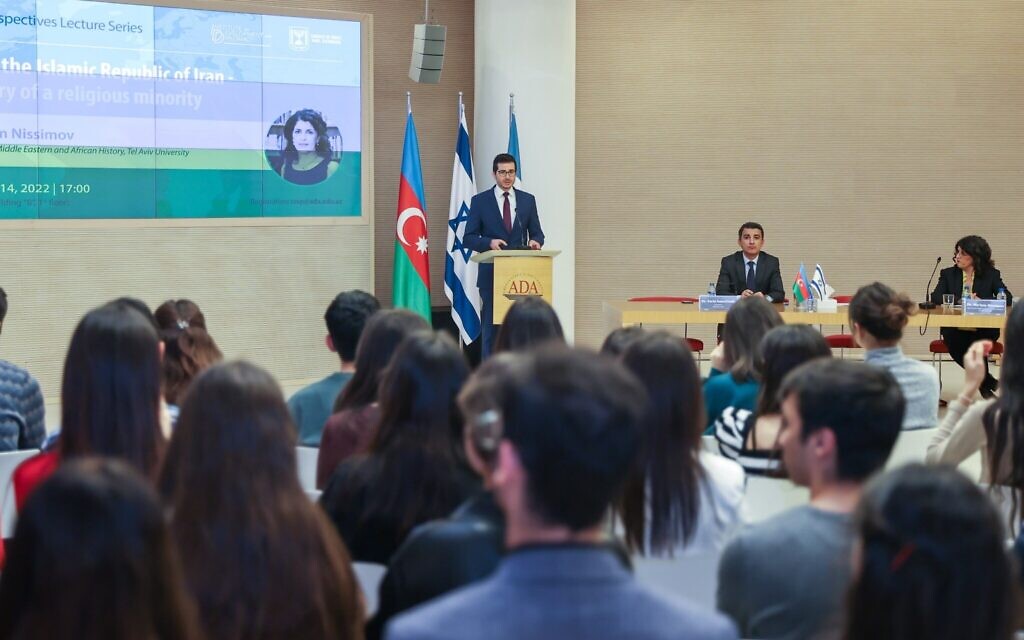
Our relations have evolved from being government-to-government to being people-to-people. If in the past, most of our relations were covert and focused on either security or energy, in the last several years we’ve completely diversified our relations. In 2016, only 10,000 Israeli tourists visited Azerbaijan, while in 2019 that number had increased to 50,000. So the trend was clear until the pandemic halted it. Today, the tourists are starting to return in large numbers with more scheduled flights between Israel and Azerbaijan planned for the coming months, and we see a similar increase in trade and economic affairs, in arts and culture, and in the academic sphere.
From your vantage, how do you explain the absence of antisemitism in Azerbaijan?
Azerbaijanis have mostly lived under big powers, such as Russia, Persian empires and others. So they know what it means to be a minority, to be different. Therefore, I think it’s easier for them to put themselves in the shoes of minorities. They have a minority mentality, and that’s a very good thing. This in addition to an already well-established history of good relations with the Jewish community here that has created fertile ground for mutual tolerance and friendly coexistence.
Do you think most Israelis are aware of Azerbaijan’s record regarding its Jewish citizens?
I sure hope so. I always used to tell my Azerbaijani counterparts that in the absence of an embassy in Israel, there’s nobody to tell their story there and explain what Azerbaijan is about. Hopefully, that will now change with the decision to open the embassy. They will finally have a representation and a voice in Israel.
Most Azeri non-Jews make little or no distinction between Jews and Israelis. How does that manifest itself in Azeri society?
Azerbaijanis understand that Israel is the Jewish state, so naturally for them every Jew has a home there and a sense of belonging there. I think that because Western-style anti-Zionism has thankfully not reached Azerbaijan, they do not have the urgency to differentiate between the Jewish state and the Jewish people. That’s usually something used as a tool for those who say, “I have no problem with Jews, I have a problem with the Jewish state.” I’m not saying they shouldn’t differentiate between Jews and Israel as a matter of accuracy, but only that there was no practical need for it because there’s neither antisemitism nor anti-Zionism here.

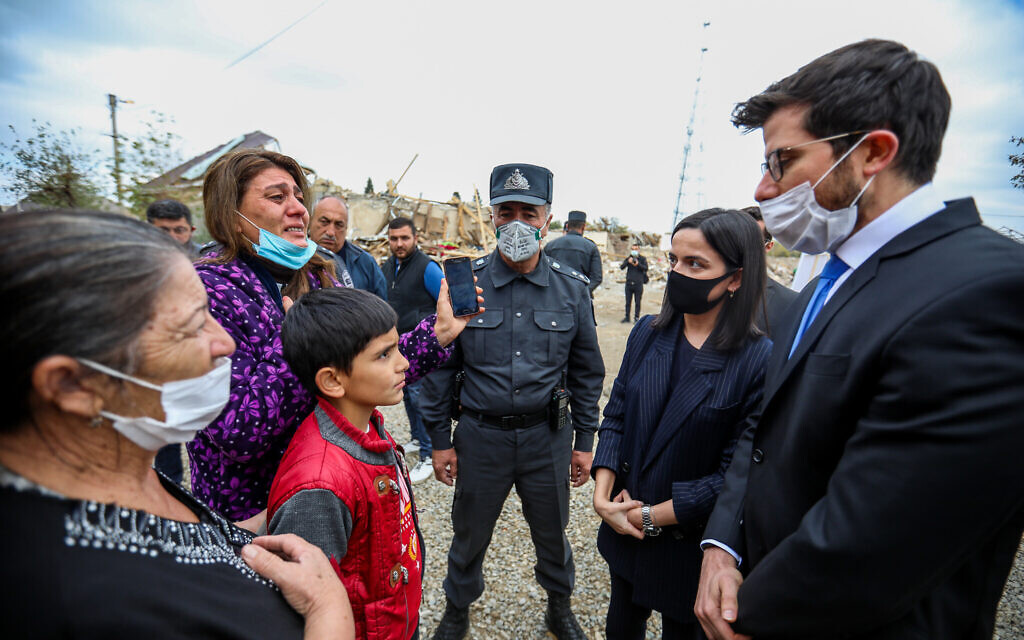
During the 2020 war between Azerbaijan and Armenia, you visited a residential neighborhood in the city of Ganja — a four-hour drive from Baku — shortly after it was attacked by Armenian missiles, making you the first foreign diplomat to arrive there in support. What prompted you to go to such lengths?
As an Israeli, I know what it means to live as a civilian trying to lead a normal life with the fear of rockets falling on your head, or hurting your family and loved ones. So, instinctively I wanted to go there. Even before that attack, I had engaged our government and got them to donate humanitarian supplies and equipment for the survivors who lost their homes in previous Armenian missile attacks.
Was it that particular attack that made up your mind, or had you already decided to go?
I actually made my decision a day before the major missile attack hit the city on October 17, 2020. It fell in the middle of a residential neighborhood there, killing many civilians and wounding others. I didn’t want to just send humanitarian supplies and equipment to the residents from afar. I wanted to meet the people in person and tell them how much we felt for them in those difficult days and to express our condolences for the victims.
Were you concerned for your safety given the war was still raging?
Of course, I was afraid. On our way to Ganja, we were hearing reports of more missiles launched [from Armenia]. Keep in mind that where we were going, there were no bomb shelters, nowhere to hide. But once I made the decision to go there, nothing else mattered. All I could see were the people and their pain. In talking to them at the site of the destruction, in the temporary shelters, in the streets, I heard stories that made me shiver. But I also saw hope, that houses that were destroyed would be rebuilt and those whose lives were shattered were determined to recover. That strength, that hope, gave me the power and the energy to keep going.
How did Azeris respond?
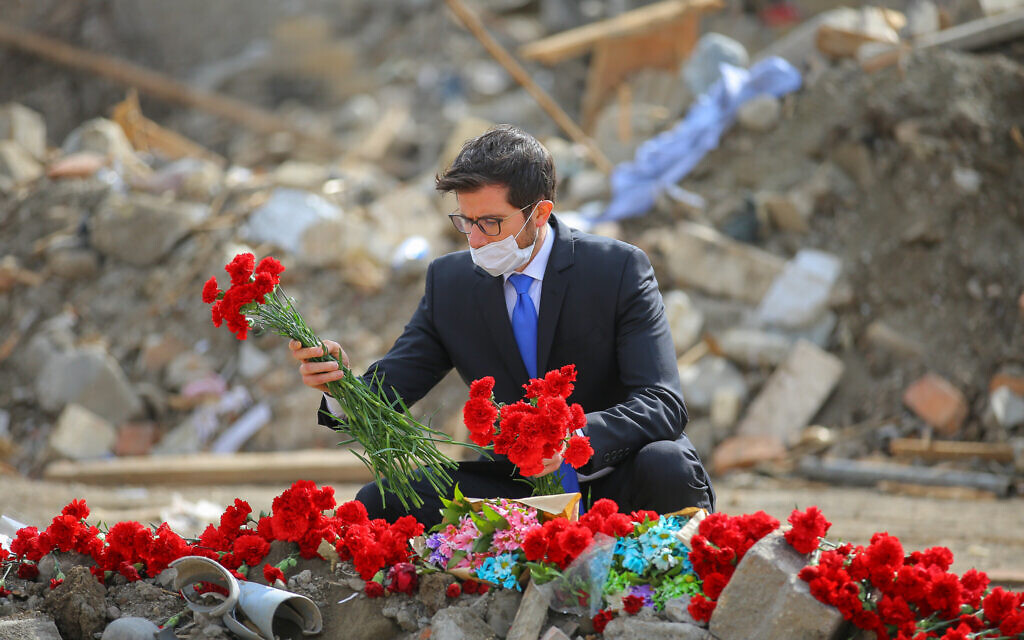
The reactions were incredible. I didn’t see it coming. Until today, people still refer to my visit as a turning moment in the relations between our two countries, because Israel showed we were there with Azerbaijan at a time of need. For them, it was proof of a real friendship. It was a hallmark moment in my diplomatic career. The picture of me laying the red roses at the remains of the buildings that had been destroyed in the missile attack became iconic and was even featured in videos of songs written about the war. For me, it will always be unforgettable.
In late July, it was widely reported in the media that your Iranian counterpart in Baku denounced you publicly as an “evil Zionist” and threatened (Hebrew link) to “bury” you after you posted a photo of yourself on Twitter reading a book titled “Mysterious Tales of Tabriz.” Did his threats have any impact on you?
Iran has proven it’s the number one terror-sponsoring country. They’ve tried relentlessly to attack Israelis, directly or through proxies. In the last few months, we’ve seen it in Turkey and in Georgia. In the past, there were published reports about attempts against Israeli ambassadors and diplomats, including in Baku. The point is that’s the kind of regime they are, that’s what they do. As an Israeli ambassador, I have a task and a mission, and no threat will divert me from that. I also have to commend the Azerbaijani government for taking these and other threats very seriously.
Robert Sarner
The writer was part of a delegation of Canadian journalists who were invited to Azerbaijan by the Toronto-based advocacy group, the Network of Azerbaijani Canadians.