The statement by President of the European Council Charles Michel also touches upon the issues of humanitarian cooperation, communications, mine clearance and the missing persons problem.
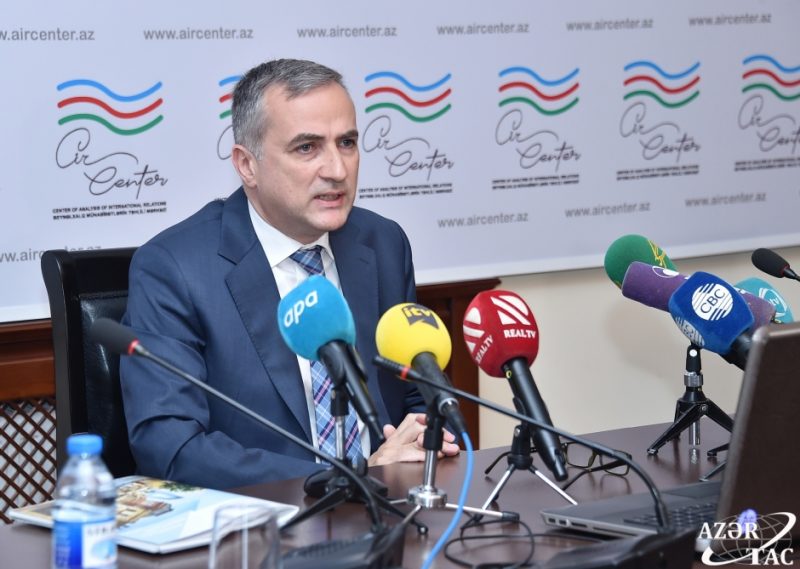
Farid Shafiyev, Chairman of the Board of the Center for Analysis of International Relations, said this in his interview with Day.Az, commenting on the trilateral meeting in Brussels on April 6 between President of Azerbaijan Ilham Aliyev, Prime Minister of Armenia Nikol Pashinyan and President of the European Council Charles Michel.
Shafiyev emphasized that the meeting had in fact addressed the key issues of the agenda between Azerbaijan and Armenia. The issue of the so-called status was not discussed, nor were there any references to the Minsk Group.
“These are, of course, positive developments. I also find it very important that all this is happening through the mediation of the EU. Apparently, a platform is being created in which the role of the EU as mediator will be significant. This does not preclude other mediation efforts, including those by Russia. But the problem is that the Minsk Group had a mandate on the Karabakh conflict, and today, we do not see any prospects for its work based on that mandate. In order to continue mediation, the group should have a new mandate, a new format. Then there is also a very serious question of how the United States, France and Russia see their joint work in the Minsk Group in the current situation. I ask diplomats of these countries that question but never get an answer,” Farid Shafiyev said.
According to him, the overall atmosphere of the Brussels meeting was positive. Most importantly, an agreement was reached for the first time that Azerbaijan and Armenia would work on the delimitation and peace treaty issues without mediators. This is the right thing to do, we should switch to a bilateral format, and the fact that there is a preliminary agreement to that effect is a very positive factor.
As for the further development of the situation, the analyst pointed out that it is difficult to make forecasts today. The process is influenced by domestic political situation in Armenia, as well as external geopolitical factors, particularly given the serious crisis caused by the events in Ukraine. It would therefore be wiser to refrain from making forecasts, Shafiyev believes.
“Last year, a trilateral commission was established to unblock communications, but Armenia torpedoed its work, and some negotiations began only at the end of the year. But there was no breakthrough, no concrete results were achieved, so Azerbaijan was forced to find an alternative route to Nakhchivan through Iran.
“Now it is up to the Armenian side. If you think about it, the peace agenda Azerbaijan is proposing with its five-point plan benefits not only us, but Armenia as well. Peace and cooperation in the region will be of nothing but benefit to Armenia. Look at what it has achieved in the last thirty years, at the state of its cities and its economy, at its declining population. This is a non-zero-sum game, that is, everybody wins here,” Chairman of the Board of the Center for Analysis of International Relations said.
Leyla Tariverdiyeva
Translated from Day.Az