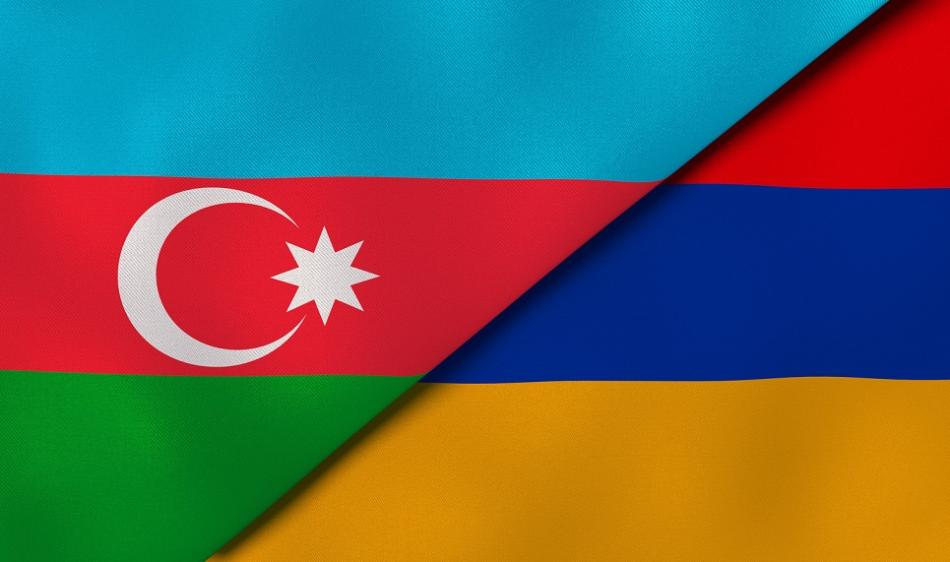
Azerbaijan resorted to military means after three years of Armenia dragging its heels on signing a peace treaty that accepted the Karabakh region is part of Azerbaijan, Russian obstruction, and Western negotiators taking a late interest in the South Caucasus only after Russia invaded Ukraine.
Armenians living in Karabakh were given the opportunity to remain and become citizens of Azerbaijan. This was the same offer given after the USSR disintegrated to millions living in other Soviet republics in January 1992. In Ukraine, some Russians, Jews, Poles, and other national minorities remained while others moved to other former Soviet republics or emigrated to Israel and Poland.
Contrary to Western media reports, the United Nations recorded no instances of human rights abuses of the Armenian minority. Azerbaijan’s military operation is very different to the early 1990s when three quarter of a million Azerbaijani’s were ethnically cleansed from Armenia and occupied Azerbaijani lands.
The closure of the separatist Karabakh republic completes the liberation of internationally recognised Azerbaijani territory that had been under Armenian occupation since 1994. The first stage of this process had taken place in 2020 when Azerbaijan defeated Armenia in the second Karabakh war.
The path is now open to Armenia and Azerbaijan signing a peace treaty that recognises the former Soviet republican boundary as their international border. The other Soviet republics underwent this process in the 1990s, but this escaped the South Caucasus because of Armenian nationalist irredentism and Russia playing off countries against each other.
A lasting peace treaty between Armenia and Azerbaijan will bring peace, security, and economic prosperity to the South Caucasus if four factors are taken into consideration.
Firstly, outside powers should not attempt to revive the OSCE Minsk Group, set up in 1992 with France, the US, and Russia, because it failed to negotiate a resolution to the conflict. Members of the OSCE Minsk Group failed to give the peace process serious consideration and insufficiently condemned Armenian war crimes in the early 1990s and the Armenian occupation of twenty percent of Azerbaijan.
Secondly, France cannot be involved in negotiations for a post-conflict peace treaty. With a large Armenian lobby, France has always, and continues to show, its bias towards Armenia by condemning Azerbaijan in 2020 and now for seeking the restoration of its territorial integrity. At the same time, France militarily supports Ukraine in the restoration of its territorial integrity.
Thirdly, during the last three decades the Kremlin has shown a preference for freezing conflicts in Moldova, Georgia, and Azerbaijan, to maintain a Russian military presence, and not to negotiate peace agreements. Russia’s duplicity was clearly seen over the last three years when it pretended to be a ‘peacekeeper’ in Karabakh but in fact satisfied neither Armenia or Azerbaijan.
Fourthly, the US, which ignored the OSCE Minsk Group under President Barack Obama and did not participate from 2010, would in an ideal world be a strategic negotiating partner but since the 1990s, US administrations have pandered to the large Armenian lobby. The Joe Biden administration has continued in this vein by condemning Azerbaijan in seeking to restore its territorial integrity. As with France, the US does not seem to understand how this represents double standards as Washington is the largest supplier of military aid to Ukraine which is fighting to also restore its territorial integrity.
With the OSCE Minsk Group, Russia, France, and the US unable to act as impartial or serious negotiating partners, the only viable negotiator for a post-conflict peace treaty is the European Union (EU). The EU began to take an interest in the South Caucasus quite late following Russia’s invasion of Ukraine in February 2022. Throughout the last two years the EU has attempted to bring Armenia and Azerbaijan together and a peace treaty was close to signing but the obstacle was always the status of Karabakh. In 2022, Armenia and Azerbaijan signed an agreement under the auspices of the EU that recognised Karabakh as part of Azerbaijan, but Russia intervened and sought to derail progress by sending Ruben Vardanyan, who became a billionaire oligarch in Russia, to Karabakh to challenge Prime Minister Nikol Pashinyan.
Prime Minister Nikol Pashinyan was not strong enough to take on pro-Russian Armenian nationalists led by the ‘Karabakh clan’. The hard-line pro-Russian ‘Karabakh clan’, led by former Presidents and Prime Ministers Robert Kocharian and Serzh Sargsyan, had ruled Armenia until the 2018 revolution (MerzhirSerzhin) brought Pashinyan to power.
Pro-Russian forces in Armenia supported Armenian separatist ‘self-defence forces’ and separatist political leaders in Karabakh by supplying them with military equipment and other forms of assistance. Karabakh Armenians feared terrible things that would happen to them if Azerbaijan took control of the region.
The return of Karabakh to Azerbaijan’s sovereignty frees Pashinyan’s hands to negotiate a peace treaty which he has pledged to sign by the end of this year. The pro-Russian ‘Karabakh clan’ are now at their weakest point in the last three decades, Karabakh separatist structures are disbanded, and its political and military leaders are either detained by Azerbaijan or have fled; meanwhile, Russia is no longer the great power hegemon in the South Caucasus.
A peace treaty should codify the Soviet republican boundary between Armenia and Azerbaijan as their new international frontier. After taking Azerbaijani citizenship, Armenians living in Karabakh should receive national minority rights.
There are multiple benefits to the South Caucasus of an end to three decades of conflict. This is especially the case for Armenia which could use the stability that will emerge from a peace treaty benefit to reduce its economic reliance on Russia, join regional energy projects, normalise relations with Turkey, and reduce spending on defence and security. Sensing regional stability and improving economic prospects, many of the Armenians living in Russia would return to live in Armenia.
For the last three years, Azerbaijan attempted to lobby for a peace treaty following the second Karabakh war, but the Karabakh question and Pashinyan’s domestic weakness prevented progress. The resolution of the Karabakh question, without a huge loss of life and human rights abuses, opens the way for a lasting peace in the South Caucasus that will be of benefit to all – but especially to Armenia.
Dr. Taras Kuzio is Professor in the Department of Political Science, National University of Kyiv Mohyla Academy and Associate Research Fellow at the Henry Jackson Society.