“Ecological security” is a much more appropriate phrase, implying that humankind and other species are parts of one complex system. In this report, the phrase “ecological security” is used.
“Environmental security” is focused rather on sustainable population growth, while “ecological security” focuses on all living organisms (including humans) and their interdependent security in the environment. “Ecological security” aims to maintain the physical environment of human society to meet the needs of the latter. “Ecological security” is much more than “environmental security” focused on the biodiversity of populations (including but not limited to humans) and resource competition between different species. “Ecological security” refers not only to people and communities, but also to other species, their populations and communities that make up full-fledged ecosystems in the full sense of the word. At the same time, ecological security continues to emphasize acknowledging the need to conserve non-renewable natural resources and finding alternative sources[1].
The human environment is only part of the natural environment. One of the most important aspects of studying complex human systems is the physical environment. Not only people transform this environment, but they are also transformed by it. The issue of the relationship between humans and the natural environment is particularly acute in the aftermath of natural disasters, as well as in the aftermath of man-made disasters. War is one of the latter. Therefore, one cannot ignore the issues of ecological security in Karabakh when it comes to the settlement of the conflict and peacebuilding in the region[2].
The lands of Karabakh, including not only the former Nagorno-Karabakh Autonomous Oblast (NKAO), but also the surrounding seven administrative districts of Azerbaijan, were recognized as an integral part of the territory of Azerbaijan by four resolutions (822, 853, 874 and 884) of the UN Security Council in 1993. This status has not changed, and even Armenia never recognized the so-called “Nagorno-Karabakh Republic”. Certain obligations of the Armenian occupation forces under international law follow from this fact. I will name some of them, but first we need to assess the ecological situation in Karabakh as it was before the outbreak of the recent hostilities.
I would like to draw attention to these issues and highlight some of them. These issues are technically and legally separated from possibly more important humanitarian issues, such as, for example, the ethnic cleansing of hundreds of thousands of Azerbaijanis during the First Karabakh War by forces controlled by the Armenian SSR and its political successor, the Republic of Armenia. Here we can also mention the problem of the destruction of cultural heritage, which is a violation of the international law of war and occupation. But in general, these issues will remain outside the scope of this study and I will focus on issues such as land use, forestry, water resources, and so on.
In my brief report, I point out only some of the key points that require further and deeper development. First and foremost, expert missions should be sent to Karabakh itself to assess the new situation after the cessation of hostilities. Unfortunately, their work will be complicated by the Armenian side’s continuing refusal to hand over the maps of landmines planted over the past thirty years. This clearly can be regarded as a violation of international humanitarian law. I confine myself here to the reports of international observers and actions of international organizations.
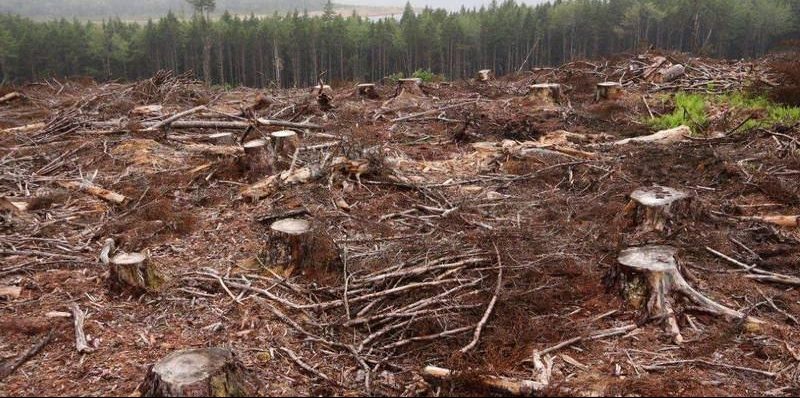
- A report prepared jointly by the Organization for Security and Cooperation in Europe (OSCE), the United Nations Development Program (UNDP) and the United Nations Environment Program (UNEP) over 15 years ago, in October 2004, assessed the consequences of the occupation as representing a major challenge for the environment and security of Azerbaijan. The report highlighted the long-term impacts of overuse of pasture, deforestation, stockpiling of waste, and irrational use of land[3].
- The OSCE-led Environmental Assessment Mission to fire-affected territories in and around the Nagorno-Karabakh region in October 2006 concluded[4] that the areas burned by wildfires there had been extensive and the impact on people, the economy and the environment significant. The exploitation of natural resources, not limited to forests, included copper, gold mines and other resources, and also caused environmental disasters such as tailings and water pollution. Even Armenian environmental organizations paid attention to these issues.
- The exploitation and destruction are easy visible in satellite imagery and constitute an environmental crime under international law. To give just one example: in January 2016, the Parliamentary Assembly of the Council of Europe (PACE) adopted Resolution 2085, which condemned the fact that the Armenian occupation created humanitarian and environmental problems for the Azerbaijani citizens living in the Lower Karabakh valley. PACE calls on the Armenian authorities to cease using water resources as tools of political influence[5].
- The European Court of Human Rights ruled in the case of Chiragov and Others v. Armenia (2015)[6] that the Republic of Armenia, and not the so-called “Nagorno-Karabakh Republic”, exercised control over the occupied territories and is therefore responsible under international law for environmental damage, violation of the human rights of the population expelled as a result of ethnic cleansing of Azerbaijanis and the destruction of their cultural heritage. According to international media reports, Armenians in Kalbajar burned houses, cut down trees and set fire to forests before leaving the region in November 2020, taking advantage of the delay granted by the Azerbaijani side at the request of the Republic of Armenia. It is also reported that the Armenians burned down schools and hospitals and slaughtered livestock.
In view of the above, it is necessary to resolve legal issues and assess the financial damage. The ecosystem of Karabakh was unique and perfectly balanced, with many unique species of flora and fauna. It is likely that part of this ecosystem was destroyed forever—it is an irreparable loss not only for Azerbaijanis, but also for all of humankind. There is no doubt that the de-occupied territories will be redeveloped and rebuilt, but, unfortunately, this will happen almost on the tabula rasa principle, that is, from ground up, as a result of the complete annihilation of the local culture that existed here 30 years ago.
However, this tragedy also makes it possible to more fully develop the concept and application of not “environmental security”, but “ecological security” to an all-encompassing complex system that binds together humans and many elements of the natural environment. Thus, it is also an opportunity for a systematic scientific study of true environmental issues at the local scale, leading to conclusions that can become “best practice” for dissemination around the world. Perhaps specialized international organizations can even promote cooperation in the region to achieve this goal. Karabakh deserves no less effort in this direction.
[1] Cudworth E., Hobden S. Beyond environmental security: complex systems, multiple inequalities and environmental risks // Environmental Politics. – 2011. – No. 1. – Pp. 42-59,
Kostova P., Sidova D. Ecological security and environmental security: Similarities and differences // Security & Future. – 2020. – No. 1. – Pp. 91-94.
McDonald M. Ecological security // E-International Relations. – 2015. – November 28. – https://www.e-ir.info/2015/11/28/ecologicalsecurity/
Mogstad, M.W. Socio-ecological security: Moving beyond the human-nature dualism // E-International Relations. – 2016. – August 5. – https://www.e-ir.info/2016/08/05/socio-ecological-security-moving-beyond-the-human-nature-dualism/
[2] Huseynov V., Heintze H.-J., Ronzitti N. Neglected victim of the Armenia–Azerbaijan conflict: Environmental impacts of occupation. // Baku. – 2020. – https://aircenter.az/uploads/files/Report%20Final%20October%20with%20cover%20end.pdf
[3] United Nations Development Program, United Nations Environment Program, Organization for Security and Cooperation in Europe. Environment and security: Transforming risks into cooperation; The case of Southern Caucasus // 2004. – https://digitallibrary.un.org/record/699002/files/envsec_transforming_risk_en.PDF
[4] Global Fire Monitoring Center [GFMC]. OSCE and GFMC activities in Southeast Europe, Eastern Europe, the South Caucasus, and Central Asia, 2006-2019. – 2019. – http://gfmc.online/GlobalNetworks/%20%20SEEurope/SEEurope_8.html
[5] Resolution 2085 of the Parliamentary Assembly of the Council of Europe. Inhabitants of frontier regions of Azerbaijan are deliberately deprived of water // 2016. – https://assembly.coe.int/nw/xml/XRef/Xref-XML2HTML-en.asp?fileid=22429&lang=en
[6] European Court of Human Rights, Grand Chamber. Case of Chiragov and Others v. Armenia / Application no. 13216/05 / Judgment (Merits). – 2015. – 16 June. – https://hudoc.echr.coe.int/app/conversion/pdf/?library=ECHR&id=001-155353&filename=001- 155353.pdf