By using this site, you agree to the Privacy Policy and Terms of Use.
Accept
Azemedia new logo
  • Home
  • Opinion
  • News
    • Economy
    • Energy
    • Climate and Ecology
  • Diaspora
  • Interview
  • Science
  • Logistics-Transport
  • History
  • Defense
Aze.MediaAze.Media
Font ResizerAa
Search
  • News
  • Economy
  • Climate and Ecology
  • Energy
  • Opinion
  • Culture
  • Gender
  • Interview
  • Science
  • Logistics-Transport
  • History
  • Defense
  • Karabakh
  • Diaspora
  • Who we are
Follow US
© 2021 Aze.Media – Daily Digest
Aze.Media > Opinion > Does the Zangezur Corridor remain Iran’s primary “red line”?
Opinion

Does the Zangezur Corridor remain Iran’s primary “red line”?

The strike on Palestinian quarters in Beirut with bunker-buster bombs and the death of Hezbollah's spiritual leader, Sheikh Nasrallah, will long remain the "topic of the day," not only for the Middle East.

AzeMedia
By AzeMedia Published September 30, 2024 869 Views 7 Min Read
Gettyimages 2164603926
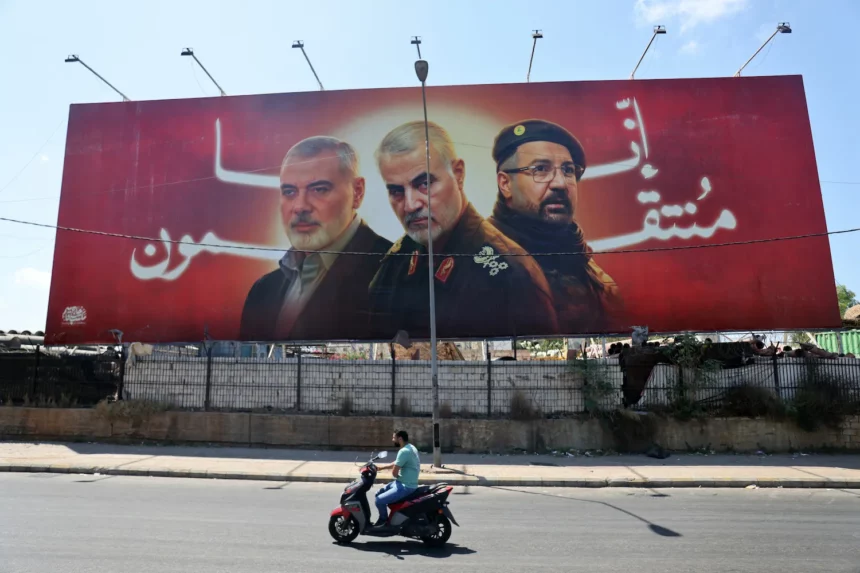
A man rides his moped past a billboard bearing portraits of slain leaders, Ismail Haniyeh of the Palestinian militant group Hamas, Iranian Quds Force chief Qasem Soleimani, and Hezbollah senior commander Fuad Shukr on the main road near the Beirut International Airport on August 3, 2024. Ibrahim AMRO / AFP

It’s now clear that the “exploding pagers” were just the first phase: first, cut off Hezbollah’s internal communications, and then strike the organization’s leadership. The world holds its breath, wondering: what’s next?

Tensions in the region are already running high amid Israel’s operation in Gaza, where the “collateral damage” has clearly surpassed what global public opinion can “swallow.” Against this backdrop, a strike on Beirut certainly won’t bring peace in the next few hours. Undoubtedly, Israel had and still has the right to respond to the shelling of its cities and towns from Lebanese territory, something Hezbollah has been actively doing, but how far does the response that includes striking Beirut fit within acceptable limits?

Iran has declared a five-day mourning period for Sheikh Nasrallah. The official representative of the Islamic Republic’s Foreign Ministry, Nasser Kanani, has already stated: “Iran continues its efforts following the conversation between the first vice-president [Mohammad Reza Aref] and [Lebanese Prime Minister Najib] Mikati. We are in contact with the Lebanese authorities and monitoring the situation. Iran will not leave any of the Zionist regime’s aggressive actions unanswered, and the regime will not go unpunished for its crimes.”

But what does this mean in practice? So far, Tehran has made it clear that it will not send soldiers to assist Hezbollah. Nothing has been mentioned about missile strikes, drones, etc. However, the world had already been waiting for weeks for Iran’s response to the elimination of one of Hamas’ leaders, Ismail Haniyeh, but instead, it witnessed Israel’s strike on Sheikh Nasrallah’s bunker. Moreover, Israel continues to “take out” the leadership of Palestinian groups — now the Popular Front for the Liberation of Palestine is under threat in every sense. Simultaneously, key targets of the Yemeni Houthis are also being hit. This raises uncomfortable questions: where will Israel stop? Will it limit itself to strikes on Iran’s proxies, or is Iran itself the next target? And in that case, what to expect — strikes on nuclear facilities, military bases, or government institutions? It’s no coincidence that within hours, reports emerged of Iran’s Supreme Leader Ayatollah Ali Khamenei being relocated to “a more secure location” — the strike on Hezbollah’s headquarters in Tehran was clearly seen as a “warning.” The “spiral of escalation” is spinning at an unprecedented pace. Even if no strike on Iran follows, it is not yet a reason to sigh with relief.

Will Tehran continue to watch as Israel decimates its most valuable and capable proxies without intervening? This is not only humiliating but also dangerous, especially in the Middle East. And even within Iran itself, peaceful gestures have often been perceived as weakness. Azerbaijan knows this very well. Will Iran eventually enter into a direct conflict with Israel? So far, Tehran has waged wars through its proxies, but how will things develop now? What position will “third countries” take? The sympathies of the “Muslim street” are largely on the side of the Palestinians, but in the oil monarchies, Iran is feared far more than Israel. During the last Iranian raid on Israel, many Muslim countries allowed missiles to be intercepted in their airspace. In principle, many Muslim capitals wouldn’t strongly oppose it if the “troublesome Zionists” were to solve the Iranian problem. Iran suddenly finds itself in a very vulnerable position, and most disturbingly, the situation’s development hardly depends on Tehran itself or its current president, Masoud Pezeshkian.

It’s hardly necessary to remind anyone that, in such a context, Tehran most of all needs good and predictable relations with its neighboring states. And it raises an interesting question: in the current situation, with Israel bombing Hezbollah’s headquarters in Beirut and key Houthi infrastructure in Yemen, does the Zangezur Corridor still remain Iran’s primary “red line”?

It’s worth reconsidering the arguments. First, “red lines” should be drawn on one’s own territory, not someone else’s. Second, the Zangezur Corridor is a rail and highway that will pass through Armenian territory and has nothing to do with Iran. Third, this is not anyone’s whim but signed commitments that need to be fulfilled. Finally, Iran’s nervous reaction to the Zangezur Corridor certainly doesn’t contribute to strengthening good-neighborly relations with Azerbaijan.

Iranian leadership certainly has much to ponder, but time for reflection may already be running out.

You Might Also Like

Iran’s Caspian signaling and the boundaries of regional alignment

No talks with revanchists: what Armenians will have to pay for

Turkey-Azerbaijan alliance strained by opposing stances on Israel

Caspian escalation raises stakes for Central Asia

Dialogue amid escalation

AzeMedia September 30, 2024 September 30, 2024

New articles

148898 AAfileIranAzerbaijan
Iran’s Caspian signaling and the boundaries of regional alignment
Opinion April 1, 2026
Tumblr 7785d4993072edee15c5f76f97426150 cbc66783
No talks with revanchists: what Armenians will have to pay for
Opinion April 1, 2026
FzXmfsHpncSf7mjEilSDOohDU3PyMoxbiG63JOjQ
ING Group: Azerbaijan’s external economic position remains very strong
News April 1, 2026
69ca6321ec2b869ca6321ec2b9177487132969ca6321ec2b669ca6321ec2b7
Baku Initiative Group calls on UN member states to take practical steps on slavery resolution
News March 30, 2026
7YNXnb05zWpwunxmQWNmwxfqd6tq6osklTkNbHWo
Azerbaijan evacuated over 3,000 people from Iran to date
News March 30, 2026
Bildschirmfoto 2026 03 30 um 11.14.38
Turkey-Azerbaijan alliance strained by opposing stances on Israel
Opinion March 29, 2026
Screenshot
President Ilham Aliyev completely, directionally turned his country around – Steve Witkoff
News March 28, 2026
69c778d12350869c778d123509177468027369c778d12350669c778d123507
Azerbaijani oil price exceeds $124
News March 28, 2026
QJ9m9qaUTjKho4NQMQ4PTfRb7ykBAWVDMnL2UsSf
FAO offers Azerbaijan to develop five-year fisheries development plan
News March 28, 2026
577c9b7a tcxj78bkp11yulvvjs6gr
Türkiye and Azerbaijan sign media cooperation pact at STRATCOM summit
News March 28, 2026

You Might Also Like

148898 AAfileIranAzerbaijan

Iran’s Caspian signaling and the boundaries of regional alignment

April 1, 2026 6 Min Read
Tumblr 7785d4993072edee15c5f76f97426150 cbc66783

No talks with revanchists: what Armenians will have to pay for

April 1, 2026 7 Min Read
Bildschirmfoto 2026 03 30 um 11.14.38

Turkey-Azerbaijan alliance strained by opposing stances on Israel

March 29, 2026 7 Min Read
Image Mar 25 2026 02 25 03 PM

Caspian escalation raises stakes for Central Asia

March 25, 2026 9 Min Read
148898 AAfileIranAzerbaijan

Dialogue amid escalation

March 24, 2026 6 Min Read
Azerbaijan armenia border shootouts scaled e1717316787977 1536x862

Diaspora activism and the limits of external influence in the Armenia–Azerbaijan peace process

March 23, 2026 8 Min Read
655215

The ‘Azerbaijani Way’: Three lessons from Baku to Jerusalem

March 21, 2026 10 Min Read
BneGeneric Caspian Sea ariel

War reaches the Caspian: Central Asia faces growing regional risk

March 20, 2026 9 Min Read

Useful links

426082d1 a9e4 4ac5 95d4 4e84024eb314 pojkz91103g6zqfh8kiacu662b2tn9znit7ssu9ekg
Ab65ed96 2f4a 4220 91ac f70a6daaf659 pojkz67iflcc0wjkp1aencvsa5gq06ogif9cd0dl34
96e40a2b 5fed 4332 83c6 60e4a89fd4d0 pojkz836t9ewo4gue23nscepgx7gfkvx6okbbkasqo
759bde00 a375 4fa1 bedc f8e9580ceeca pq8mvb9kwubqf6bcadpkq5mz16nayr162k3j2084cg
aze-media-logo-ag1

We are a unique political and socio-cultural digest offering exclusive materials, translations from Azerbaijani media, and reprints of articles from around the world about Azerbaijan.

  • Privacy Policy
  • Terms and Conditions
  • Cookies Policy

Email: editor@aze.media

© 2021 Aze.Media – Daily Digest
aze-media-logo1 aze-media-logo-ag1
Welcome Back!

Sign in to your account

Lost your password?