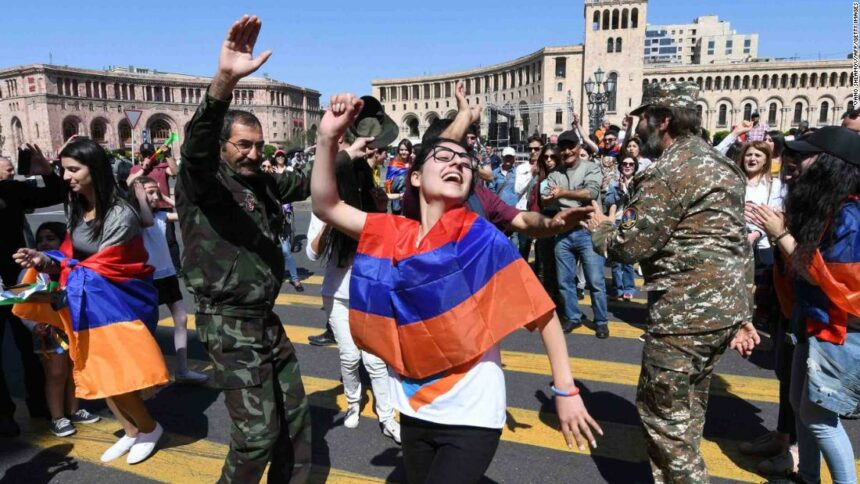
On one hand, there is a noticeable divide in opinions and sentiments, while on the other, there is a shared perspective on certain matters. It is clear that Armenian society is polarized based on external sympathies and antipathies. Rather than discussing the situation in Armenia and the steps necessary to strengthen the country’s sovereignty, the conversation often shifts toward the “benefits” of aligning with certain foreign states or groups of countries.
For instance, Armenian media frequently debates the role of foreign organizations operating within the country, broadly categorized as either “Western” or “Eastern” in the realm of so-called soft power. Among the “Western” entities, experts often highlight USAID and the Open Society Foundation (also known as the “Soros Foundation”), which are involved in grant projects targeting youth policy, education, and other sectors. Some experts have started to openly accuse these organizations of promoting “tolerance for various psychosocial deviations, undermining national identity, and framing freedom solely as a rejection of moral and ethical boundaries.” Additionally, these programs are criticized for instilling an image of Russia, Iran, and China as enemies in the minds of Armenian youth. According to certain commentators, these Western grants are dismantling Armenian national identity and leading the country towards disintegration as a coherent ethno-political entity.
Meanwhile, the activities of “Eastern soft power,” predominantly represented by Russian, Iranian, and to some extent Chinese platforms, are viewed more favorably. Positive assessments are given to the operations of the “Russian House,” the Gorchakov Foundation, and the Analytical Center for Strategic Studies and Initiatives (ACSSI) in Yerevan. However, the most praise is reserved for the new organization “Eurasia,” which has been sanctioned by the U.S. State Department. Programs like “Discover Russia,” where Armenian youth are invited to Russia to experience the country firsthand, are highlighted as examples of how Russia seeks to preserve Armenian identity, promote family values, and strengthen collective memory. In contrast to Western grants, Russian initiatives are perceived as helping maintain Armenia’s national identity rather than undermining it. This, according to some political analysts, underscores two opposing approaches to Armenia in the realm of soft power.
The issue at hand seems fairly clear. What remains perplexing, however, is that many of the conclusions drawn are based on external influence — focusing on who is shaping the minds of Armenian youth, without considering the internal dynamics at play.
Naturally, Azerbaijan’s position is presented through a specific lens, with claims that Baku begins by publicly issuing absurd, anti-Armenian, and anti-state demands, such as calls for amendments to Armenia’s constitution. The logic behind such claims is questionable. For instance, are revanchist sentiments so deeply embedded in Armenian society that citizens see it as justified to enshrine territorial claims against Azerbaijan in their constitution? If so, how can there be a genuine desire for peace with Azerbaijan while simultaneously promoting narratives about Baku’s “aggressive ambitions”?
Some analysts argue that the “logical structure” of these revanchist ideas stems from Armenia’s continued dependence on external forces, which heighten anti-Azerbaijani rhetoric both within the ruling elite and the opposition. But should this be surprising when foreign powers have been shaping Armenian youth’s perceptions, instilling geopolitical biases from a young age?
It is no coincidence that one Armenian political analyst has remarked that Armenia is “gradually losing its agency, transforming from an independent entity into a regional outpost.” He noted that while Russia was once Armenia’s ally and Iran always maintained strong ties that could have been elevated to strategic partnership, Yerevan’s recent steps, taken at the West’s behest, are leading the country to lose not only its independence but also its perception as a sovereign player by external actors. According to him, the government’s actions resemble “enticing behavior,” which fails to address Armenia’s real issues.
This brief look at contemporary Armenian political thought reveals deep psychological challenges within Armenian society. The nation struggles to move beyond the belief that it must remain under the protective wing of a powerful external force, to the detriment of national development. The reliance on external powers is one of the largest obstacles preventing Armenia from transitioning from object to subject in global politics. The sooner Armenians realize that Baku is offering multiple paths toward genuinely independent development, the better it will be for Armenian society — assuming, of course, that this is something they truly want.
Teymur Atayev
Translated from minval.az