Do you believe Russia’s mediation mission in the Armenian-Azerbaijani conflict is effective? What political tools of pressure has Moscow left to use to finally force Armenia to peace?
Russia’s mediation mission in the conflict between Armenia and Azerbaijan is quite effective. However, it is impossible to completely resolve the conflict for now. The reason is the serious historical contradictions between Armenians and Azerbaijanis, as well as Armenia’s dissatisfaction with the outcome of the 44-day war, which Azerbaijan calls Patriotic.
A blow was also dealt to the image of Armenia, who had previously presented itself as all but the militarily strongest state in the South Caucasus. Azerbaijan did not gain control over all of Karabakh, as it seems to have planned. The country agreed to the presence of Russian peacekeepers in the region, and the latter, in particular, have complete control over the Lachin corridor connecting Armenia with Karabakh. The clashes that broke out in the border areas, in particular, in May 2021, especially in the area of the so-called “Black Lake” (Garagol— Ed.), indicate that the conflict is still very far from over.
There was no question of “forcing Armenia to peace” to begin with at all. However, it was thanks to Russia’s mediating role that the leaders of Azerbaijan and Armenia signed the document that ended the 44-day war in Karabakh on November 10, 2020.

So, instead of gratitude to Moscow for the efforts it has been making to preserve the Armenian statehood, Russophobic sentiments are on the rise in Yerevan?
There are various political forces of influence in Armenia. As for complaints against Russia, they have always been there. But given the importance of maintaining Russia’s geopolitical positions in the South Caucasus in the face of a break in relations with Georgia, Russia will continue to build as smooth a relationship with Armenia as possible.
Do you think that the final declaration adopted at the recent ECO summit in Ashgabat, which was also signed by three CSTO member states, is Baku’s diplomatic victory and Yerevan’s political failure?
The Economic Cooperation Organization (ECO) is a regional intergovernmental organization founded in 1985 primarily by three states—Iran, Pakistan and Turkey. In the early 1990s, it was joined by Kazakhstan, Azerbaijan, Afghanistan, Kyrgyzstan, Tajikistan, Turkmenistan and Uzbekistan. Many of them, namely Kazakhstan, Kyrgyzstan and Tajikistan, are indeed CSTO members. This declaration is not the official position of this military bloc, of which Armenia is a member. However, the ECO members congratulating Azerbaijan on the victory in the war in Karabakh became a landmark moment of the summit in Ashgabat. And this is indeed a clear victory for Azerbaijani diplomacy, given that Baku was also supported by Tehran, who welcomed the adoption of the final declaration at the Ashgabat summit.
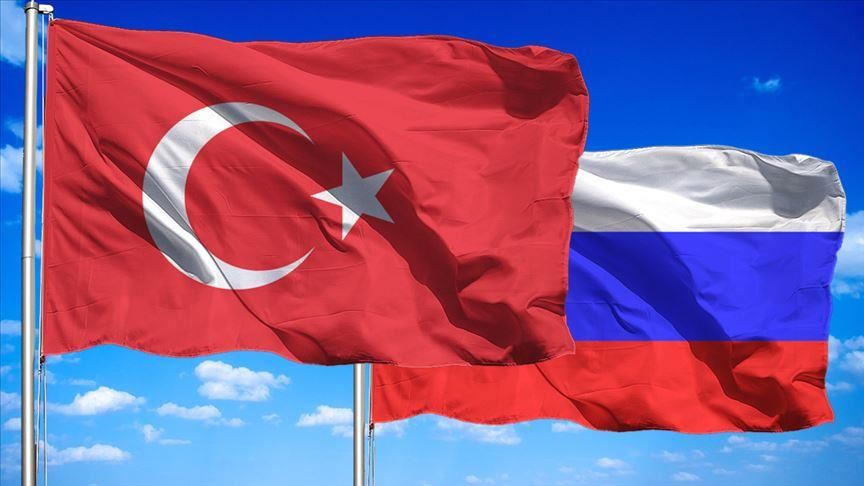
What is your take on the positions of Turkey and Russia in the processes taking place in the South Caucasus? Where are the interests of the two leading geopolitical actors aligned?
Without a doubt, Russia and Turkey are significant actors in the South Caucasus. They have historically had a significant impact on the region. For example, in the 18th century, as the Ottoman Empire began to weaken, Russia’s serious strengthening in this region began. In the early 19th century, most of the modern South Caucasus became part of Russia—and Russia and Turkey have always been opponents here. Suffice it to recall the numerous Russo-Turkish wars. The Crimean War of 1853-1856 was also a serious blow to Russia’s image, but Russia recouped this damage, regaining its importance in the region during the Russo-Turkish war of 1877-1878, when Russian troops under the command of Mikhail Skobelev almost reached Istanbul, stopping on the outskirts of the then capital of the Ottoman Empire, in the village of San Stefano.
Today, both states are playing a significant role in the South Caucasus region again. But their positions are different. Turkey uncompromisingly supports Azerbaijan because of the historical mistrust between Turkey and Armenia. Historically, complicated relations have developed between Turkey and Georgia as well. Of course, there are a number of factors at play, including the ethnic factor. Azerbaijanis are a Turkic people, which is an important factor in the relations between the two states, and they are also Muslims. Georgians and Armenians have nothing to do with the Turks—they are mostly Christian peoples, with the exception of the Adjarians and the population of the Pankisi Gorge in Georgia.
Russia’s foreign policy is mainly focused on equal relations with both Armenia and Azerbaijan. Formally, Armenia is undoubtedly a closer ally of Russia. As you know, Armenia is the only state in the South Caucasus that is a member of both the EAEU and the CSTO. The 102nd Russian military base is stationed in the territory of Armenia, with its garrisons in Gyumri and Yerevan.
But at the same time, the Russian Federation also maintains and develops active relations with Azerbaijan. The diplomatic relations between our two states were established on April 4, 1992, and the Russian embassy in Azerbaijan officially began to perform its functions as early as on September 25, 1992. Trade turnover between the two countries is also growing quite rapidly, and there is also military and technical cooperation taking place.
Russia-Georgia relations remain strained after the five-day war in August 2008. In 2009, Georgia withdrew from the CIS, and its active orientation towards the EU and NATO clearly does not help Russia-Georgia relations.
On what terms would a long-term strategic partnership between Ankara and Moscow in the Greater Middle East be possible?
The answer to this question is obvious: Russia and Turkey will not be able to become allies in the Middle East. This is primarily due to their disagreement regarding the Syrian Arab Republic (SAR). Russia supports the official leadership of the SAR and its President Bashar al-Assad, while Turkey does not. But I would not be categorical about the complete irreconcilability of the positions of Russia and Turkey on the situation in Syria.
What can you say about Iran’s policy in the South Caucasus?
Iran-Azerbaijan relations look very complicated historically. The main issue here is South Azerbaijan, an area in the north-west of Iran, which directly borders the Republic of Azerbaijan and is mainly inhabited by ethnic Azerbaijanis. This controversy is the reason Iran has been supporting Armenia since the early 1990s, despite the fact that these are not closely related peoples in either ethnicity or religion. Iran clearly sides with Armenia both in the conflict in Karabakh and in the Caucasus in general.
Iran-Turkey relations are rather complicated as well. This is a historical reality. They have historically been rivals in the region, and their relationship is unlikely to improve in the immediate future. At the end of October this year, the armed forces of Turkey and Azerbaijan held the large-scale “Indestructible Brotherhood-2021” joint military exercise, and Iran responded by conducting the “Conquerors of Khaybar” military exercise on the border with Azerbaijan. Nevertheless, Iran is trying to build a certain political line in its relations with Turkey and Azerbaijan. The meetings between the leaders of the three states is an example of these efforts.
Of course, Iran-Azerbaijan relations are further complicated by the expanding ties between Azerbaijan and Israel, given the extreme hostility existing between the latter and Tehran.
Matanat Nasibova
Translated from Caliber.Az
Aze.Media