When global leaders gather in Azerbaijan for the COP29 climate summit at the end of this year, this event will serve as an important barometer in more ways than one. Like previous COPs, it will take stock of global carbon emissions and assess international efforts to tackle climate change. The event will also serve as a major litmus test for Azerbaijan, both in its ability to steer the proceedings toward effective climate solutions and weather the scrutiny that host countries—especially energy-producing states—inevitably face.
However, with these tests also come significant opportunities, and one such opportunity comes in the potential to boost Western engagement with Azerbaijan and the broader Caspian region, including the Caucasus and Central Asia. This region not only presents significant green energy potential to help the United States and EU enhance energy security and combat climate change, but its strategic location can also help the West address broader foreign policy challenges, from Russia and China to mitigating instability within the Caspian region itself. As such, the West should focus on three key areas of engagement related to the Caspian region in the lead-up to the COP29 summit next November.
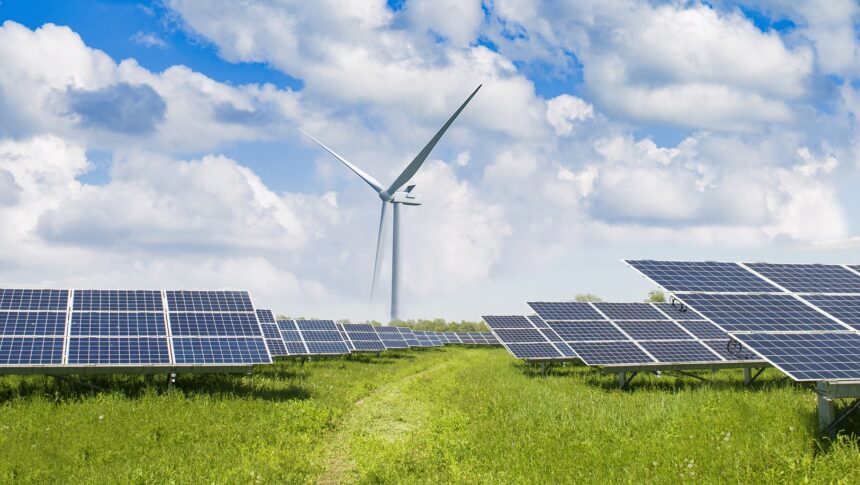
The first area relates directly to the climate transition and sustainable energy cooperation. To be sure, there have already been significant efforts to expand such cooperation between the West and the Caspian states. For example, just a few months after Russia launched its full-scale invasion of Ukraine, the EU and Azerbaijan signed an MoU on a strategic energy partnership, which included expanding Azerbaijani natural gas exports to Europe to 20 billion cubic meters per year by 2027 as well as EU support for Azerbaijan to reduce methane flaring in its gas production. Last year, the United States ramped up its engagement with Central Asian states in the C5+1 format, which included the first head-of-state summit between U.S. president Joe Biden and the five presidents of Central Asia, as well as the launching of the Critical Minerals Dialogue to expand clean energy cooperation.
While these are necessary initial steps, the West must turn such MoUs and dialogue formats into a tangible expansion of sustainable energy ties with the Caspian states. One way to do so would be to increase private sector investment into this region from Western companies as a complement to state-led initiatives from both the United States and the EU. This would not only enable both parties to showcase their contribution to reducing global emissions, but it would also enhance the climate transition of the fossil-fuel-intensive Caspian region and offer Azerbaijan concrete joint projects to highlight at the upcoming COP summit.
The second area that the West should focus on relates to the competition with Russia and China, which are both very active in the Caspian region. China has emerged as the region’s largest trade partner. Russia has maintained its position as the dominant security power in the Caspian, including military bases in countries like Armenia, Kyrgyzstan, and Tajikistan. However, both Beijing and Moscow have faced challenges to their position in recent months. China is contending with economic pressures on the homefront and complications with its Belt and Road Initiative. Russia’s military focus on the Ukrainian theater has exposed weaknesses of its security patron status in both the Caucasus and Central Asia.
As such, there is a window of opportunity for the West to compete more effectively with Russia and China in the Caspian region. One way to do so would be to leverage cooperation in the green energy sector into building greater connectivity to and within the region, particularly via the Trans-Caspian corridor. Another way to do so would be to lessen and mitigate a largely punitive approach to the region with a more constructive one. This could be done by limiting the impact of secondary sanctions on Caspian countries associated with Russia’s war in Ukraine. At the same time, the United States, in particular, should seek to repeal the Jackson-Vanik amendment, which has inhibited trade ties with Azerbaijan and Central Asian countries in particular.
The third area that the West should focus on is combating instability within the Caspian region. As the recent military conflict between Azerbaijan and Armenia has shown, Russia’s ability to play a mediating and “peacekeeper” role in the region has been ineffective. And as the Armenian government has openly called for the need to reduce its security reliance on Moscow and instead has explored increasing ties with the West, this, too, presents Washington and Brussels with an opportunity to boost its engagement in the Caspian region.
However, the West should not take such an opportunity to back one side over another for political purposes, which can be detrimental to peace. Rather, this can be a chance for the United States and EU to promote diplomacy and build the foundation for further regional connectivity enhancement. While political and diplomatic challenges remain to overcome in the post-war negotiation between Armenia and Azerbaijan, further communication should be encouraged rather than politicized by the West or the Caspian states. While political and diplomatic differences between Baku, Yerevan, and the West are inevitable, these should be managed more effectively to pursue common goals, such as building greater economic connectivity and contributing to the energy transition.
Indeed, Armenian leadership has expressed its desire to join east-west energy and transport by building connections to both Azerbaijan and Turkey in its Crossroads for Peace initiative, and some progress has been made on issues like border delimitation directly between Baku and Yerevan. Such signals, along with Armenia’s support of Azerbaijan’s hosting of COP29, show that the opportunity for diplomatic progress is real. If the United States and EU can foster greater collaboration between the Caspian states, this will enhance their ability to play an active diplomatic role to mitigate against potential spoilers like Russia.
There is much to be gained for the West and the Caspian region as COP29 approaches. Greater collaboration on clean energy can enhance regional connectivity, combat climate change, and build resilience and stability within the region. Of course, there will always be challenges associated with each of these elements. Still, the degree to which the West and the Caspian can jointly maneuver these risks and challenges could have important implications for the upcoming COP29 summit and well beyond.
Eugene Chausovsky is the Senior Director for Analytical Development and Training at the New Lines Institute.