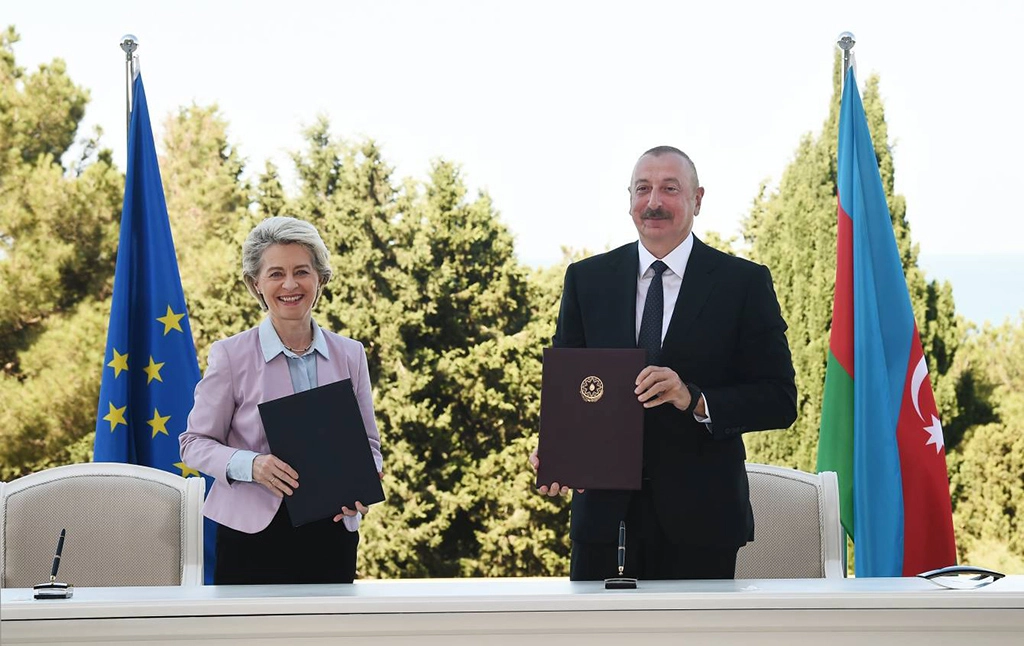
As a journalist who has spent the past 25 years specializing in Turkish and Caspian energy issues, I was not surprised to see the president of the European Commission, Ursula von der Leyen, in Baku last month desperately trying to source extra volumes of gas. Russia, as security mavens have long predicted, is now using its supply stranglehold on the EU to try to force concessions over its war in Ukraine.
But why didn’t Brussels have Caspian gas supplies in place long ago? It was only in 2020 that small quantities finally began flowing to Europe along a so-called “Southern Gas Corridor.” In Baku, von der Leyen secured a non-binding promise that those supplies might double to 20 billion cubic meters per year (bcm) by 2027. That’s a pittance. Compare the figure to 155 bcm, which is what Russia supplied last year, meeting 40 percent of EU demand.
Something went horribly wrong.
The root problem has been Brussels’ insistence that pipelines be developed by private firms and be “commercially viable.” The EU has not been willing to underwrite the necessary infrastructure, assuming that market forces would take the lead. Maybe that would happen in a world of perfect competition. But market forces have been unable to compete with Gazprom, a Russian monopoly that plays by its own rules.
In theory, as one EU technocrat patiently explained to me, creating a commercially viable pipeline project to carry Caspian gas to Europe is simple: You need Europeans to sign contracts to buy the gas, which they are willing to do. This guarantees a revenue stream and enables banks to provide the tens of billions of dollars in financing to develop the fields and the pipelines to deliver the gas.
Simple – but, he cautioned, the converse is also true. If, like Gazprom, you have the finance, you can go ahead and build the pipelines and then secure the buyers – whose main interest is short-term supply, not long-term security. In the process, Gazprom has effectively blocked the development of rival pipelines.
Which, in short, is how Europe has missed a succession of opportunities to import gas from the Caspian and allowed itself to be blackmailed.
If Gazprom only liberalized
The collapse of the Soviet Union in 1991 and the emergence of independent, gas-rich Caspian states coincided with the decline of Europe’s own gas production and the first warnings of over-dependence on Russia.
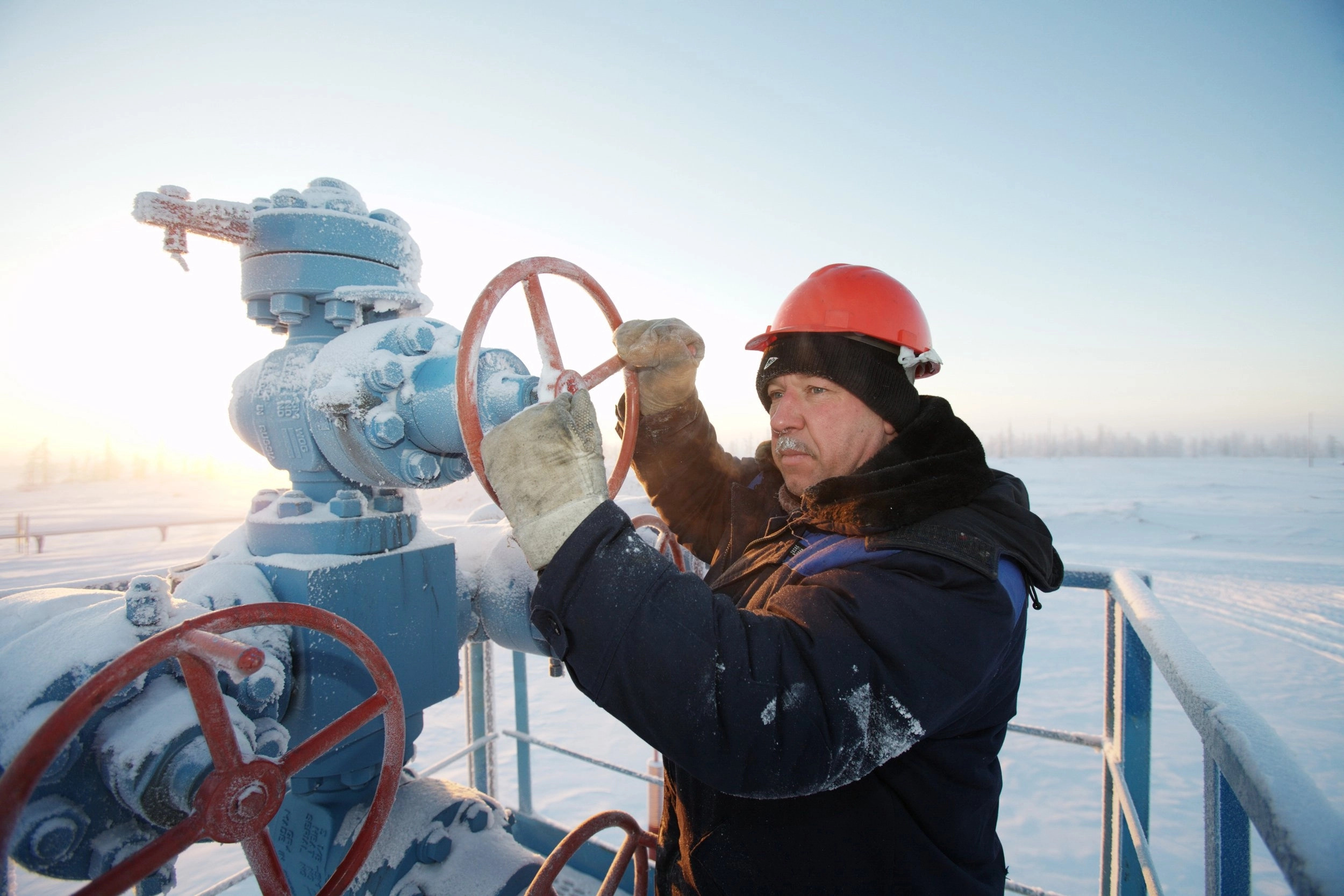
Soviet-era agreements and pipelines meant Russia already supplied 30 percent of Germany’s gas by the early 1980s. Last year, Germany relied on Gazprom for more than half the gas it consumed. With such an eager buyer, Gazprom funded its own pipelines.
Against that, bringing Caspian gas to Europe required developing difficult offshore gas fields and building pipelines running 3,500 kilometers through multiple countries with only a passing familiarity with democratic and commercial norms – some of which were barely on speaking terms.
Brussels assumed the liberalization of the Russian economy would end Gazprom’s monopoly, while a European market governed by legally enforceable contracts would ensure free competition and competitive pricing. If Caspian gas was commercially viable, the mantra went, the private sector would be able to bring it to market.
The private sector did try, but repeatedly came up against insurmountable obstacles.
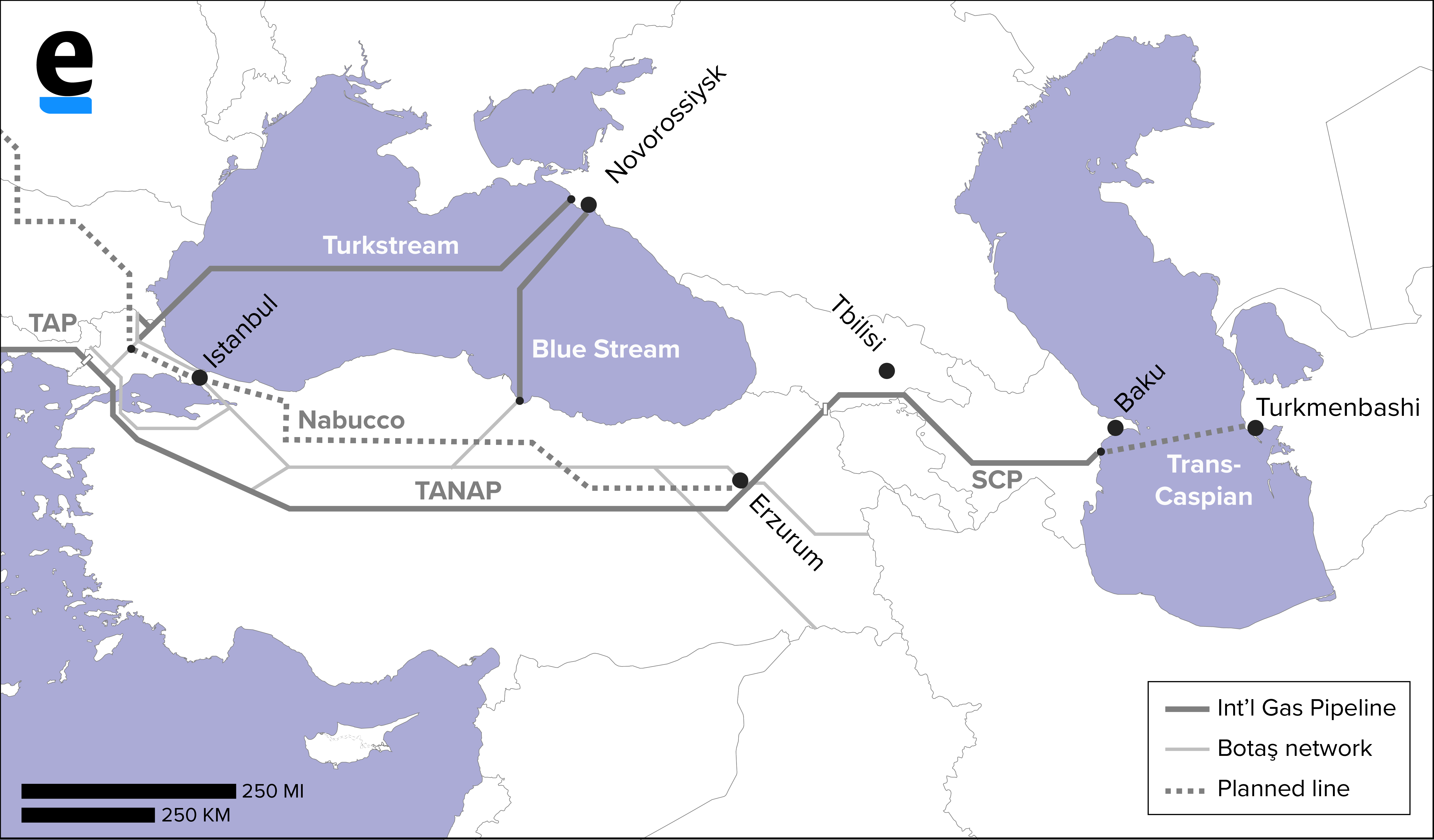
A first attempt, launched in 1999 with strong support from Washington, saw U.S. giants GE and Bechtel partner in an ambitious project to produce over 30 bcm of gas from fields in Turkmenistan, to be transited via a “Trans-Caspian Pipeline” to Azerbaijan and on through Georgia to Turkey.
Ankara agreed to take half the gas, and to develop pipelines to transit the rest to Europe, apparently securing the project’s finances.
Yet it foundered not on commercial grounds but following the discovery of Azerbaijan’s own giant Shah Deniz gas field, and the failure of Baku and Ashgabat to agree on sharing the planned pipeline. Could European guarantees of income from gas sales have persuaded the two emerging states to agree to share a pipeline? We’ll never know. Brussels showed little interest in the Trans-Caspian project. (Russia also threw cold water on the pipeline by arguing that the Caspian Sea was a lake, and that therefore Azerbaijan and Turkmenistan needed its approval before building anything across the seabed.)
With Turkmenistan sidelined, in 2001 Turkey and Georgia signed contracts to take some of the newly discovered Azerbaijani gas. That allowed a BP-led consortium to develop Shah Deniz and build the South Caucasus Pipeline (SCP), which finally delivered Azerbaijani gas to eastern Turkey in 2006.
Waiting for Nabucco
Plans for the South Caucasus Pipeline inspired European firms and in 2002 Austria’s OMV formed a consortium with the state gas transmission operators of Turkey, Bulgaria, Romania and Hungary to develop blueprints for a 31 bcm “Nabucco” pipeline to carry gas from multiple Caspian sources to Europe’s Baumgarten gas trading hub in Austria.
The European Commission finally took an interest, funding half the cost of a feasibility study. But it was only six years later with the publication of the EU’s “Second Strategic Energy Review” in 2008 that concern over growing dependence on Russia developed into actual policy for development of a “Southern Gas Corridor.” The review stated: “A southern gas corridor must be developed for the supply of gas from Caspian and Middle Eastern sources, which could potentially supply a significant part of the EU’s future needs. This is one of the EU’s highest energy security priorities.”
Still, Brussels remained wedded to the idea that development was a job for the private sector. It failed to identify Nabucco or any other pipeline project that could fit the bill.
At the same time Nabucco was facing other challenges.
Two smaller projects were angling to carry the same Azerbaijani gas to Europe. And Gazprom had announced its own giant 63 bcm “South Stream” pipeline across the Black Sea to Bulgaria, which would swamp the European market.
Nabucco couldn’t find the gas to fill its 31 bcm capacity. Planners looked at Turkmenistan, then Iran, even Iraq. But with Azerbaijan still unwilling to transit Turkmen gas, Iran hit by international sanctions, and Iraq embroiled in its own interminable problems, none offered any hope of gas within a workable timeline. Azerbaijan’s Shah Deniz could supply less than 20 bcm, and the BP-led consortium developing the field was unwilling to commit its gas to Nabucco unless Nabucco’s backers found other suppliers to ensure it was commercially viable.
Had the European Union been sufficiently committed to creating its Southern Gas Corridor, it could have designated Nabucco a project of “strategic importance” and guaranteed funding, ensuring the pipeline was built.
In the event, the Azerbaijani government tired of waiting and announced that it would fund its own 31 bcm pipeline across Turkey, dubbed the Trans Anatolian Pipeline (TANAP), a move which effectively killed Nabucco.
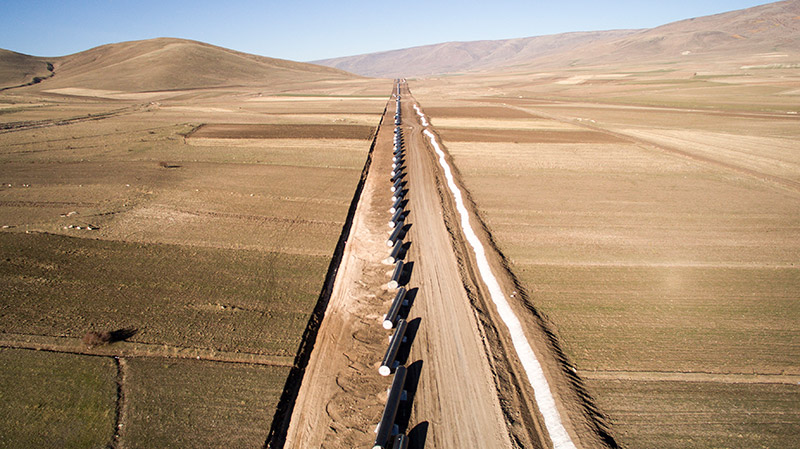
Construction began in 2015. After crossing into Greece, TANAP connected with what had been one of Nabucco’s rivals, the Trans-Adriatic Pipeline (TAP).
Supply to Turkey began in 2018, with gas finally flowing to Italy at the end of 2020.
Twenty-one years after the first serious talk of moving Caspian gas to Europe, and 12 years after the Southern Gas Corridor become EU policy, the market had finally delivered Caspian gas to European consumers.
But the Southern Gas Corridor carries just 10 bcm to Europe (this year the amount is slated to rise to 12 bcm). Could that be viewed as a success? Does it confirm Brussels’ commitment to diversifying away from Russia?
Far from it. The same 21-year period saw Gazprom commission three major gas pipelines to Europe with a total capacity of over 125 bcm.
Only the last of these, the 55 bcm Nord Stream 2 line – partly financed by German gas companies – encountered any serious obstacles, when German Chancellor Olaf Scholz finally bowed to EU and U.S. pressure and blocked operation, and that only on February 22, 2022, two days before Russian tanks rolled into Ukraine.
Expensive mistakes
Further increasing the volume of Caspian gas to Europe is possible. Turkmenistan, which has to date been effectively frozen out of the Southern Gas Corridor, boasts reserves of 13.6 trillion cubic meters – the fourth-highest in the world. Relations with Azerbaijan have warmed and Russia even dropped its opposition to a Trans-Caspian pipeline in 2018.
But delivering sufficient volumes to Europe to replace or meaningfully compete with Russian gas will take many tens of billions of dollars and the willing cooperation of countries through which the new pipelines will have to be constructed. More importantly, Brussels may need to jettison its insistence it play by neoliberal market rules.
Even then, such a pipeline will take years, during which time Europe will remain dependent on Russia.
Which raises the question of whether the enormous investment required for Caspian gas might be better spent on another pressing energy issue that has increasingly occupied my time over the past two decades – namely, developing Europe’s renewable energy resources to meet carbon reduction targets.
Failing to realize the delivery of significant volumes of Caspian gas to Europe is proving an expensive mistake. The evidence of this summer of heatwaves and wildfires suggests failure to address climate change may prove more expensive still.
David O’Byrne is an Istanbul-based journalist who covers energy.