The American magazine The Diplomat has published an article by Eric Rudenshold dedicated to the C5+1 diplomatic platform. Caliber.Az offers its readers the most insightful parts of the piece.
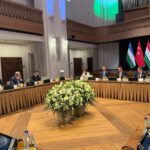
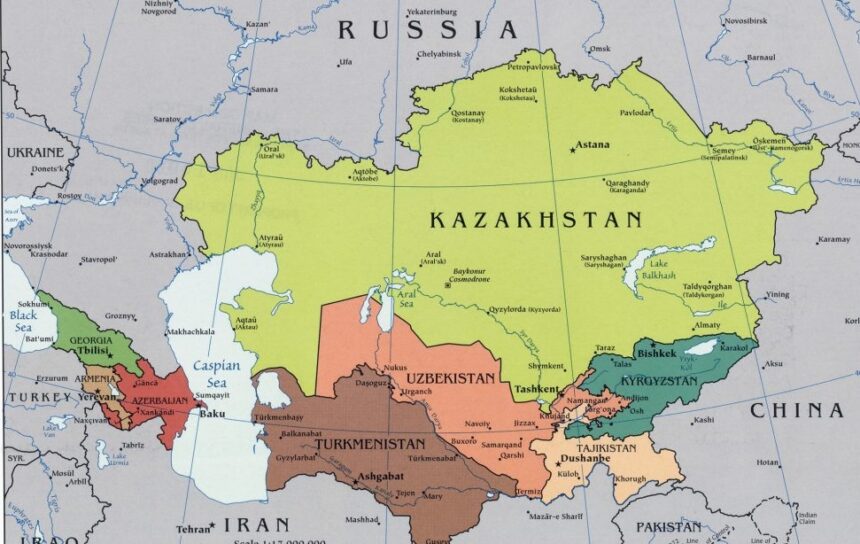
Home to massive supplies of strategic minerals and rare earths that Washington and the Trump administration are interested in securing, the Central Asian region is experiencing historic levels of interest. The upcoming White House summit with the five Central Asian presidents is a Washington first. November also marks the 10th anniversary of the C5+1 platform – the United States’ diplomatic platform for engaging the five Central Asian republics (Kazakhstan, Kyrgyzstan, Tajikistan, Turkmenistan, and Uzbekistan).
Created in 2015, the C5+1 has evolved from a diplomatic experiment into a durable and flexible tool for Washington to address regional diplomacy. The US must decide whether to adapt the mechanism to new geopolitical realities, including the potential inclusion of South Caucasus states, or possibly maintain a narrower focus on targeted resource investment.
C5+1
The early years of C5+1 activities were fairly modest. The situation began to change after 2020. Under the platform’s framework, initiatives in trade and infrastructure were expanded to address regional needs that went beyond bilateral relations. The C5+1 ministerial meeting became a key fixture on the diplomatic calendar, and cooperation in security, economic diversification, and transportation gained momentum.
As evidenced by the New York Summit in 2023 and an upcoming Washington Summit in 2025, the C5+1 platform appears to have evolved from the U.S. foreign policy periphery to the mainstream of strategic relevance.
New geopolitical context
The war in Ukraine and its cascading effects on global logistics have catalysed a fundamental shift in Eurasian geopolitics. At the heart of this transformation is the Middle Corridor, a multi-modal network of railways, ports, and pipelines that connect Central Asia to Europe via the Caspian Sea, the South Caucasus, and Turkiye. What was once a boutique project is now a strategic lifeline: trade volumes have more than tripled since 2022.
For Central Asian governments, this shift is more than logistical – it is existential. Diversified trade routes mean greater political independence and economic sovereignty. For Washington, it presents an opportunity to support the region’s ambitions while developing cost-effective access to the region’s resources.
Should Azerbaijan be added to the C5+1?
The most immediate question is whether the U.S. version of the C5+1 platform should expand to include Azerbaijan. There is a compelling case to do so. Baku’s Alat port is the only major transit port on the western shore of the Caspian Sea. The South Caucasus country is a critical node in the Middle Corridor and a major energy producer whose infrastructure – particularly pipelines and rail networks – is essential to any westward transit strategy. Absent Azerbaijan, there is no Middle Corridor.
Azerbaijan’s president has regularly attended recent regional summits as an observer, framing his country as part of a broader Central Asian community, both economically and strategically. Central Asian leaders may appear willing to formally include Azerbaijan themselves into a formal C6 structure.
Joining Azerbaijan to the U.S. platform would reflect geopolitical reality. Central Asia’s westward connectivity literally runs through Baku. Moreover, Azerbaijan’s inclusion could bring greater diplomatic weight, energy expertise, and investment capacity to the table.
What about Georgia and Armenia?
However, if Washington is serious about supporting the Middle Corridor, it must also think beyond Azerbaijan. Georgia, too, is indispensable. As the final link connecting the Caspian to Black Sea ports and European markets, it is a transit state without which the corridor simply does not function.
Then there is Armenia. Historically isolated due to conflicts and its geographical location, this country recently reached peace agreements with Azerbaijan through Washington’s mediation. The so-called Trump Route for Infrastructure and Peace Partnership (TRIPP) corridor, which would connect Armenia into the broader Middle Corridor network, is projected to more than double trans-Caspian freight capacity. It would also deliver a tangible peace dividend, anchoring the Armenia-Azerbaijan settlement in shared economic interest.
Incorporating Georgia and Armenia would transform the C5+1 or C6+1 into a platform not just for Central Asia but for the entire trans-Caspian region – a logical evolution given the growing economic and political interdependence of these states.
The U.S. and the South Caucasus
The peace between Armenia and Azerbaijan, the rise of the Middle Corridor, and the emergence of new opportunities in critical minerals and energy all point to the need for a sustained, strategic approach.
A new C3+1 Caucasus framework dedicated to bringing together the United States with Armenia, Azerbaijan, and Georgia could provide the structure for such engagement. It would signal a long-term U.S. commitment to the region, facilitate deeper cooperation on energy, trade, governance, and security, and complement Central Asia’s C5+1.
A combined approach
The C5+1 remains a valuable platform and could continue as a forum for focused engagement with the five Central Asian states. But, the U.S. should consider launching a parallel C3+1 platform for the South Caucasus, focused on connectivity, conflict resolution, and economic integration. As needed, these two platforms could converge on issues of truly trans-regional importance, from economic development to energy security, as a C8+1 that encompasses all eight states plus the United States.
Such an approach would preserve the agency and voice of all republics while acknowledging the new geopolitical map. It would also allow Washington to engage more flexibly: working with Central Asia on strategic minerals and energy, with the Caucasus on peacebuilding and connectivity, and with all eight on infrastructure, trade, and supply chains.
Caliber.Az