On Thursday, the United States, under Secretary of State Antony Blinken, placed Azerbaijan on a religious freedom watchlist. This means Azerbaijan could be subject to potential sanctions unless improvements are implemented.
This follows baseless concerns voiced by the Armenian diaspora regarding the preservation of Christian heritage as Azerbaijan regained control of territories previously under illegal Armenian occupation for nearly three decades. It is noteworthy to mention that the section related to Azerbaijan in the report, which influenced the Department of State’s decision, was authored by Danielle Saroyan Ashbahian — an ethnic Armenian. Ashbahian serves as the Chief of Public Affairs at the U.S. Commission on International Religious Freedom, overseeing Communications and Congressional Relations. Prior to joining USCIRF, she held the position of Director of Communications at the Armenian Assembly of America. Her professional background includes roles as the Layout Editor at Public Diplomacy Magazine, work at the office of former U.S. Congresswoman Janice Hahn, and experiences at the United Nations Department of Public Information in Armenia, the Lebanese Consulate in Los Angeles, and the San Francisco Ethics Commission. In addition to casting a negative light on Azerbaijan based on unfounded claims, Ashbahian went beyond by including anti-Azerbaijan propaganda unrelated to the report’s topic and, undoubtedly, also founded on falsehoods.
I want to address three points, emphasizing that the third is especially critical for all parties to handle with care.
The first point underscores Azerbaijan’s reputation for tolerance in matters of religion, race, and ethnicity. Individuals from diverse religious backgrounds, including those who profess no faith, have coexisted peacefully in Azerbaijan for years. A firsthand visit to Azerbaijan would reveal this harmonious atmosphere, challenging any naive acceptance of fabricated narratives. In my own family, which comprises Muslims, Christians, Jews, deists (myself), and atheists, everyone lives harmoniously, each practicing their chosen beliefs.
Azerbaijan not only consistently demonstrates respect for all religions within its sovereign territory but also extends support to religions globally. The country actively allocates resources and directly participates in the restoration of holy places belonging to various religions worldwide.
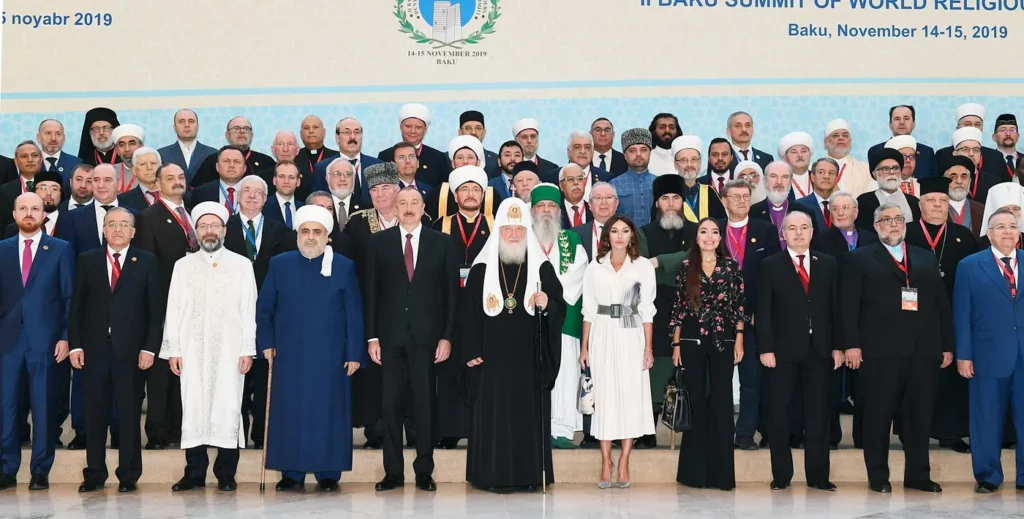
The Azerbaijani state oil company (SOCAR) is providing free gas to all churches in Georgia since 2013. SOCAR has extended this benevolent initiative through agreements with various religious communities, including the Armenian Orthodox Church, the Muslim community, Catholics, and followers of Judaism in Georgia. SOCAR’s support extends to churches, mosques, and synagogues, spreading beyond Tbilisi to all regions of Georgia.
The Heydar Aliyev Foundation has undertaken significant restoration projects, contributing to the preservation of cultural heritage. Notably, the Foundation restored two monuments featured in the World Heritage List, showcased in the park of the Palace of Versailles in Paris. In collaboration with the Louvre Museum of Paris, dedicated halls highlighting Islamic art were established, thanks to the Foundation’s involvement. Additionally, support was provided for the restoration of seven churches dating back to the 10–12th centuries in various settlements of the Orne Department, France, including Saint-Hilaire, Fresnaye-au-Sauvage, Saint-Hilaire-la-Gérard, Tanville Courgeoût, Réveillon, and Mâle.
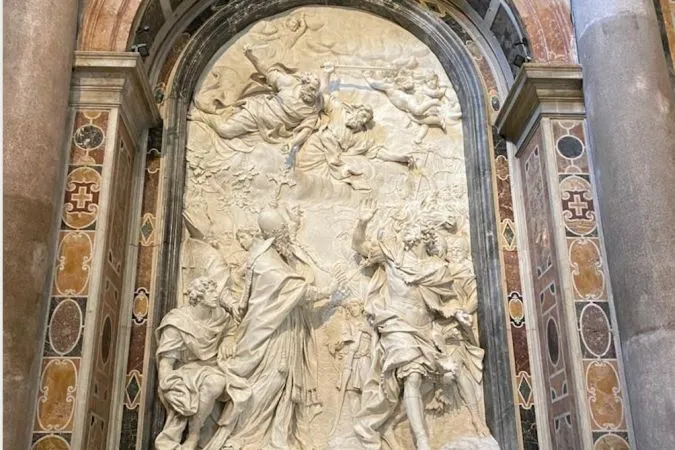
As part of the “Address of Tolerance-Azerbaijan” Project by the Heydar Aliyev Foundation, five stained-glass windows from the 14th century at the Strasbourg Cathedral Church were successfully restored. Furthermore, the Foundation played a pivotal role in the restoration of the Saint Sebastian catacombs and the bas-relief “Meeting of Pope Leo I with Hun Emperor Attila” in the Saint Peter Church in Vatican. The bilateral agreement on the restoration of Roman catacombs between the Heydar Aliyev Foundation and the Holy See led to the restoration of Saint Marcellino and Pietro’s catacombs.
The instances I outlined above are just a glimpse of the countless examples that render the Department of State’s decision baseless.
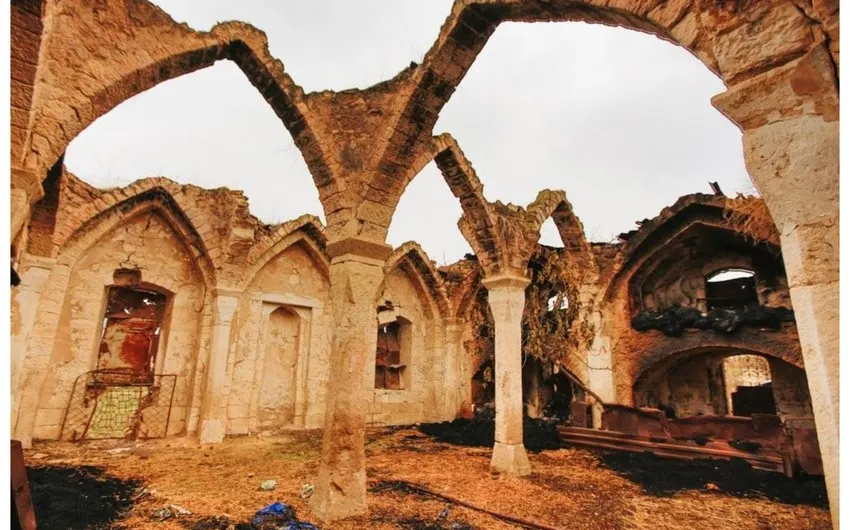
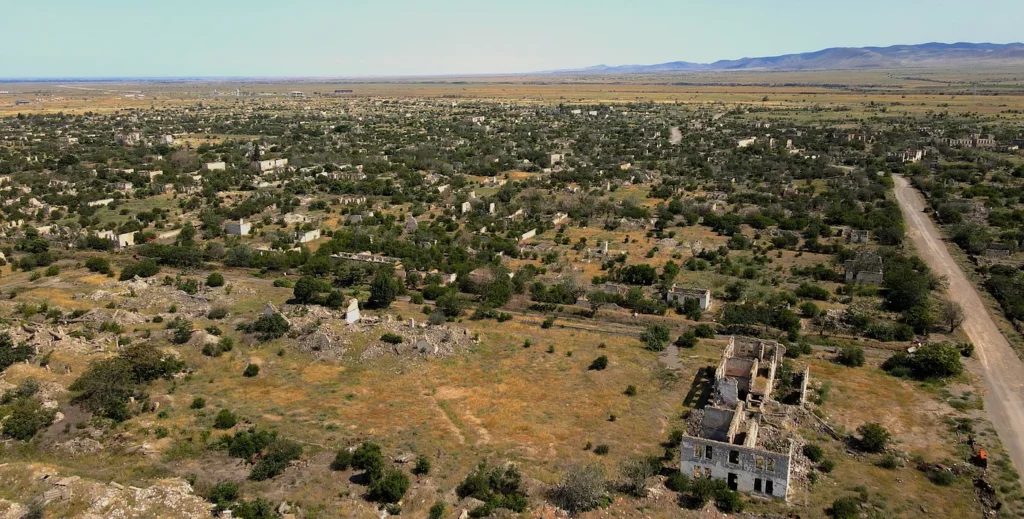
The second point underscores that, from the early 1990s until the recent liberation of Azerbaijan’s internationally recognized territories, Armenia’s illegal occupation led to the near-total obliteration of Azerbaijan’s cultural and religious heritage. Illegal occupying forces demolished entire cities where Azerbaijanis once lived before being ethnically cleansed and becoming IDPs.
Numerous documented facts, materials, and reports from both local and international organizations highlight the extensive damage inflicted on Azerbaijan during decades of occupation. Delving deeper into these resources reveals the true picture, countering any misrepresentation by others.
The third point underscores that as Armenia and Azerbaijan approach the signing of a long-awaited peace, sidelining foreign interference, the Armenian diaspora worldwide grows increasingly disturbed. It is crucial to differentiate between Armenians in Armenia and diaspora Armenians, as they often hold distinct perspectives. Diaspora Armenians, detached from Armenia and its people, are historically known for their radicalism and involvement in terrorist attacks worldwide.
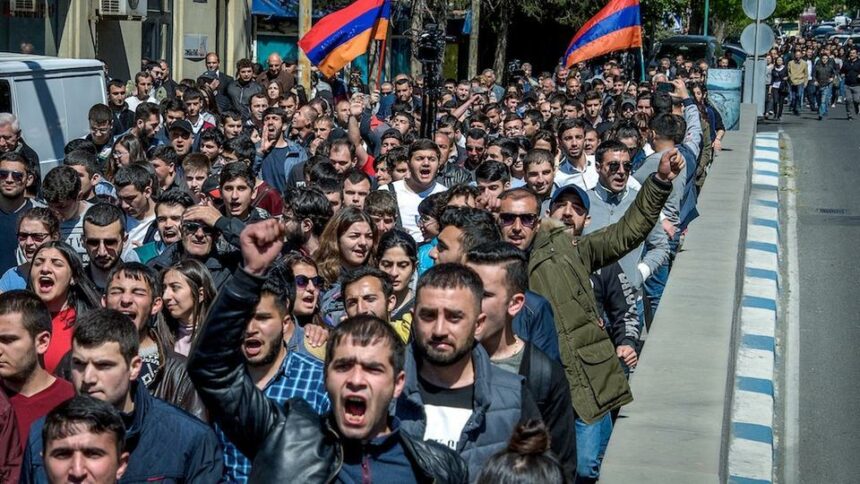
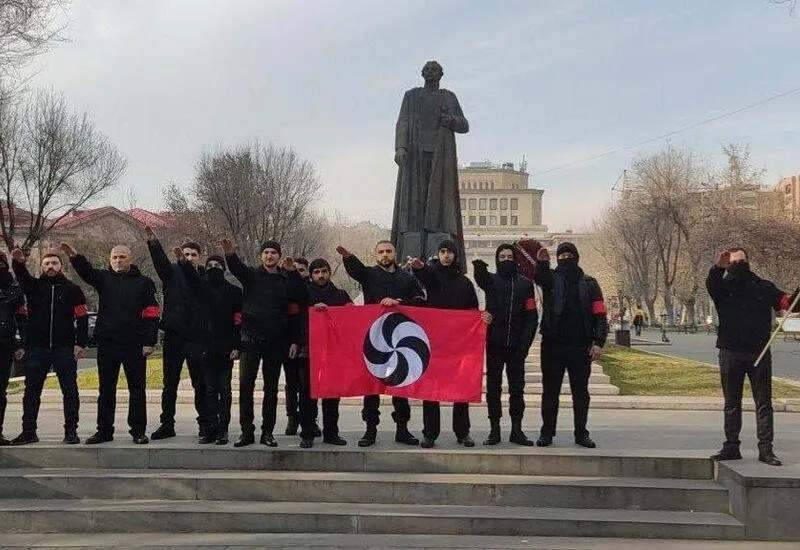
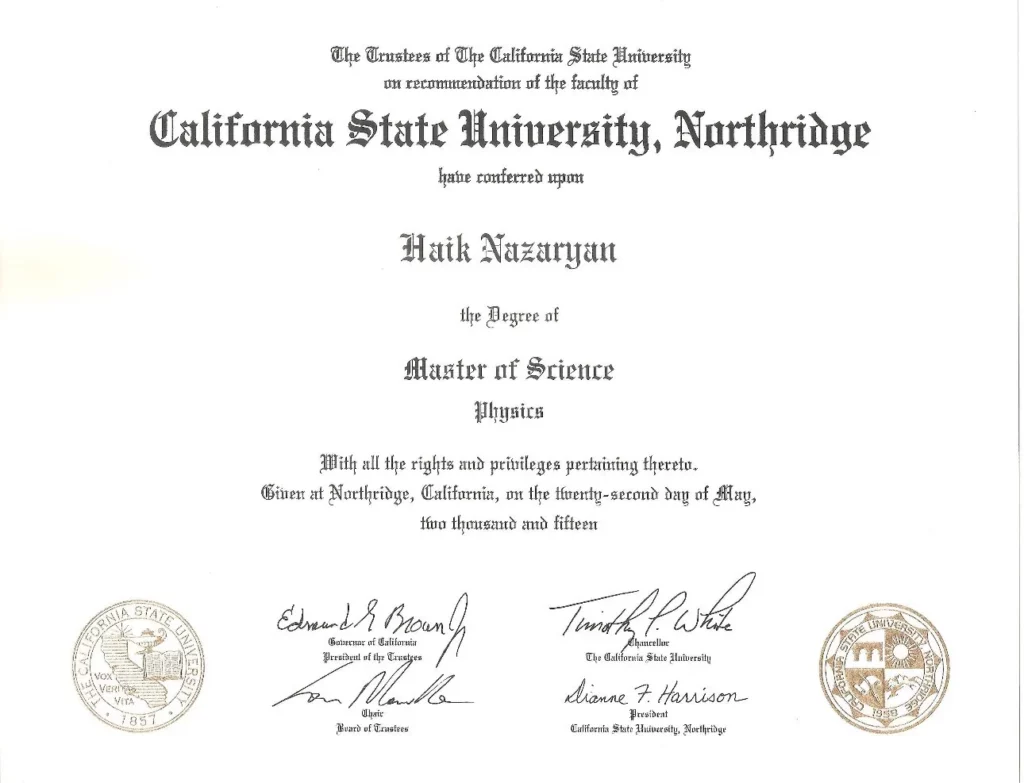
A notable and recent example illustrating the radicalism within the Armenian diaspora is the recent march of an Armenian Nazi organization in the heart of Armenia’s capital, Yerevan. The march involved Nazi salutations and rhetoric openly displayed in broad daylight. The organization’s founder is a U.S. citizen named Hayk Nazaryan, born in California and a graduate of California State University, who relocated to Armenia in 2016.
An interesting aspect is that following the footage of the Nazi march in Yerevan organized by him on January 1st, opinions and reactions among Armenians diverged. The majority of Armenians within Armenia denounced his actions, emphasizing that Hayk and his group do not represent Armenia and its people. In contrast, diaspora Armenians exhibited varied responses, with most openly supporting and attempting to justify his actions, while others chose to divert the topic.
Revisiting the third point, it appears that diaspora Armenians are channeling their complete focus, resources, connections, and influence toward garnering international support by straining Azerbaijan’s relations with other states. This is particularly evident in countries such as the U.S. and France, where the Armenian diaspora holds significant influence and resources. These nations are also where Armenians have been residing as full-fledged citizens for over a century.
In these countries, political figures, particularly those with ambitious political aspirations, frequently strive to appease their ethnic Armenian citizens to secure their votes. As history has repeatedly shown, during elections, grand statements and promises are often made to Armenians. However, once the elections conclude, these assurances are frequently forgotten and pushed aside.
What has persisted for decades, and to which Azerbaijan has grown accustomed, was generally not a significant concern. In most cases, we could anticipate a surge in negative rhetoric as elections approached in those countries. We were aware that this rhetoric would subside after securing the necessary votes, and everything would return to business as usual.
Since 2020, and notably accelerating after 2023, there has been a shift in the tactics of the Armenian diaspora. The focus now lies on deteriorating Azerbaijan’s relations with other countries, employing fabricated propaganda, fake news, lies, and various manipulative tools. One of their primary objectives is to influence the countries of which they are citizens to take actions they know will provoke a harsh reaction from Azerbaijan. The subsequent step involves amplifying Azerbaijan’s strong response, creating a disproportionate narrative. This strategy aims to initiate a distancing process between the two countries, starting at the government level and naturally extending to impact business and civil relations.
We have observed this phenomenon unfold with several countries, particularly notable with the U.S. and France, both of which Azerbaijan has historically maintained positive and mutually respectful relations across all levels.
Given this context, it is essential to grasp that the Armenian diaspora opposes peace in the South Caucasus region. They actively work to obstruct both Armenia and Azerbaijan from reaching a peace agreement and hinder genuine international support for the peace agenda. Furthermore, diaspora Armenians pursue their own agenda driven by personal interests. The signing of peace between Armenia and Azerbaijan conflicts with their interests. Instead, they seek to influence all parties, encouraging actions that could lead to another war, which they can then exploit for personal gain from the comfort of their residences in Los Angeles and Paris.
In summary, as Armenia and Azerbaijan strive to cultivate a positive dynamic in the peace process, the Armenian diaspora emerges as a significant challenge, actively attempting to impede progress and engage international actors in their efforts. At this crucial juncture, all parties must exercise extreme caution to counteract the diaspora’s attempts at undermining diplomatic relations. Foreign actors engaging with Azerbaijan should approach matters with fairness and impartiality, acknowledging the complexities involved. Returning to the earlier-mentioned report segment by Danielle Saroyan Ashbahian, it is evident that the Armenian diaspora exploits its foreign citizenship and government positions to propagate falsehoods, hindering the peace process and straining relations between their country of residence and Azerbaijan. Nations should be vigilant against such actions. Simultaneously, Azerbaijan, cognizant of the negative influence wielded by the Armenian diaspora, is encouraged to respond with wisdom, assuming the role of a diplomatic leader dedicated to preserving relations over potential destruction. Now, more than ever, a unified effort is crucial to thwart the diaspora’s disruptive goals, ensuring diplomatic relations triumph over provocations. Governments and citizens alike must discern these maneuvers, exposing and halting such manipulative tactics. It is a collective responsibility to safeguard ongoing progress and prevent the Armenian diaspora from achieving its provocative objectives.