Azerbaijan has provided a vivid and compelling example of the conditions under which the so-called “peaceful and diplomatic path to conflict resolution” can actually work—if the conflict has already escalated to open aggression. For thirty years, the diplomatic wheel spun in vain until Azerbaijan won the war. And perhaps, to understand what happened in Washington, it is worth recalling the negotiations that took place before the autumn of 2020—negotiations aimed at pushing through an “interim status” for Karabakh, carving out a second Armenian state on Azerbaijani territory, and persuading our country to “accept the results of the war.” But in reality, the war did not end on May 5, 1994, with the occupation of 20% of Azerbaijan’s territory. Now the negotiations have cemented a new arrangement—victorious for our country.
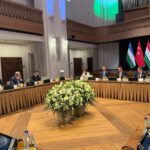
It is now time for a more detailed analysis of what actually took place. On August 8 in Washington, Azerbaijani Foreign Minister Jeyhun Bayramov and Armenian Foreign Minister Ararat Mirzoyan initialed the draft “Agreement on the Establishment of Peace and Interstate Relations between the Republic of Azerbaijan and the Republic of Armenia.” This is truly a landmark event and a crucial stage in normalizing relations between the two countries—let us recall once again that the normalization process was initiated by Azerbaijan in the immediate aftermath of its victory in the 44-day Patriotic War.
As diplomats know well, in international treaty practice, the initialing of a document is considered an important step before signing. It essentially expresses the parties’ intent to conclude negotiations on an agreed text. Importantly, initialing is a step toward signing, but not the signing itself. This choice reflects the consistency and principled stance of Azerbaijan.
Specifically, our country insists on constitutional amendments in Armenia to remove territorial claims to Karabakh. This is already a major diplomatic achievement for Azerbaijan: our position has not only been successfully defended but also recognized by the international community, primarily by the United States, which for months organized negotiations between the two countries and prepared the Washington meeting.
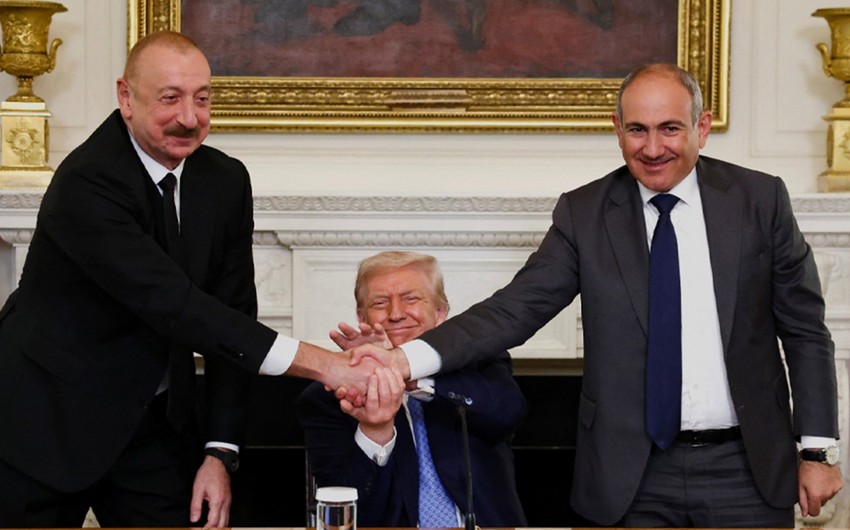
It is no coincidence that the joint declaration signed at the end of the Washington summit—bearing the signature of U.S. President Donald Trump—confirms the need for additional measures to achieve the signing and ratification of the agreement. Azerbaijan firmly defended its stance on a complex and important stage. As President Ilham Aliyev stated, for the agreement to be signed, Armenia must do its “homework”—amend its constitution accordingly. This is no longer just Azerbaijan’s demand—additional measures are now stipulated in a document signed by Aliyev, Pashinyan, and Trump. And that is not all.
Analysis of the published text shows it is based precisely on Azerbaijan’s proposed agenda. Before the initial draft was prepared, Azerbaijan put forward five key principles, all of which are fully reflected in the document.
First and foremost is the mutual recognition of sovereignty and territorial integrity, along with the renunciation of territorial claims now and in the future—closing the door to any attempts at revanche. Article 1 states that both parties recognize each other’s territorial integrity within the borders corresponding to the administrative lines between the union republics during the USSR period. This definitively affirms Karabakh as part of Azerbaijan.
A brief historical reminder: Armenia ostensibly supported the Alma-Ata Declaration, which recognized former administrative borders as state borders, but later its Supreme Council added numerous reservations precisely about claims to Azerbaijani territory. Before the war and before the current talks, many Armenian politicians argued Karabakh did not belong to Azerbaijan, citing a self-declared “independence referendum,” inventing non-existent Soviet legal norms supposedly granting autonomous regions the right to secede, and so forth. Robert Kocharyan was particularly active in promoting such notions. Now these disputes are over. As President Aliyev said: “Karabakh is Azerbaijan—period!” This is now enshrined in the Washington declaration.
Article 2 links the renunciation of territorial claims to this provision, excluding any future Armenian claims to Karabakh. It also commits Armenia to preventing any actions on its territory aimed against Azerbaijan’s sovereignty and territorial integrity. In other words, voicing claims to Karabakh or maintaining remnants of the former occupation regime is no longer possible, even unofficially. This will be a difficult challenge for Pashinyan’s government, but Armenia must take this path—now as a matter of binding obligation, not goodwill.
The agreement also includes a pledge by both sides not to use force and not to allow their territories to be used by third states for aggression against the other. This is especially significant given the presence of foreign military forces in Armenia and the absence of such in Azerbaijan. Recent reports of additional Russian forces and equipment being moved to the base in Gyumri underline the importance of this clause. Armenia has now pledged not to host any such hostile actions.
Another major point: Article 7 prohibits the deployment of third-party forces near the border—a previously contentious issue. This directly affects the EU Monitoring Mission (EUMA) in Armenia, which under the draft, Yerevan must terminate. The same article outlines that border delimitation and demarcation will be conducted by specialized commissions under a separate agreement, reflecting Azerbaijan’s stance and rejecting the imposition of pre-selected maps.
A further significant diplomatic win for Azerbaijan is the inclusion of a clause on missing persons, providing for information exchange and justice. The fate of around 4,000 Azerbaijanis missing since the early 1990s remains unresolved.
Under Article 8, both sides commit to combating separatism. This is unprecedented in Azerbaijan-Armenia relations, obligating Armenia to oppose any separatist activity. Azerbaijan, for its part, has never supported separatism in Armenia or elsewhere, but Armenia in past years actively supported separatist groups in Azerbaijan, such as the “Sadval” militants trained by Armenian security services, who in 1994 attempted terrorist acts in Baku. Now such activities are explicitly prohibited.
Article 11 stipulates that obligations to third countries must not contradict the agreement—protecting Azerbaijan’s long-term security interests. Article 12 prevents parties from citing domestic law as grounds for non-compliance, blocking Armenia from reverting to past legal pretexts. Dispute resolution is assigned to a bilateral commission, preventing third-party interference.
Finally, Article 15 rules out mutual claims in international legal forums, eliminating avenues for Armenia or others to raise Karabakh-related issues, including through NGOs or “human rights” or “cultural heritage” pretexts. The matter is closed—permanently.
The contours and scale of Azerbaijan’s diplomatic victory in Washington thus become clear. The initialed agreement not only addresses Azerbaijan’s legal concerns over the former conflict but also comprehensively neutralizes long-term threats to its security, sovereignty, and territorial integrity.
Azerbaijan has not merely consolidated its military success in legal and diplomatic terms—it has converted its brilliant victory in Karabakh into serious political and diplomatic dividends, into security guarantees, and into binding obligations that will neutralize threats and risks in the long run. Simply put: we know how to win—both on the battlefield and at the negotiating table.
Nurani
Translated from minval.az