As foreign policy debates intensify in Washington over how to conclude wars rather than merely manage them, Azerbaijan’s post-war trajectory in the South Caucasus has begun to attract analytical interest. Not as a universal template, but as a case study in rapid transition from conflict to reconstruction led primarily by national institutions.
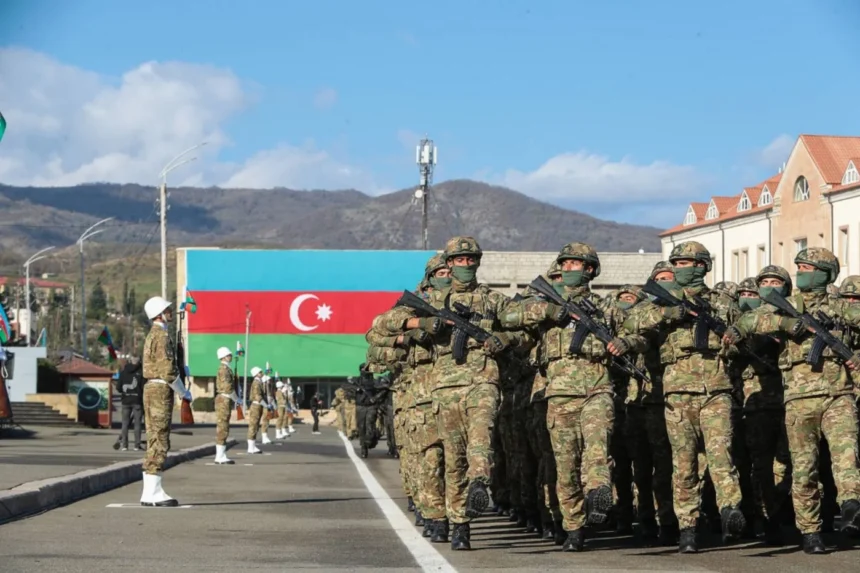
Following the 2020 war, Azerbaijan moved quickly from military operations to large-scale rebuilding. Vast territories required extensive demining, infrastructure restoration, housing development, and energy network reconstruction. Rather than relying on prolonged international peacekeeping frameworks, Baku launched a centralized reconstruction program designed to integrate security stabilization with long-term economic planning.
Entire districts were designated as “green energy zones,” with investments in renewable energy infrastructure and smart city planning. Transport corridors were upgraded to reconnect the region internally and position Azerbaijan within broader Eurasian trade routes. Reconstruction was framed not only as recovery, but as modernization.
This sequencing—conflict resolution followed by rapid state-led rebuilding—has resonated in U.S. policy discussions, particularly as debates surrounding a potential recalibration of American foreign policy emphasize sovereignty, reduced open-ended commitments, and measurable post-conflict outcomes.
Azerbaijan’s geographic position amplifies its relevance. Located along the Trans-Caspian International Transport Route, commonly known as the Middle Corridor, the country has become an increasingly important link between Central Asia and Europe. The corridor has gained strategic visibility amid disruptions to northern trade routes and the recalibration of global supply chains. Yet corridor politics rarely unfold in isolation.
Russia’s evolving posture remains central to the region’s strategic equation. In 2024, Russian peacekeeping forces began withdrawing from Karabakh ahead of schedule, marking a significant shift in Moscow’s on-the-ground presence. While Russia retains historical influence and deep security ties in the South Caucasus, its capacity to act as the primary security arbiter has been constrained by broader strategic pressures, including the war in Ukraine. This recalibration has created new space for regional actors—but it has also introduced uncertainty. Moscow is unlikely to disengage entirely from a region it considers strategically proximate, and any further adjustments to its posture could affect transit security and normalization dynamics.
Iran’s security calculations add another layer of complexity. Tehran closely monitors developments along its northern frontier, particularly Azerbaijan’s expanding ties with Israel and Western partners. Iranian officials have repeatedly expressed concern over what they perceive as shifts in regional military alignments and external influence near their borders. Beyond military considerations, Iran also views regional transit configurations through a strategic lens. Any corridor arrangement that alters trade flows, regional access patterns, or connectivity balance in ways perceived as exclusionary could generate political friction. For Tehran, preserving both border stability and economic relevance in regional trade architecture forms part of its broader security calculus.
At the same time, the growing importance of transport corridors introduces structural vulnerabilities. Infrastructure that enhances connectivity can also become leverage. Transit routes—whether energy pipelines, rail corridors, or logistics hubs—may be exposed to political pressure during periods of tension. The risk extends beyond physical disruption to strategic coercion, particularly in a region where unresolved political sensitivities intersect with major power competition.
China’s Belt and Road Initiative intersects with elements of the Middle Corridor, as Beijing seeks diversified westward connectivity. Chinese companies have participated in infrastructure and logistics projects across the wider region, embedding economic relationships within long-term trade architecture. While Azerbaijan has pursued a multivector foreign policy—maintaining strategic partnerships with Turkey, the European Union, Israel, and the United States while managing pragmatic relations with Russia and economic engagement with China—the presence of multiple external actors increases the geopolitical density of the corridor environment.
Transit routes in the South Caucasus operate within a broader contest over supply chains, energy security, and strategic influence. Their fragility lies not only in geography, but in geopolitics. Shifts in global alignments, sanctions regimes, or regional security perceptions can quickly alter the operating environment in which such corridors function.
For Washington, Azerbaijan’s post-war experience offers insight into how a mid-sized state navigates reconstruction while positioning itself within emerging connectivity frameworks. At the same time, any deeper U.S. engagement would require careful calibration, given Russia’s residual influence, Iran’s security sensitivities, and the structural competition shaping Eurasian trade corridors.
The Azerbaijani case is not universally transferable. Each conflict carries distinct legal, demographic, and historical parameters. However, the relatively rapid transition from active hostilities to structured reconstruction—combined with strategic infrastructure development—has drawn attention in policy circles evaluating post-conflict stabilization under conditions of great-power rivalry.
The durability of this trajectory remains central. Long-term stability will depend not only on reconstruction and economic integration, but also on sustained normalization efforts and the careful management of regional power dynamics.
As Washington reassesses its approach to protracted conflicts, Azerbaijan’s shift from battlefield to rebuilding enters the conversation as a data point—one that illustrates both the opportunities and structural constraints inherent in post-war consolidation within an increasingly competitive geopolitical landscape.
Rachel Avraham is the CEO of the Dona Gracia Center for Diplomacy and an Israel-based journalist. She is the author of “Women and Jihad: Debating Palestinian Female Suicide Bombings in the American, Israeli and Arab Media.”