A ceasefire agreement between Armenia and Azerbaijan was signed on May 1994 to halt the bloody conflict. However, serious intermittent skirmishes had been continuing since the signing of the ceasefire agreement. To this end, the former “Karabakh conflict” between two South Caucasus countries showed that holding “status-quo” looked increasingly shaky.
It is worth noting that the occupation policy of the Armenian government prevented the full regional integration and led this country to isolation. On the contrary, Azerbaijan successfully used its energy resources from the Caspian Sea and established a strong partnership with neighboring countries such as Georgia and Turkiye to facilitate overall regional economic cooperation and integration. Important energy and connectivity projects such as the Baku–Tbilisi–Ceyhan pipeline (BTC), the Southern Gas Corridor (SGC) and the Baku-Tbilisi-Kars railway (BTK) opened up new opportunities for regional cooperation as well as strengthened partnership between the West and the South Caucasus. Moreover, strategic partnership between the European Union and Azerbaijan creates a positive business and investment environment, as well as export of fossil fuels from the Caspian region to the Western energy markets supports effective producer-consumer dialogue.
Despite the positive economic growth and regional cooperation, the former Karabakh conflict continued to cause a major threat to regional security and overall economic prosperity. It should be noted that OSCE Minsk Group in its mediation of the Armenia–Azerbaijan conflict failed to produce decisive results to ensure peace, and in fact, it was obvious that Armenia would never agree to end its occupational policy towards Azerbaijan.
After the April War in 2016 between Azerbaijan and Armenia, the former conflict entered a dynamic stage, as a fragile ceasefire was brokered between the warring parties. As a result of Armenia’s attacks, 34 towns and villages in Azerbaijan were shelled, causing casualties among civilians and the servicemen of the armed forces of Azerbaijan as well as destroying or substantially damaging private and public property, including residences, schools and kindergartens. Six civilians were killed, and 33 civilians (including children) were wounded. The clash was the worst outbreaks since the end of a full-scale war over the region in 1994.
In fact, the April War showed again that a politics of no war, no peace between warring parties could even trigger a new large-scale war, and consequently hostilities between Azerbaijan and Armenia broke out again on September 27, 2020, when Armenian military forces shelled military positions and civilian settlements of Azerbaijan. As a result, President, Commander-in-Chief Ilham Aliyev announced counter-offensive operations along the entire front in order to prevent military provocations and combat activity of the Armenian armed forces and ensure the safety of the civilian population.
During the 44 days counter-offensive operations, Azerbaijani forces liberated over 300 settlements, including the cities of Jabrayil, Fuzuli, Zangilan, Gubadli, and Shusha, from long-lasting Armenian occupation. The war ended with the signing of the act of Armenia’s capitulation, the “Statement of the President of the Republic of Azerbaijan, Prime Minister of the Republic of Armenia and President of the Russian Federation” on November 10, 2020. According to this document, Armenia also returned the occupied Aghdam, Kalbajar, and Lachin districts to Azerbaijan.
It is highly important to underline that there were serious challenges and difficulties in implementing all the provisions of the trilateral ceasefire statement. Specifically, the fourth clause of the November deal which stipulates – “The peacemaking forces of the Russian Federation shall be deployed concurrently with the withdrawal of the Armenian troops”. The continued illegal transit of Armenian armed forces and weapons through the Lachin Corridor to Karabakh sparked new escalations and damaged peace efforts.
Another essential clause of the November deal is the ninth clause which stipulates – “All economic and transport connections in the region shall be unblocked. The Republic of Armenia shall guarantee the security of transport connections between the western regions of the Republic of Azerbaijan and the Nakhchivan Autonomous Republic to arrange unobstructed movement of persons, vehicles and cargo in both directions”.
Despite several high-ranking diplomatic talks between the parties in different platforms, the sides could not overcome main problems mainly because of Armenian unwillingness to fulfill its obligations under the November deal and sign a peace agreement on the basis of the mutual recognition of each other’s sovereignty and territorial integrity.
Against the background of such developments, on September 19, 2023, Azerbaijani vehicle exploded on an anti-tank landmine planted in the Khojavand region by a sabotage group of the Armenian armed forces located in the territories of temporary deployment of the Russian peacekeeping contingent in Azerbaijan. As a result of this provocation, 2 civilians were killed. On the same day, 4 personnel of the Ministry of Internal Affairs dispatched to the area of the aforementioned terror act were killed in a landmine explosion on a new road tunnel in Taghaverd village of Khojavend region. So, the total number of landmine victims has reached 314 people, of which 61 people have died since the 44-day Patriotic War of 2020.
This terror act triggered a new confrontation between the Azerbaijani army and the Armenian troops in Karabakh region. During the anti-terror operations that lasted for a little more than 23 hours, the positions of the Armenian armed forces on the front line and in-depth and long-term firing points, as well as combat vehicles and military objects were destroyed by the use of high-precision weapons. With this, the constitutional structure was restored in all territories of Azerbaijan, and on September 28, the leader of the separatist regime in Karabakh signed an order to dissolve all “state” agencies and organizations.
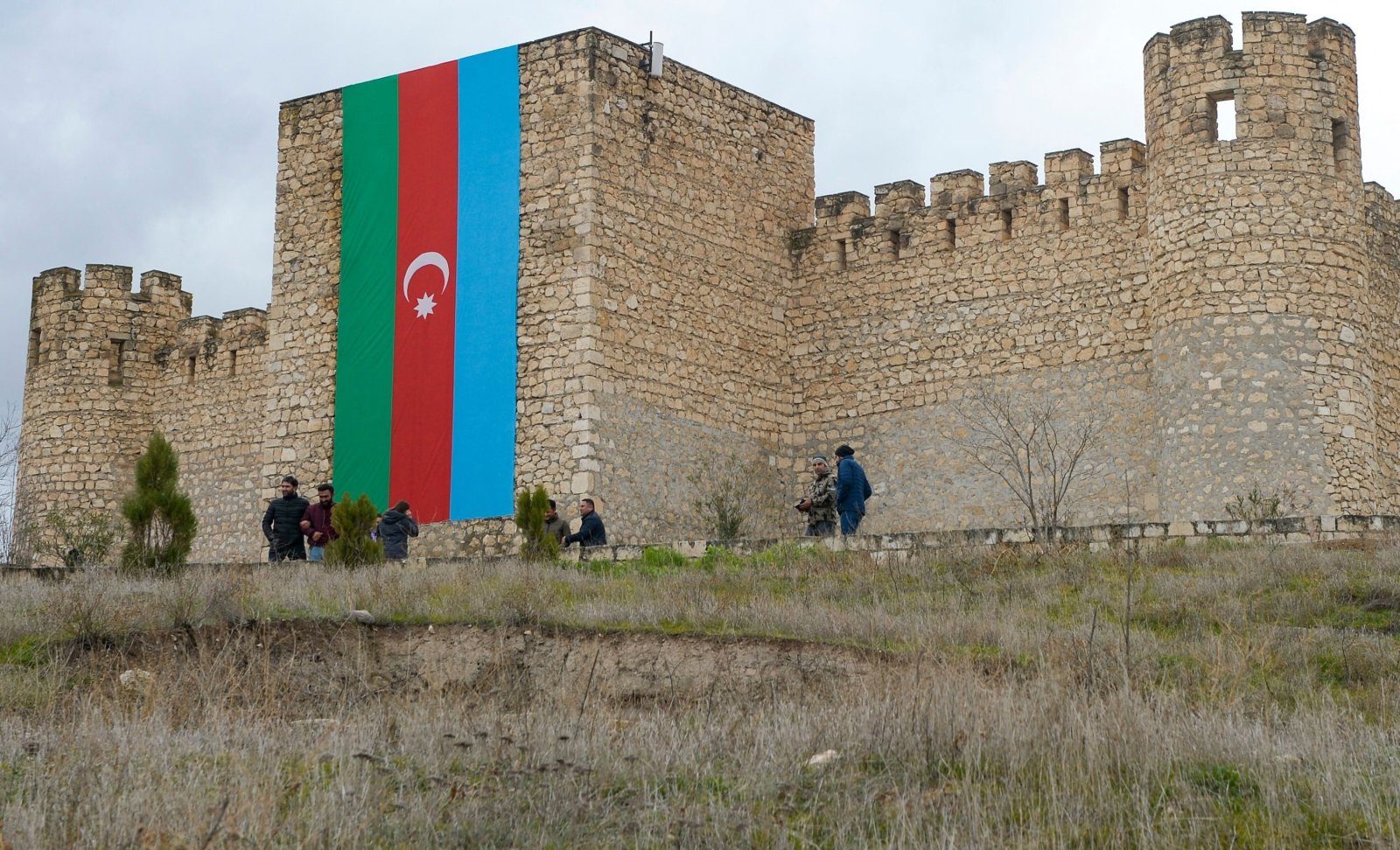
Dissolution of separatist regime in Karabakh ended long-lasting and bloody conflict in the region, and opened a historic chance to sign a peace treaty that will create new opportunities for the whole region. It is worth noting that on October 15, when President Ilham Aliyev raised the State Flag in the territories cleared of the separatists, including the cities of Khankendi, Khojaly and Khojavand, and the settlements of Aghdara and Asgaran, Azerbaijan restored its full sovereignty over Karabakh and officially became united again.
In the end, the people of Azerbaijan and Armenia have suffered enough and deserve peaceful coexistence. Azerbaijan respects international law and supports the territorial integrity of all neighboring countries. Similarly, peace-building efforts in the post-conflict period and peace proposal on the basic principles for the establishment of relations between the two countries reflect Azerbaijan’s position towards establishment of durable peace and full regional economic integration.
Shahmar Hajiyev, Senior Advisor, Center of Analysis of International Relations