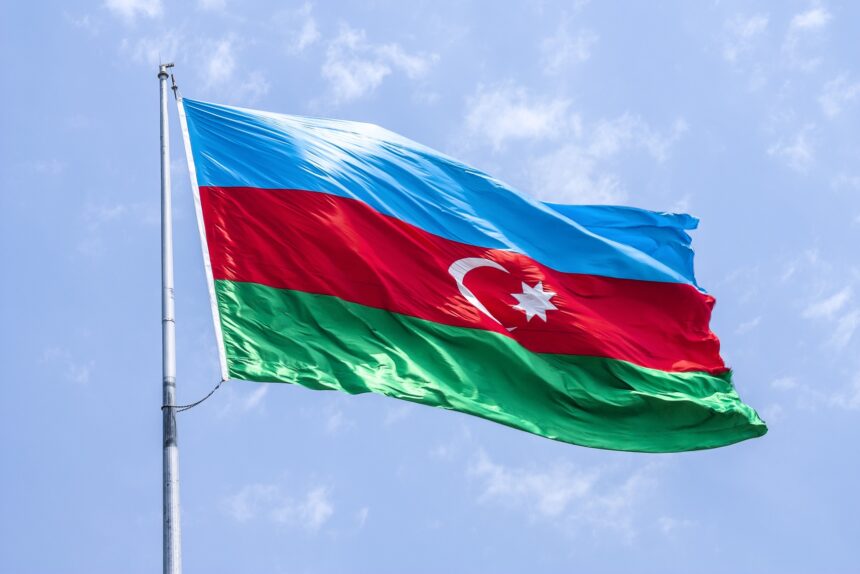
To maintain regional balance and develop strategic partnerships with global powers such as the United States, the European Union, and China, it was essential for Azerbaijan to implement a foreign policy based on national interests. This vision was shaped by the late President and national leader Heydar Aliyev, who emphasized economic development and national security. One of the most important milestones of this strategy was the signing of the “Contract of the Century” with Western energy companies, which significantly boosted foreign investment. It included 13 leading oil companies from 8 countries (Azerbaijan, the USA, the UK, Russia, Türkiye, Norway, Japan and Saudi Arabia). In parallel, Azerbaijan established a strong strategic partnership with Türkiye to enhance regional stability and security.
The energy sector quickly became a core component of Azerbaijan’s foreign policy. The “Contract of the Century” laid the foundation for major infrastructure projects such as the Baku–Tbilisi–Ceyhan (BTC) Main Export Oil Pipeline and the Southern Gas Corridor (SGC), facilitating the export of Caspian fossil fuels to global energy markets.
Heydar Aliyev’s successor, President Ilham Aliyev, has continued to pursue and deepen this multi-vector foreign policy. Azerbaijan has established strategic partnerships with numerous global and regional actors, including Türkiye, Pakistan, EU countries, Central Asian and South East Asian nations. Azerbaijan’s commitment to neutrality and balanced diplomacy is further reflected in its decision not to join any military alliance. Instead, it became a full member of the Non-Aligned Movement (NAM) on May 26, 2011, underscoring its independent foreign policy approach. NAM’s core principles respect the sovereignty and territorial integrity, refraining from acts of aggression, non-interference into the internal affairs of another country.
In recent years, Azerbaijan has signed several strategic partnership agreements with friendly countries. To this end, the Shusha Declaration on Allied Relations between the Republic of Azerbaijan and the Republic of Türkiye has special importance for Azerbaijan. The document reaffirmed the principles of solidarity and mutual assistance in bilateral and multilateral formats in such issues of national interest as independence, sovereignty, territorial integrity of both nations, inviolability of their internationally recognized borders.
Additionally, negotiations with the European Union on a new strategic partnership agreement have progressed significantly, with consensus reached on 90–95 percent of the provisions. During the visit of EU High Representative for Foreign Affairs and Security Policy Kaja Kallas to Baku, both parties highlighted the growing trust and cooperation between Azerbaijan and the EU.
President Ilham Aliyev’s continued focus on energy diplomacy has strengthened Azerbaijan’s international standing. The signing of a “Memorandum of Understanding on a Strategic Partnership in the Field of Energy” with the EU, which includes a pledge to double the capacity of the SGC to deliver at least 20 billion cubic meters of gas annually by 2027, further cemented this strategic relationship. The country has expanded the geography of its gas exports, with 12 countries currently receiving Azerbaijani gas. This diversification strengthens Azerbaijan’s role as a reliable energy supplier, particularly in the context of European energy security. With ongoing infrastructure projects and strategic partnerships, even more countries are expected to join the list in the near future, further enhancing the country’s economic and geopolitical influence.
In addition to fossil fuels, Azerbaijan has prioritized the development of renewable energy to diversify its energy portfolio and contribute to global sustainability goals. The country, in partnership with Georgia, Romania, and Hungary, signed a “Memorandum of Understanding for the Development of the Black Sea Energy Submarine Cable” in 2022. This project aims to export clean energy from the South Caucasus to Europe and will soon be joined by Central Asian countries like Kazakhstan and Uzbekistan. This initiative positions Azerbaijan as an important green energy transit hub and supports the establishment of a Central Asia–South Caucasus–EU green energy corridor. Moreover, Azerbaijan’s successful hosting of COP29 in Baku last year further demonstrated its commitment to climate action and its support for small island states facing existential environmental threats.
It is essential to highlight that following the liberation of Karabakh from occupation, Azerbaijan has expanded its foreign policy agenda. As President Ilham Aliyev stated during the “Facing the New World Order” International Forum in April 2025: “During all those years of occupation, our main foreign policy priority was the restoration of territorial integrity. All our efforts had the ultimate goal of restoring sovereignty and territorial integrity. That’s why many other important issues of our potential foreign policy agenda were overshadowed because that was the national idea of the Azerbaijani people and the Azerbaijani state.”
Today, Azerbaijan is broadening its foreign policy outreach, especially toward African and Asian nations and key global players. In April 2025, President Ilham Aliyev visited China and signed agreements establishing a comprehensive strategic partnership between the two countries. A cornerstone of this relationship is mutual respect for each other’s sovereignty, independence, and territorial integrity.
At the same time, despite challenges with regional powers like Iran and Russia, Azerbaijan continues to seek constructive engagement and maintain friendly relations. The recent visit by Iranian President Masoud Pezeshkian to Azerbaijan and the signing of several bilateral agreements marked a potential turning point in relations. In particular, Azerbaijan aims to develop a critical connectivity route through Iranian territory to link mainland Azerbaijan with Nakhchivan Autonomous Republic. Importantly, while maintaining balanced relations with neighbors, including Russia, Azerbaijan has reaffirmed its unwavering support for the territorial integrity of Ukraine. As President Ilham Aliyev emphasized: “We have always supported and will continue to support Ukraine’s territorial integrity and sovereignty.” This highlights Azerbaijan’s firm support for the principles of international law, and its consistent foreign policy.
In conclusion, in an era marked by trade wars and geopolitical uncertainty, Azerbaijan’s multi-vector foreign policy continues to deliver results by deepening bilateral ties with strategic allies. Azerbaijan’s path toward sovereignty, economic development, and geopolitical significance reflects the enduring success of the multi-vector foreign policy strategy, and foreign policy objectives positively contributes to national security, development, economic security and trade.
Shahmar Hajiyev, head of department at the Center of Analysis of International Relations.