
The role of women in the socio-political life of Azerbaijan in the 1920s
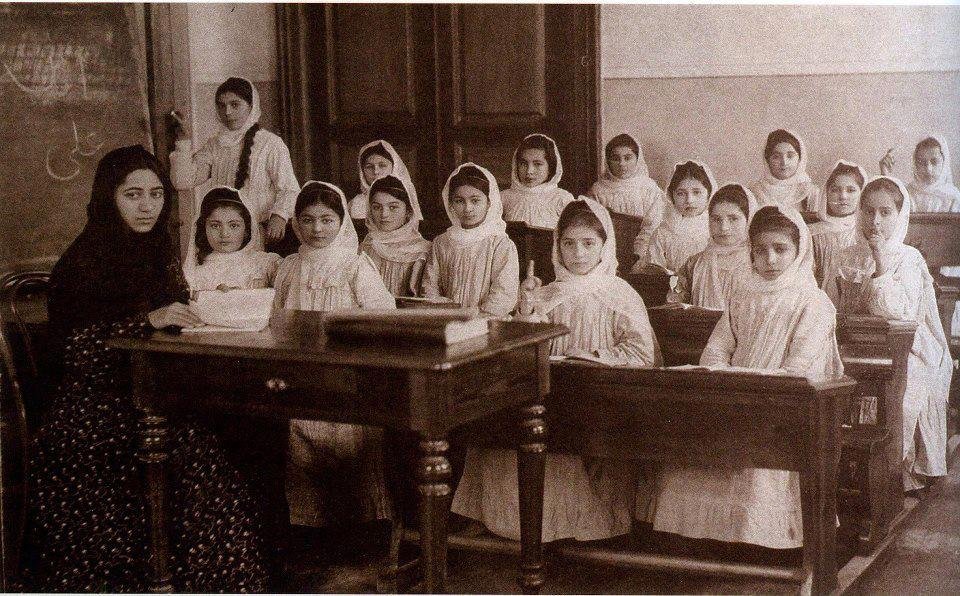
Since Sharia law was in force in Azerbaijan in the Tsarist Russia period, Azerbaijani women had a hard time. When the sun was setting on the Russian Empire, there were a total of 942 schools in Azerbaijan. Of the 62,161 students enrolled in them, 22,161 were Azerbaijani, and only 1,862 of those were girls. In the Azerbaijan Democratic Republic, due to the war and other difficulties, the number of schools dropped to 643. The number of pupils naturally dropped as well, to 16,621, of which 1,420 were girls (Şərq Qadını (Woman of the East) magazine, 1930, No 5).
The Sharia law was still there during the ADR, and this was the greatest obstacle on the Azerbaijani women’s path to freedom. Although de jure women gained the right to vote, they could not exercise this right de facto. The Bolsheviks, who included women’s freedom in the party program as one of the main provisions, considered the elimination of female illiteracy as a key factor in the building of Communism. This format of society became possible only after the establishment of the Azerbaijan SSR in 1920. One of the most important tasks in the building of a new society in the 1920s was the liberation of the Azerbaijani woman and bringing her to the arena of economic, social and cultural life. Women made up half of the republic’s population, and it was important that they participate in the building of this new society alongside men. Numerous party resolutions set out a plan for a comprehensive study of women’s issues, the status and position of women, female labor, cultural level and education.
Women’s rights legislation and women’s networking
More than twenty decrees and resolutions on women’s issues were adopted in 1920-1922, including a decree on the protection of mother and child, a decree prohibiting the relocation of pregnant women and nursing mothers, regulations of the committee to improve the living conditions of working women, a directive on making March 8 a day off for women, and so on. As a result of the implementation of these documents, women gained political and economic rights, the right to be represented in government agencies, to study, work and receive equal pay with men.
The first women’s club in Azerbaijan was established in June 1920 in the apartment of Jeyran Bayramova, one of the activists of the women’s movement. Together with Nisa Gafarova, Zeynab Rizvanova, Ayildiz Gasimova and others, Bayramova started campaigning in order to engage Muslim women in the club. An announcement was published in the Kommunist newspaper: “Comrades, Muslim women! Visit the Muslim Women’s Club, located at 73 Spasskaya Street.” (Kommunist, June 6, 1920). At first, women were afraid to visit the club. Then Jeyran Bayramova and her closest associates, several activists from the club’s management—Masma Mammadova, Hokuma Mammadova, Maliknisa Malikova and others—decided that, in addition to holding meetings and discussions, a sewing cooperative should be opened at the club. Women who became members of this cooperative were taught to read and write, and after completing the course, those who successfully passed the exam were given employment (Sultanova, 1964:31).
Adopted in May 1921, the first Constitution of the Azerbaijan SSR gave women ample rights. Article 79 of that Constitution emphasized the equality of men and women in all areas of economic, state, cultural and social life. (Bakinskiy Rabochiy (Baku Worker), May 25, 1921). Women were guaranteed the right to work and rest on an equal basis with men, as well as equal pay, social security and education. All women over 18 years of age were granted the right to vote. Decrees and resolutions were also issued to ensure the rights of mother and child and to regulate marriage and divorce. Polygamy, temporary marriage (sigheh), and forcing girls into marriage were prohibited, and the marriage age for girls—a girl could be as young as 9 years old to marry according to Sharia—was raised to 16 (Heyat, 2002:88).
However, in the early years, women still could not fully comprehend the significance of the rights they had gained, and the relics of feudal patriarchal way of life hindered the handling of women’s issues in Azerbaijan. Therefore, the issuance of decrees, resolutions and regulations and the adoption of laws did not mean actual gender equality. Those legislative acts had to be introduced to the population through active organizational and educational work. At the 1st All-Russian Congress of Women Workers’ Organizations of the East held in Moscow in April 1921, it was decided that “the campaigning carried out in the national regions of the East should be adapted to the diversity of forms of economic development and the cultural level of the peoples of the East.” This congress also pointed out the need to establish women’s production cooperatives.
Women’s departments and their scope of work
In November 1920, the so-called zhenotdels (“women’s departments”, officially—Department for Work Among Women, organizations engaged in women’s affairs) began to be established across the republic. Women’s departments played an exceptional role in handling women’s issues in Azerbaijan. It was a completely new, unprecedented format. Taking into account the local environment, specifics of everyday life and Muslim traditions, women’s departments carried out a very careful and accurate work, gradually involving women in public life. In a short time, having gained popularity and trust among the female population, they became tactical headquarters of progressive Muslim women.
In January 1921, the first meeting of leaders of women’s departments was convened in Baku, at which representative delegations were created to ensure communication between these departments and women. Representatives of the delegations were elected for a period of one year from among women workers and peasants, and then united in groups called the Council of Representatives. The responsibilities of delegations were defined at a meeting of the heads of regional women’s departments in the Central Committee in 1921: to promote the professional development of women and to involve women workers and peasants in active membership in all public and government organizations. These were the first practical steps aimed at motivating women to take initiative in governance.
Representatives were involved in political activities related to childcare, schools, cooperatives and women’s departments. The most active of them were selected to work in trade union bodies. By 1927, 14,846 women in Azerbaijan were members of trade unions, and 2,504—members of rural self-government bodies. In 1927 alone, 9 women were elected chairpersons of rural self-government. In the same year, 11 women became members of the Central Executive Committee of Azerbaijan, and another 11 members of the District Executive Committee. In 1928, 119 women became chairpersons of rural self-government bodies, 160—members of the District Executive Committee, and 17—members of the Central Executive Committee of the Azerbaijan SSR. Stressing the historical role of women’s departments in Azerbaijan, activist of the women’s movement Viktoriya Tseitlin said, “Our methods of working with women served as a model for the entire Transcaucasia.” (Kommunist, May 25, 1921).
First Congress of Women of Azerbaijan
The 1st Congress of Women of Azerbaijan was held in Baku in February 1921. 1,188 delegates took part in it; 815 of them were from Baku, 369—from 12 regions of the republic and another 4 came from Dagestan. As for the ethnic composition, 41.8% of the delegates were Azerbaijani, 36.7% Russian, 13.8% Armenian, and 7.7% representatives of other ethnic groups (Sultanova, 1970:53).
The main purpose of the congress was to intensify the activity of working women in Azerbaijan and organize the work of regional women’s departments. The following issues were discussed at the congress: “On the current situation”, “On education”, “On the congress of women of the East”. The congress was also attended by Party and state leaders of the Azerbaijan SSR N. Narimanov, S. Kirov, D. Bunyatzade, S. Agamalioglu.
In June 1922, the Congress of Women of Transcaucasia was held in Baku. It became a substantial contribution to the organization of the Transcaucasian Federation. According to the decision of the congress, the Committee for the Improvement of Women’s Labor and Life was established under the Central Executive Committee of Azerbaijan in 1922, which significantly expanded the scale of the struggle against the outdated attitude towards women in the family and everyday life. The Committee took a number of actions to ensure legal protection of mothers and children and to involve women in socially useful activities. The work of this committee was supervised by Gulnara Goylu gizi.
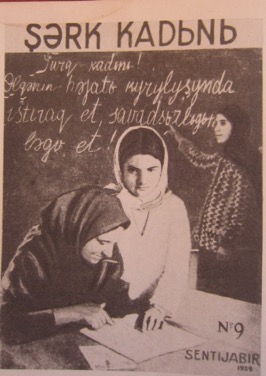
Azerbaijani women and media: Woman of the East magazine
Şərq Qadını (Woman of the East) began to be published in November 1923. Aliheydar Garayev, Rukhulla Akhundov, S. Efendiyev and S. Agamalioglu were involved in the preparation of its first issue. This first issue of the magazine featured an article by Samed bey Agamalioglu “The value of women in history” about the protest against old customs and traditions awakening in women and their courageous struggle for their rights. “The current era is the era of gender equality. And the achieving this equality depends on the women’s movement. For the sake of equality, women must free themselves from old traditions and way of thinking and boldly take a new path,” Agamalioglu wrote (Najafov, 1966:40).
Woman of the East regularly covered the struggle of women for their rights, educational programs and the organization of schools, protection of mother and child, opening kindergartens, antenatal clinics, craft cooperatives and other relevant topics. The following statement was published in the first issue of the magazine. “From now on, the magazine entitled “Woman of the East” will be published in Azerbaijan, this gateway to the Eastern world. For the first time in the history of Eastern women, they can independently publish a magazine, discuss their problems themselves and defend their rights. Rusted locks have been opened on schools, reading rooms and libraries that were locked for women. Now women, like men, can participate in the building of a new world of workers, and fight their enemies, like men, openly expressing their opinion.” (Woman of the East, 1923, No 1).
The range of issues covered by this magazine was very wide and varied. The magazine provided important assistance in organizing the work of women’s departments, informed readers about the decisions of the Party concerning women, about international women’s movements. The magazine often published articles by N. Krupskaya, C. Zetkin, V. Artyukhina, Y. Stasova, N. Kolesnikova, A. Sultanova, Sh. Efendiyeva and other well-known activists of the women’s movement. The readership of the magazine was not limited to Azerbaijan: it was also read in Uzbekistan, Turkmenistan, Tajikistan, Georgia, Tatarstan, Dagestan, Iran, Turkey, Afghanistan, India and other countries.
Struggle against the veil
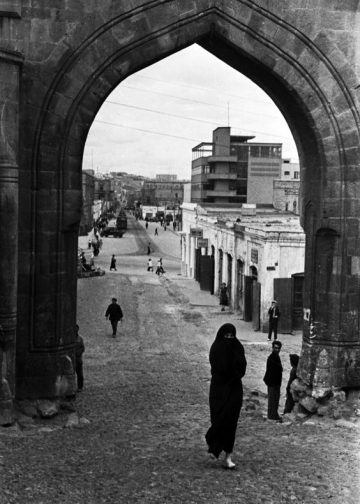 The theme of women’s freedom and emancipation is also reflected in Azerbaijani literature. Such works as Lightning by Abdulla Shaig, Honor by Suleyman Sani Akhundov, Sevil by Jafar Jabbarli were devoted to this problem. And along with the elimination of illiteracy, the struggle against the chador and the burka was also gaining momentum.
The 6th All-Azerbaijan Congress of Soviets was held in April 1929. Speaking at this congress, S. Agamalioglu elaborated on the need to step up the struggle against the chador and on the ways of this struggle. “We must get rid of the veil that enslaved women. And there is no need for a special decree for this. The government has to allocate money to fight religion and backwardness, and all institutions must be united in this fight in order to destroy their foundations in all departments, to strengthen the rights of Turkic women freed from slavery and to involve them more in everyday issues,” he said (Najafov, 1966:41). Following the resolution of the congress, the Central Executive Committee of Azerbaijan published special instructions on the struggle against the chador in 1929. It spoke about the origin of the chador, its class meaning, and the political, social and cultural importance of fighting both the chador itself and those who interfere with this struggle.
Thanks to the intensified public awareness campaigning, tens of thousands of women began to consciously take off their veils. In general, 269,870 women took off the chador across the Azerbaijan SSR in 1929.
All of the above is indicative of women’s active involvement in the struggle against outdated rules during that period. The rejection of the veil was the final stage of the policy of eliminating gender inequality, which began in 1920. By the eve of World War II, the difference in the level of education between men and women was eliminated as well. This balance must also be maintained in our modern society.
References
Literature:
- Farideh Heyat, (2002), Azeri Women in Transition: Women in Soviet and Post-Soviet Azerbaijan
- Sultanova Hökümə, (1964), Schastliviye zhenshini Sovetskogo Azerbaydzhana [In Russian: Sultanova Hokuma, (1964), Happy Women of Soviet Azerbaijan]
- Sultanova Hökümə, (1970), Schastye azerbaydzhanki [In Russian: Sultanova Hokuma, (1979), Happy Azerbaijani Women]
- Nəcəfov, Xəlil (1966), Səmədağa Ağamalıoğlu: bioqrafik oçerk. [In Azerbaijani: Najafov, Khalil (1966), Samedaga Agamalioglu: a biographical essay.]
Newspapers and magazines:
- Kommunist (Communist)
- Bakinskiy Rabochiy (Baku Worker)
- Şərq Qadını (Woman of the East)
Aze.Media