For the first time voting will be held across the entire territory of the country, without occupied districts, “gray zones”, etc. Azerbaijan, the first democratic republic in the Muslim East, is making every effort to ensure that this election is held in line with international standards, safely, fairly and transparently. With candidate debates, with funded and free campaigning, with accurate counting of votes.
Now, this is a fact that already presents a serious test … for the observers.
It is a common belief that experienced and professional observers come and check how elections are held in a particular state. But as a matter of fact, the observers themselves also take a “test”, as they also need to demonstrate at least minimal objectivity. And many of them have trouble doing this. For example, in Azerbaijan representatives of the “best houses of Europe” twist the Election Code to make accusations of insufficient democracy, whereas in Armenia they publish a “polished” preliminary report, as they did in 2008, when the “final” report was being prepared and Serzh Sargsyan’s victory was being “drawn”, while participants of a protest rally against election fraud were shot in the streets of Yerevan.
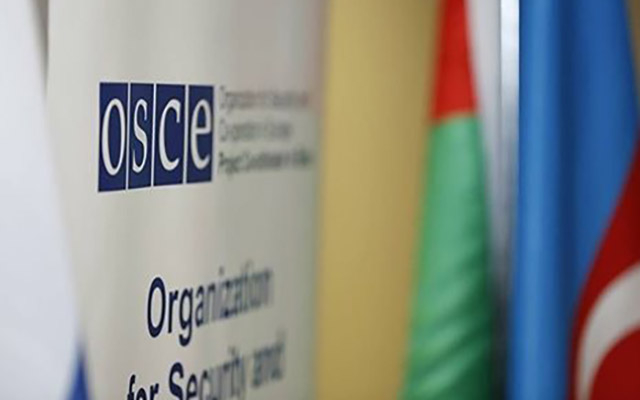
This applies in full measure to the OSCE Office for Democratic Institutions and Human Rights. The observation mission of this organization is working in Azerbaijan today. Representatives of the OSCE ODIHR have received official accreditation at the Central Election Commission. They have been provided with all the necessary conditions for their work. Rest assured, the OSCE/ODIHR report will be read in Baku most thoroughly.
Yes, we are well aware that there may be technical problems during voting. A camera may malfunction somewhere, or someone may not find his or her name on the voter lists. If the observers note these kinds of issues—well, that is their job, after all. But a critical eye is one thing and obvious bias multiplied by the circulation of deliberate fakes, on some outside orders to boot, is quite another.
Now, let us be frank: the OSCE ODIHR too often shows this very bias. Most often at the behest of well-known circles in the West, primarily the United States. However, to be fair, it must be said that OSCE institutions do not carry out only American orders. Suffice it to recall how in 2014 Dunja Mijatović, the current Commissioner for Human Rights of the Council of Europe and then OSCE Representative on Freedom of the Media, fervently demanded that the Ukrainian authorities immediately release the journalists of Gabrelyanov’s Life News. Not only did those journalists arrive in Ukraine without accreditation, but a grenade launcher (!) was found in the trunk of their car.
The OSCE has made too much of a mess on the Azerbaijani track. And this is not only about the Minsk Group.
Harlem Désir, a former Secretary of State for European Affairs, known for his openly pro-Armenian views, became the OSCE Representative on Freedom of the Media in 2017. And in his new capacity, he began to push his country’s interests quite vigorously, from “influence” to covering up espionage. And even more so, he tried to lecture official Baku, notably in the case of blogger Mehman Huseynov, right at a time when the police in France were bludgeoning the participants of the Yellow Vests protests.
Before that, there was a series of scandalous antics by the United States Ambassador to the OSCE, Daniel Baer. He waged an almost open war with Alexis Chahtahtinsky, a French diplomat of Azerbaijani origin, who was harassed for … a photograph with the President of Azerbaijan. The result is also known: after Chahtahtinsky was recalled, Baku decided to close the OSCE office. Simply put, Baku did not accept blatant bias and responded to it through “hard diplomacy”.
The members of the OSCE/ODIHR observation mission would do well to keep this background in mind today. And be aware that Azerbaijan is open to cooperation. Baku will accept reasonable criticism without complaint. But it will not put up with obvious commissioned bias. And if this happens, cooperation with the OSCE/ODIHR will be cut off.
Simply because any cooperation should be a two-way street. And it definitely should not involve regular dirty tricks and backstabbing.