Syrian Energy Minister Muhammad al-Bashir announced that Azerbaijani gas, at a volume of 3.4 million cubic meters per day, will be delivered to the Aleppo province, where it will be used to generate 900 megawatts of electricity. Turkish Energy Minister Alparslan Bayraktar stated that gas deliveries from Azerbaijan to Syria via Kilis will take place within a swap agreement that also includes Qatar. After Aleppo, gas deliveries to Damascus are planned.
The Israeli business outlet Globes reports that Azerbaijan’s gas deliveries to Syria are not only aimed at contributing to the country’s reconstruction. Baku has broader and more ambitious long-term objectives. According to the publication, Azerbaijan intends to eventually connect to Israel’s gas pipeline network through Syrian territory. “Azerbaijan is positioning itself as a major regional player by acting as a mediator in the normalization process between Israel and Syria. But the country is going further. Azerbaijani Minister of Economy and chairman of the state oil and gas company SOCAR, Mikayil Jabbarov, recently signed an agreement with Syrian Energy Minister Muhammad al-Bashir to supply natural gas to the war-torn country. According to the deal, gas exports to northern Syria will begin next month,” Globes notes.
According to UN estimates, 14 years of civil war have caused damage in Syria amounting to between $250 and $400 billion. More than half of the population remains displaced, and 90% live below the poverty line. One of President Ahmed al-Sharaa’s key priorities is ensuring electricity supply for the population. Qatar has pledged to invest $7 billion in building power plants, but this requires fuel. While Qatar could supply LNG, pipeline deliveries are significantly more cost-effective.
As reported, Azerbaijan is interested in supplying natural gas to Syria through Turkey — along the same corridor used for gas deliveries to Europe. Between January and May of this year, Azerbaijan exported about 4.77 billion cubic meters of natural gas to Turkey — a 1.9% increase compared to the same period last year. In May alone, exports amounted to approximately 1.05 billion cubic meters. During the same month, Russian gas exports to Turkey fell by around 62% year-on-year, totaling about 1.19 billion cubic meters, while Iranian supplies were significantly lower.
It should be noted that Azerbaijani energy exports to the Middle East via Israel are not new. Israel imports Azerbaijani oil through the Baku–Tbilisi–Ceyhan pipeline, from where it is transported by tankers to Israel.
According to Al-Monitor, Azerbaijan supplies between 40% and 60% of Israel’s oil needs. Despite the declared embargo, Turkey did not halt oil shipments to Israel during the war — reportedly due to its dependency on Azerbaijani oil and gas, as well as a transit fee of $1.27 per barrel.
In Syria’s case, the situation is more straightforward for Turkey: President Ahmed al-Sharaa operates under Ankara’s protection and is interested in maintaining regional stability. Azerbaijani President Ilham Aliyev has already expressed readiness to support Syria “in all areas.” Baku sees Syria as a key instrument for weakening Iran — Azerbaijan’s neighbor and an ally of the Assad regime. From an economic standpoint, the move is also beneficial. According to official data, over 90% of Azerbaijan’s exports in 2024 consisted of oil and gas. Natural gas exports alone increased by 5.8%, reaching 25.2 billion cubic meters. Of that, 12.9 billion cubic meters were delivered to Europe, 9.9 billion to Turkey, and 2.4 billion to Georgia. Now, Syria is being considered a potentially major and long-term buyer.
Globes reports that the agreement between Azerbaijan and Syria foresees the supply of up to 2 billion cubic meters of gas annually through the existing Kilis–Aleppo pipeline. However, due to infrastructure limitations, the initial volume will be limited to 1.2 billion cubic meters per year.
Azerbaijan has also previously participated in energy projects in Israel. In March, SOCAR signed a work plan for gas exploration in Block I of Israel’s northwestern exclusive economic zone. Azerbaijan won the tender thanks to an initiative by NewMed CEO Yossi Abu, made before the outbreak of war. SOCAR views Israel’s existing gas pipeline infrastructure as an opportunity to connect with Turkey via Syria and create a circular regional network.
Currently, Israel is connected to Jordan, which in turn links to Syria and Lebanon through the Arab Gas Pipeline. Azerbaijan’s initial plan envisions expanding the Arab Gas Pipeline, which currently reaches as far as Homs, and then branches to Tripoli (Lebanon) and Baniyas (western Syria). The distance from Homs to Turkey is about 150 kilometers, and Azerbaijan plans to connect to this system by investing an estimated $200 million.
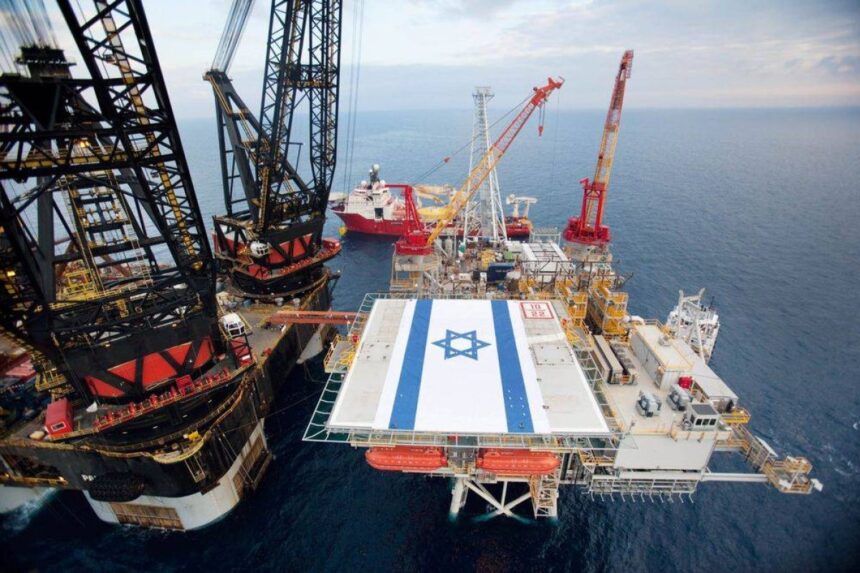
Another major step taken in Israel — as Globes also notes — was last month’s completion of SOCAR’s acquisition of a 10% stake in the Tamar gas field from Aaron Frenkel, valued at approximately $1.25 billion. “All of this reflects Azerbaijan’s far-reaching ambitions. The strengthening regional consolidation in the oil and gas sector serves these goals, and if it becomes possible to link all regional gas infrastructures via Syrian territory, it would benefit all parties — but especially Azerbaijan,” Globes concludes.
Translated from haqqin.az