In a speech in Moscow in 2016, Henry Kissinger, the former national security adviser and Secretary of State of the United States, said Ukraine should serve “as a bridge between Russia and the West, rather than as an outpost of either side.” In a similar vein, the Ukrainian leaders prior to the collapse of the balance between the two geopolitical poles argued that “Ukraine should make use of its geopolitical advantages and become a bridge between Russia and the West. We should not be forced to make the false choice between the benefits of the East and those of the West… There is no reason that good relations with all of our neighbors cannot be achieved”.
This vision was, however, and unfortunately, not possible for Ukraine to realize in practice, and the country eventually found itself in a war with the big neighbor, Russia. All other post-Soviet states in Eastern Europe and the South Caucasus, except for Azerbaijan, experienced a similar fate, though often in less tragic ways. The three Baltic states, Belarus, Moldova, Georgia, and Armenia largely aligned with one geopolitical pole, usually at the expense of their relations with the other. In this context, Azerbaijan stood out as the only country that has successfully built friendly relations with all major powers without aligning exclusively with one side.
Central to Azerbaijan’s diplomatic strategy is the overarching foreign policy framework established by President Heydar Aliyev (1993-2003), the father and predecessor of the current President, Ilham Aliyev. Heydar Aliyev promoted the concept of a “balanced approach” as the cornerstone of his government’s foreign policy. This strategy involved maintaining equidistance from all major powers while leveraging all available resources to pursue the liberation of territories occupied by Armenia in the early 1990s. Since assuming office in 2003, President Ilham Aliyev has continued to uphold these principles in his foreign policy. In the meantime, Azerbaijan successfully liberated all occupied territories during the Second Karabakh War (2020) and subsequent anti-terror operations (2023). Last month the withdrawal of the Russian peacekeeping mission from Karabakh, where they had been deployed following the 2020 war, marked a historic moment for Azerbaijan: for the first time since the early 19th century, there are no foreign troops on Azerbaijani soil.
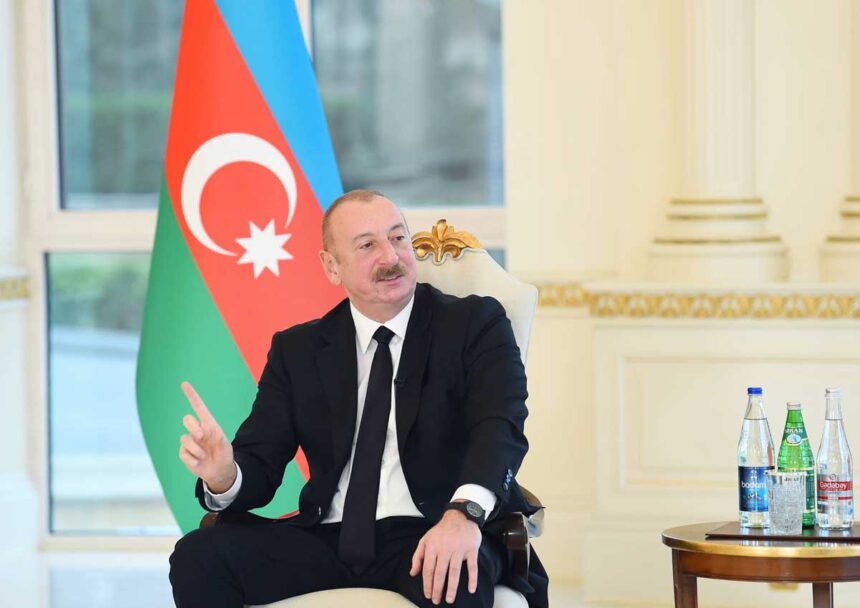
Having witnessed the benefits of a balanced, multilateral, and pragmatic foreign policy, President Aliyev is committed to maintaining this approach in his new presidential term, which began with a landslide victory in the February 7 elections. In the three months since his re-election, his government has worked to strengthen close ties with friendly states and develop new relationships with others. Beyond its traditional diplomatic engagements in the West and the post-Soviet space, Azerbaijan is now enhancing its cooperative links with China and Iran, among others. Azerbaijan has virtually become a bridge that many other leaders in the region attempted to build with no success.
Diplomacy based on bilateral and equal partnerships
Under President Aliyev’s leadership, Azerbaijan has adopted a distinctive approach to foreign policy in recent years. Observing the unsuccessful and dangerously counterproductive attempts by Georgia and Ukraine to join the EU and NATO, as well as the experiences of other post-Soviet states that have integrated into Russia-led projects, has highlighted the risks associated with multilateral cooperation dominated by great powers. Consequently, Azerbaijan has decided against pursuing Euro-Atlantic integration as an objective, a stance outlined in the National Security Concept of 2007, and has opted to maintain a safe distance from Russia-led integration projects like the Eurasian Economic Union and the Collective Security Treaty Organization. Meanwhile, Baku has been markedly successful in building bilateral cooperation and collaboration with the member states of these blocs.
For instance, Azerbaijan has explicitly stated that it is not planning to apply for the EU membership, and as such decided also against the Association Agreement with the EU, primarily due to the fact that this framework stipulated an unequal relationship between Baku and Brussels. Instead, Azerbaijan has signed declarations on strategic partnership with ten members of the EU. On May 6, in the course of Prime Minister Robert Fico’s visit to Baku, Slovakia became the 10th member of the EU with which Azerbaijan signed declaration on strategic partnership. A couple of days later, a joint declaration on Strengthening Strategic Partnership between Bulgaria and Azerbaijan was signed during Bulgarian President Rumen Radev’s visit to Baku. Azerbaijan has earlier launched strategic partnership with Romania (2011), Croatia (2013), Italy (2014), Hungary (2014), Czech Republic (2015), Bulgaria (2015), Poland (2017), Latvia (2017) and Lithuania (2017). This constitutes more than one-third of the EU members and provides a good basis for bilateral relations between the sides.
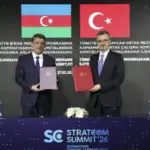
In a similar vein, Azerbaijan has confined its engagement with NATO to primarily cooperation against common threats, particularly, terrorism and extremism – without seeking a membership to the Alliance. Meanwhile, Baku has built a close relationship with the NATO members, including, Türkiye and the United States. Azerbaijan’s relations with Türkiye have already evolved to the allied level and reinforced by the mutual security commitments of the Shusha Declaration in 2021. The two countries build upon on these bonds by promoting integration in multiple spheres within the Organization of Turkic States (OTS) together with other Turkic States in Central Asia.
On the other hand, the Azerbaijan-US relations are evolving to the strategic partnership. Diplomatic contacts between Baku and Washington are intense as the two countries need each other for a variety of geopolitical and geoeconomic reasons. In the wake of last year’s tense situation due to the reintroduction of the sanctions against Azerbaijan under the 907 Section of the Freedom Support Act (1992), there are now signs that relations are returning to normal. The Washington visit of Hikmet Hajiyev, foreign policy advisor to President Aliyev, on May 17, and the meetings he held with US President’s National Security Advisor Jake Sullivan and officials at the State Department have also positively contributed to these dynamics.
Azerbaijan’s approach vis-à-vis the Eurasian Economic Union (EAEU) is based on the same principles. President Ilham Aliyev made it clear in response to a question about Azerbaijan’s position on the Eurasian integration asked at an international conference in Baku on April 23. “[W]ith all the countries that are members of the Eurasian Union except Armenia, Azerbaijan has a very close partnership relationship… bilateral ties with members of the Eurasian Union actually, are enough for us,” he said, adding that “if there are additional advantages and we see practical advantages of further integration, of course, we will evaluate that.” He underscored Azerbaijan’s economic self-sufficiency as a factor that empowers the country’s independent course in foreign policy. “Azerbaijan’s economy is actually a self-sufficient economy. It demonstrates sustainable growth even in the period of crisis. We have very low foreign debt, which is now even below 8% of our GDP,” he emphasized.
Nevertheless, as President Aliyev noted, Azerbaijan’s relations with the members of the EAEU are at a very high level. In the course of the past three months since his re-election President Aliyev has met the leaders of all the EAEU member states, except Armenia. While three of them, Kazakhstan’s President Kassym-Jomart Tokayev (March 11), Kyrgyzstan’s President Sadyr Zhaparov (April 24), and Belarus’s President Alexander Lukashenko (May 17) paid a visit to Baku, Aliyev met the Russian leader Vladimir Putin during his official visit to Moscow on April 22. These meetings underscore the effectiveness of Azerbaijan’s diplomatic efforts and the robust relations it maintains with EAEU countries without committing itself to the multilateral complications of the organization.
Azerbaijan has been similarly successful in its relations with the other pole of the international relations, namely, China. Relations between the two countries are evolving rapidly and an agreement on the strategic partnership is expected to be established in the near future. This comes amidst the renewed efforts by the two countries to deepen their cooperation in various spheres of mutual interest, particularly in connectivity, energy, and trade. The trade volume between the two nations increased by over 43.5% last year, reaching approximately $3.1 billion. Both imports and exports experienced double-digit growth. Notably, Azerbaijan has solidified its position as China’s largest trade partner in the South Caucasus, a testament to the robust economic collaboration.
The two countries share interest also in the realm of connectivity where Azerbaijan has strategically positioned itself as a key player in the transportation between Europe and Asia via the Trans-Caspian International Transport Route, also known as the Middle Corridor. The Baku International Sea Trade Port, the Baku-Tbilisi-Kars railway line, and other infrastructural projects form a comprehensive network that offers efficient routes for transporting goods between the two edges of Eurasia. The Middle Corridor is gaining traction, attracting interest from Chinese transit operators and logistics companies. Cooperation in block trains, logistics information exchange, and cargo placement underscores the commitment to optimizing transportation routes.
Conclusion
Azerbaijan’s ability to maintain a balanced and pragmatic foreign policy has proven to be a strategic advantage in a region often characterized by geopolitical turbulence. Under the leadership of Presidents Heydar and Ilham Aliyev, Azerbaijan has adeptly navigated the complex dynamics between major global powers, fostering strong bilateral relationships while avoiding the pitfalls of aligning too closely with any single bloc. This unique stance has allowed Azerbaijan to harness economic and diplomatic benefits from multiple directions, securing strategic partnerships with over one-third of EU member states and maintaining robust ties with NATO members like Türkiye and the United States, without seeking formal membership in these alliances.
Simultaneously, Azerbaijan’s nuanced approach to the Eurasian Economic Union (EAEU) highlights its commitment to independent economic and foreign policy. The country enjoys high-level relationships with EAEU members, evidenced by frequent diplomatic engagements, while retaining the flexibility to evaluate further integration based on practical advantages. Moreover, Azerbaijan’s burgeoning relationship with China exemplifies its forward-looking strategy. By enhancing cooperation in trade, energy, and connectivity, Azerbaijan is not only diversifying its economic partnerships but also strengthening its role as a critical transit hub between Europe and Asia through the Middle Corridor.
Baku has been able to make these diplomatic accomplishments despite all the malicious attempts of Armenia and its allies, including France, the Armenian diaspora in the West, pro-Armenian groups at the US Congress, Freedom House and elsewhere to isolate Azerbaijan at the global stage. That said, Azerbaijan’s strategic, balanced approach to foreign policy has allowed it to emerge as a significant player in international relations. By establishing itself as a reliable partner to both Western and Eastern power centers, Azerbaijan has successfully positioned itself as a bridge between diverse geopolitical spheres.
Dr. Vasif Huseynov is a senior fellow at the Center of Analysis of International Relations (AIR Center) in Baku, Azerbaijan.