Ankara and Baku also came together to shape a nucleus for tripartite configurations with countries in different parts of the globe – Pakistan being an essential one to build a solid international base for supporting Azerbaijan’s cause on the Karabakh issue.
The decisive battlefield victory in last year’s war with Armenia did not only see Azerbaijan bolster its position as a pivotal player in regional affairs but also ushered in a new geopolitical order fraught with a complex of challenges and opportunities.
On the one hand, the temporary deployment of Russian peacekeepers to the Azerbaijani territory as a result of the trilateral November 10th agreement gave Russia significant leverage over both Armenia and Azerbaijan to ensure that the managed instability in Nagorno-Karabakh was sustained, hence rendering the possibility of signing a comprehensive peace agreement between the two countries elusive in the short term. It should come as no surprise that Moscow promised to supply, to Baku’s mounting ire, heavy weapons to Yerevan to offset the power asymmetries in the post-war period. In August, the Russian foreign ministry spokeswoman, Maria Zakharova, commenting on Azerbaijan’s qualms about the issue said that Russian weapon supplies to Armenia take into account the peculiarities of the current balance of power in the region.
On the other hand, Azerbaijan’s decade-long balanced foreign policy between Russia and the West took a decisive turn after the war, highlighted by a greater emphasis on military alignment with an increasingly assertive Turkey. Ankara and Baku also came together to shape a nucleus for tripartite configurations with countries in different parts of the globe, Pakistan being an essential one to build a solid international base for supporting Azerbaijan’s cause on the Karabakh issue. Islamabad has so far been the only country not to recognise Armenia as a state and recently reiterated its readiness to complement its diplomatic support to Azerbaijan with deeper military-economic co-operation.
Joint military drills
The increasing number of joint military exercises with Turkey and later with Pakistan in a trilateral format shows that Azerbaijan will not remain mute in the face of rapidly unfolding events within and around its borders, with Russian peacekeepers allowing the deployment of Armenian forces to Karabakh against the principles of the November 10th agreement; and Iranian trucks carrying cargo to the separatist entity without Azerbaijan’s permission. Although the Azerbaijani leadership signalled its grievances about the current state of affairs through diplomatic channels, there has been little to no achievement in both cases.
It was in this context that the Azerbaijani and Turkish armed forces started joint air, sea and land exercises on September 2nd. To the surprise of many, the special forces units of the two countries conducted joint drills in the Lachin district of Azerbaijan, a mere 300 meters from the Lachin corridor that has been under the control of Russian peacekeepers after the second Karabakh war last year. According to Azerbaijan’s defence ministry, “the special forces fulfilled the tasks on conducting reconnaissance in difficult terrain, setting up ambushes on the roads, detecting and destroying sabotage groups in the area, as well as secretly approaching the imaginary enemy by overcoming various obstacles”.
In another unprecedented event, Azerbaijani and Turkish underwater offence and defence groups performed joint training exercises in the Azerbaijani sector of the Caspian Sea, neutralising a ship captured by an imaginary terrorist group. In the air, two MiG-29 fighters and two Su-25 attack aircraft of Azerbaijan participated in the “TurAz Falcon – 2021″ joint flight-tactical exercises held in Konya, Turkey between September 3rd and 17th.
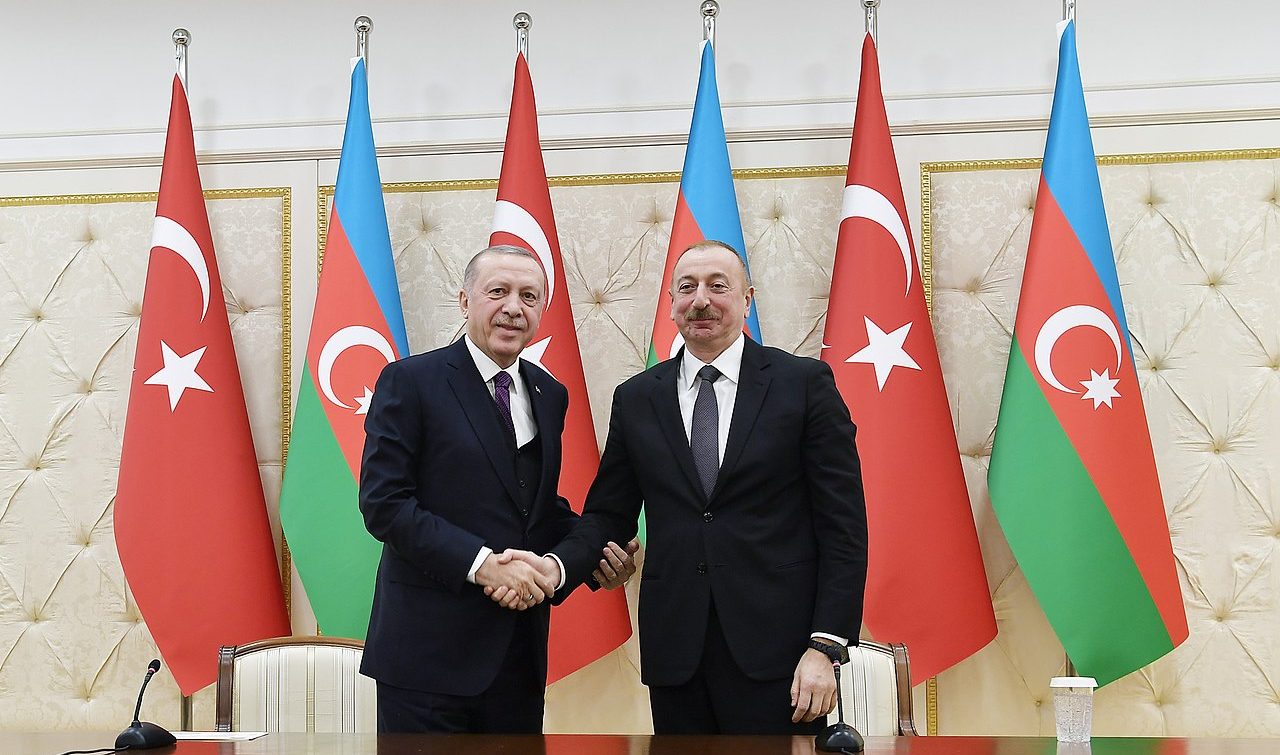
In parallel, Ankara and Baku exchanged official visits by high-ranking military officers, sending signals that deepening the defence partnership is a new normal in bilateral relations. On September 9th, Turkey sent four generals to Azerbaijan to upgrade its representation in the Special Operational Group which has been one of the crucial pillars of military co-operation between the two sides since 1992, albeit with a lower profile. For many, it could be seen as the embodiment of the tenets of the Shusha Declaration signed in June by Turkey’s President Recep Tayyip Erdoğan and Azerbaijan’s President Ilham Aliyev, laying the foundations of an allied relationship. On their part, high ranking Azerbaijani defence officials including the minister of defence, Colonel General Zakir Hasanov, and recently appointed chief of the general staff of the Azerbaijan army, Lieutenant General Karim Valiyev, met the Turkish President in Ankara on September 14th.
In a trilateral format, special forces units of Azerbaijan, Turkey, and Pakistan participated in the week-long “Three Brothers-2021” joint international exercises held in Baku, aiming to improve the interoperability of respective forces in times of peace and war. It was a notable event against the background of Azerbaijan’s increasing interest in Pakistani military equipment, eyeing for a lighter version of analogous defence industrial co-operation it already has with Turkey. In the recent past, Pakistan hosted more than 100 Azerbaijani defence personnel for military training by local experts. The two countries also frequently discussed the possible purchase of Pakistani-Chinese JF-17 fighter jets and Super Mushshak trainer aircraft by Azerbaijan. In 2019, Azerbaijan’s defence ministry reported the delivery of 10 aircraft from Pakistan. Yet, post-Karabakh war Azerbaijan looks more invested in the idea of joint ventures with Pakistani firms, attracting them to open production or at least assembly facilities in the country. Baku already has such an experience with Ankara and taking Islamabad on board on this issue would be a significant achievement for further development of the local defence industry.
Reactions from the neighbours
Against the expectations of many, Russia kept its silence on the Azerbaijani-Turkish drills near its troops along the Lachin corridor. But with a touch of symbolism, Moscow sent two warships (Astrakhan/Anatoly Gujvin) to Baku in an unofficial friendly visit on September 18th possibly to show its unease about the joint exercises in the Caspian Sea. Interestingly, the Azerbaijani side welcomed the ships with a Turkish military song called “Mehter marşı”, lately viewed as the symbol of Turkey’s military support in Azerbaijan. Although the Azerbaijani government’s decades-long soft balancing strategy (diplomatic, economic, institutional) with regard to Russian policies towards the South Caucasus gradually gives way to hard balancing (military) moves, Baku still understands it should exercise restraint in countering Moscow’s influence. In this context, participation in joint military exercises (International Army Games-2021) with Russia and the other CIS countries simultaneously with the recent trilateral drills with Turkey and Pakistan may be seen as Baku’s overtures to smooth ruffled feathers in Moscow.
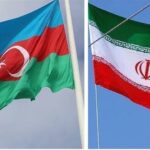
Compared to Russia, Iran took a hardline stance against the joint drills. Referring to Azerbaijan-Turkey underwater offense and defence exercises, the Iranian foreign ministry spokesman Said Khatibzadeh said that Turkey’s military presence in the Caspian Sea is illegal as the convention on the legal status of the sea prohibits non-littoral states from having armed forces there. A few days later, the Iranian supreme leader’s representative in the Ardabil province Seyyed Hassan Ameli warned Azerbaijan not to “play with the lion’s tail”, reflecting Iran’s concerns about the trilateral drills between Azerbaijan, Turkey and Pakistan. While this might be manageable in the near term, things could go further south in Azerbaijan-Iran relations considering unprecedented steps taken by Tehran to deploy troops and weapons, including armed drones, close to its border with Azerbaijan.
Pondering the causes of the problem, one should highlight two structural factors that, unless carefully dealt with, could upend bilateral relations in the coming years. Firstly, Iran feels isolated from regional developments in the wider Caspian basin after the second Karabakh war as Russia and, to a lesser degree, Turkey emerged as the main winners in geopolitical terms. Therefore, the consolidation of a strong Azerbaijan-Turkey alliance with the politico-military support of another large neighbour, Pakistan on its northern borders could not go unnoticed in Tehran.
On its part, Azerbaijan perceives Iran’s covert support to Armenian separatists as a threat to its territorial integrity. Recently, Baku has been pushed to adopt a more bellicose posture regarding the illegal entrance of Iranian trucks to the parts of Karabakh that are under the temporary control of Russian peacekeepers. After sending letters to Russia’s ministry of defence and its peacekeeping contingent in Karabakh with claims to stop illegal crossings and summoning the Iranian ambassador to the foreign ministry to present him with a note of protest about the issue, finally on September 12th, Azerbaijani Customs Service set up a checkpoint on the Goris-Kapan road to stop the Iranian trucks involved in the process. In an interview with Turkey’s Anadolu news agency on September 27th, Aliyev said that the number of trucks heading to Karabakh went down to zero after legal measures taken by Azerbaijani police. With this move, Baku made it clear that it will no longer tolerate Iran crossing the red line in Karabakh, though it will continue engaging Tehran in regionally important issues.
Secondly, Iran has long been worried about the growing military ties between Azerbaijan and Israel especially after the second Karabakh war as Israeli-made drones, tactical ballistic missiles, and air-defense systems played a critical role in the eventual victory. According to Israeli media outlet Israel Hayom, the two countries are currently in talks over a two billion US dollar weapons transfer to Azerbaijan. Baku also welcomed Tel Aviv’s involvement in the reconstruction of newly-liberated territories along its borders with Iran. It was therefore not surprising that the Iranian foreign ministry spokesman rationalised Tehran’s recent military manoeuvres near the Azerbaijani border with its categorical opposition to the presence of a “Zionist regime” around its borders.
What is striking is that, even if Azerbaijan’s reassurances about this partnership’s anti-Iran character does little to allay Iranian concerns about its geostrategic implications, Iran is not in that position to punish Azerbaijan’s moves in any meaningful way. In a worst-case scenario, military escalation would undoubtedly bring Iran to a collision course with Turkey, western countries and even Russia – at a time it is already facing pressure from different sides. Thus, Tehran and Baku have recently gone a long way to avoid alienating the other that would have serious ramifications for each side’s position in the region.
To get the ball rolling, Azerbaijani and Iranian foreign ministers met on the sidelines of the UN General Assembly session in New York on September 24th, discussing recent developments in bilateral relations. More to the point, Turkish foreign minister Mevlut Chavushoglu agreed with his Iranian counterpart to hold a trilateral meeting between Azerbaijan, Iran and Turkey in Tehran soon. Expectedly, discussions will revolve around mitigating the uncertainty in the region where multilateral platforms such as the 3+3 initiative could play a crucial role. Offered back in early 2021, the framework includes three South Caucasus countries and Russia, Turkey, and Iran as members. In January, Iran’s former foreign minister Javad Zarif said that Tehran “is looking to form a six-party co-operation union in the region”. The project has so far been supported by Russia too.
What makes these cooperative initiatives worth watching closely in the near future is Azerbaijan’s recently-gained confidence with regard to Russian and Iranian pressures, pushing back where the red lines are breached simultaneously with papering over differences through diplomatic means. Baku’s deepening politico-military partnership with Turkey and Pakistan has been and will continue to be one of the building blocks of this balancing act in the post-Karabakh war period.
Mahammad Mammadov is a research fellow at the Topchubashov Center in Baku.