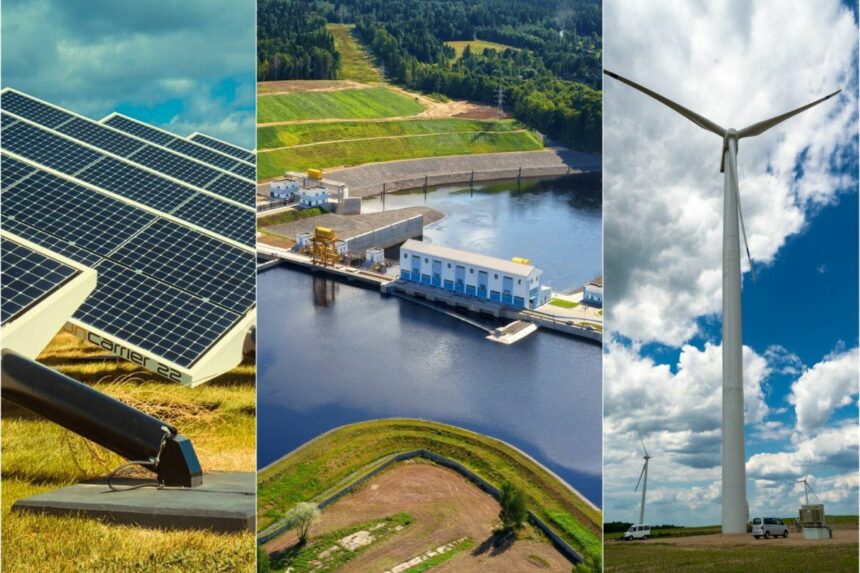
To this end, the country has formed modern legislation and public-private partnership mechanisms, attracted foreign investors, created a Green Energy Zone in Karabakh, etc. The development of these trends is seen as stimulation of microgeneration in the country: it is about installation of solar panels, small capacity wind turbines in individual houses and households for personal use, as well as sale of excess electricity to the power grid of the country. Recently, experts from the Azerbaijan Renewable Energy Agency (AREA) shared with the public the possibilities of promoting RES in the civil sector.
Microgeneration is a fairly new area of alternative energy development, and today this segment is relatively active in four dozen countries, mostly in economically developed countries. In the last century, the demand for microgeneration arose mainly in inaccessible regions with difficult terrain (mountains, gorges, forests), where small communities or individual families lived: the classical power supply with the laying of power lines there turned out to be commercially unprofitable due to small volumes of electricity consumption. As an alternative, such households could use diesel generators, small wind turbines, solar panels, and, if streams were available, micro-hydro turbines. The main disadvantage of such a scheme was that the cost of producing one kilowatt from such micro-generators was significantly higher than purchasing electricity through the fixed distribution network.
Nevertheless, in the new century, microgeneration has been actively developing, covering not only geographically inaccessible areas, but also settlements and low-rise suburbs of large metropolitan areas. Moreover, the scientific and technical developments of the last decade allowed to reduce production costs at wind farms, and their efficiency increased significantly. Similar changes are observed in the solar energy segment: today the efficiency of modern photovoltaic panels has reached an unprecedented level of 33.3 per cent, which is very close to the efficiency factor of standard gas turbines – about 35 per cent. The surge of interest in microgeneration increased after 41 countries of the world, including the European Union, US, Canada, China, Israel, Japan, adopted various incentive measures for microgeneration entities, in particular, free access to the electricity market, non-discriminatory preferential connection to the power grid, subsidies for producers, grants, “green certificates”, etc.
In EU countries, the state buys surplus energy at a fixed price for 20 years and compensates part of the costs of purchasing and maintaining renewable energy equipment. One of the effective ways to support microgeneration is the net metering system, i.e. installation of bilateral meters and payment for actually consumed energy minus the energy supplied to the grid, as well as feed-in tariffs, i.e. purchase of surplus energy from microgeneration market participants at a price above the market with subsequent compensation of the difference by the state.
The first attempts to develop this segment of RES were also made in Azerbaijan more than ten years ago. In particular, in the Sumgayit Technological Park (STP), the STP Solar enterprise started production of solar collectors of two types – SPL and SPS, differing in the area of the thermal insulation panel.
The most powerful unit was capable of heating 100 liters of water to a temperature of 60-80 degrees Celsius in one hour. These collectors were actively purchased by recreation areas, catering and service facilities, mainly in resort regions of the country. In the same STP, production of solar panels ranging from 42 to 250 watts, which are used in microgeneration of the country’s private sector, was established at the “Azguntech” plant.
Domestic and imported solar panels were also used under the pilot project of the Azerbaijan State Agency for the Alternative and Renewable Energy Sources (ABEMDA) – “A Thousand Houses – A Thousand Power Plants”: solar energy generated by panels installed on the roofs of compact low-rise settlements was converted into alternating current and supplied to residents. Photovoltaic cells were also used to power backlit road signs, public buildings, commercial and catering facilities, etc.
However, apart from local experience, the ABEMDA program has not been further developed due to the underdeveloped legal framework – gaps in tariff setting and the lack of a mechanism for transferring excess “green” energy to the unified energy system of the country.
A breakthrough in this area came in July 2021 after the head of state approved the law “On the use of renewable energy sources in electricity generation”. The document made it possible to form a legal base, work out the tariff system, rules of production and transfer of generated electricity to the unified energy system of AzerEnergy CJSC. The document and a number of bylaws disclose in detail the mechanisms of agreements on purchase and sale of energy, connection to the distribution network, outline benefits and fiscal preferences for investors, including those operating under the build-own-operate scheme, as well as holding auctions to select investors with optimal offers on the cost-capacity factor of RES facilities.
“The legal framework formed in Azerbaijan in the field of RES has provided incentive mechanisms for citizens of the country, granting them the right to use solar panels or other sources of “green” generation to generate electricity, the surplus of which can be transferred to the power grid and provide income to the producer,” Jabrayil Aliyev, head of the AREA Project Management Department under the Ministry of Energy, told state resource vergiler.az lately. In particular, this area is regulated by the “Rules for the Implementation of the Active Consumer Support Mechanism” approved by Decree No. 346 of the Cabinet of Ministers of the Republic of Azerbaijan on September 28, 2023, which grants the individuals and legal entities the right to use RES generators to consume up to 150 kW of electricity, subject to compliance with architectural and construction norms”.
According to Aliyev, the Cabinet of Ministers’ resolution allows manufacturing of products for sale to the country’s energy system: the maximum power limit that active consumers can connect to the network is determined based on the requirements stipulated in the technical conditions of the energy supplying enterprise, applying to which individuals or legal entities can receive the document “Technical condition of an active consumer”. Further, having acquired the status of an active consumer, a citizen can, for example, install solar panels, wind turbines or other generators of “green” energy with a capacity of up to 150 kW. If monthly generation exceeds the personal consumption of an individual or a legal entity, the amount of energy he or she transfers to the grid is accumulated on his or her balance and can be used for compensation in subsequent months.
Compensation is formalized at the end of the reporting year, and if the balance is positive by then, the energy supply company pays the value of the residual electricity through a bank account at the relevant wholesale rate. Another incentive is related to the fact that citizens’ income from the transmission of electricity to the grid is exempt from income tax. In turn, the Cabinet of Ministers’ resolution defines the “Rules for issuing a certificate of a source of electric energy produced by RES”: the certification system set up by AREA certifies the electric energy source, its capacity, the volumes of energy consumed and transferred to the grid and the avoided carbon dioxide emissions.
To clarify the nuances of tariffication in this area, Caliber.Az contacted the press service of the Ministry of Energy of Azerbaijan, which noted that in the country this area is regulated by the Tariff Council (TC), and although the country does not have a system of “green” feed-in tariff operating in a number of foreign countries, a stimulating mechanism has been created under the tariff grid. In particular, the TC determined the wholesale purchase price for 1 kWh of electricity generated by small private hydropower plants at the level of 5.0 qapiks (together with VAT), while for wind generators this tariff is 5.5 qapiks, for solar plants – 5.7 qapiks. At the same time, the tariff for microgeneration and other alternative sources is set at 6.6 qapik per 1 kWh: that is, citizens of Azerbaijan who have received the status of active consumers will be able to transfer excess electricity to the “Azerishig” system at this tariff, receiving corresponding revenues at the end of the year.
The practical implementation of new microgeneration opportunities differs from region to region. For example, green energy generation on the Absheron Peninsula and the Caspian Sea in general, with its strong winds and a significant number of sunny days, is seen as more efficient. The potential of “green” energy is very high in the Karabakh region, whose towns and villages are initially designed and built with the application of RES technologies, including in the civil sector. An example is the “smart” village of Aghali in Zangilan district, where solar panels, wind turbines and biogas production systems are installed on the roofs of houses. However, in the liberated territories, such projects are financed mainly with public funds. It is obvious that in other areas, the private sector, including small industries, hotel and catering facilities, service and other structures, should play the role of the main driver of microgeneration development.
According to international practice, the main technology in microgeneration today remains the use of solar energy: its heat is relatively evenly distributed over most of the territory of Azerbaijan, apart from that, unlike hydroelectric power plants and wind turbines, the installation of solar panels does not require the construction of complex and expensive engineering structures. Finally, photovoltaic systems without rotating mechanical parts have a significant service life.
However, solar panels are not produced in Azerbaijan and are still quite expensive for an individual consumer: solar panels cost about $400 (with customs duties), and modern panels with an area of 1 x 1.6 square meters produce about 300-350 W, i.e., to obtain a conditional 100 kW of power it will be necessary to purchase about 300 such panels. And this is already a substantial amount of $120 thousand, not to mention the availability of the necessary area where all this equipment to be placed. Obviously, not all citizens can afford such projects, and the microgeneration sector is to be developed mainly by the Small and Medium Enterprises (SME). However, it is not excluded that in the future collective (cooperative) forms of citizens’ organization will be created in this area.
Khazar Akhundov
Caliber.Az