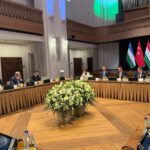
Amid the shifting geopolitical architecture of the Middle East and the South Caucasus, the strategic relations between Azerbaijan and Israel continue to grow rapidly. This was stated in an interview with The Jerusalem Post by Israel’s Ambassador to Azerbaijan, George Deek, summarizing his five-year diplomatic mission in Baku.
Since his arrival in Azerbaijan in 2019, the countries have gone through a series of historic events — from the pandemic and two wars in Karabakh to the opening of Azerbaijan’s embassy in Tel Aviv. These events have not only strengthened bilateral dynamics but also underscored Azerbaijan’s importance as a strategic partner of Israel in a region where the interests of Russia, Turkey, Iran, and the West intersect.
According to Ambassador Deek, Israeli-Azerbaijani cooperation is built on four key pillars:
Azerbaijan remains a rare example of a Muslim country with a deeply rooted tradition of interreligious coexistence. The Jewish community here feels safe, and the story of heroes such as Albert Agarunov — a Jewish tank commander who died in the First Karabakh War — symbolizes this mutual respect.
Israel receives up to 40% of its oil through Azerbaijan. SOCAR’s participation in Israel’s offshore gas projects, including the Tamar field, is not only an example of energy cooperation but also a symbol of political trust.
Azerbaijan remains one of the key clients of Israel’s defense industry. According to Deek, Baku does not conceal this cooperation, especially in the field of defense and counterterrorism.
From agriculture to cyber technology, Israel is actively involved in the transformation of Azerbaijan’s economy, helping it diversify beyond the oil and gas sector. Noteworthy are projects by Mekorot, Technion, and investments via OurCrowd.
According to the ambassador, Azerbaijan plays the role of an “irreplaceable strategic hub” in the region. It is the only country that borders both Iran and Russia, while also maintaining close ties with Turkey — a NATO member. In a context where routes from Europe to Afghanistan bypass Russia and Iran, Baku’s role as a transit corridor is hard to overstate.
Particularly important is Azerbaijan’s neutral yet active foreign policy, aimed at balancing interests. The country is “close to everyone but dependent on no one” — this approach has allowed it not only to preserve its sovereignty but also to become a reliable bridge between regional and global centers of power.
According to Deek, the Hamas attack on Israel on October 7, 2023, became a test for many partnerships. However, Azerbaijan, despite external pressure — including from Iran and parts of Turkish society — did not move to weaken its ties with Israel. On the contrary, Baku reaffirmed its strategic commitment to bilateral relations, proving that reliable partners are revealed in times of crisis.
Ambassador George Deek calls Azerbaijan “the most important country that many have never heard of.” Yet in diplomatic and economic circles, the country has long been seen as a key player in Eurasia. Expanding cooperation with Israel is not only a pragmatic calculation, but also the result of deep value-based and historical affinity. In an era of global turbulence, Baku and Jerusalem provide an example of how trust, mutual benefit, and respect for a partner’s identity can form the foundation of a true strategic alliance.