Azerbaijan, meanwhile, delivers significant amounts of oil to Israel. The wider context of these bilateral relations rests on the vital interest of Israel in the security situation in the South Caucasus – a region that borders Iran, Russia and Turkey.
In recent months, and especially during and after the 2020 Armenia–Azerbaijan war, some Israeli media outlets called for the reconsideration of relations with Azerbaijan. Put briefly, they argued that the basis of relations between the two countries is oil-for-weapons trade and such mercantile consideration should be replaced by humanitarian goals. Israel, the argument went, should empathize with Armenia as a nation that has suffered from “genocide” and is closer to its liberal values. Moreover, the “Turkey factor” was also invoked to demonstrate that Azerbaijan has close strategic ties with a country with which Israel currently has a highly complicated relationship.
None of these arguments, in my opinion, provides sufficient grounds for advocating for a cooler relationship between Azerbaijan and Israel, and some of them are faulty, especially from the very liberal viewpoints espoused by some experts and journalists.
First, while countries build their relations based on national interests, including financial benefits or security cooperation, the reductionism of Azerbaijani–Israeli relations to oil-for-weapons does not stand the judgment of history. Members of the Jewish diaspora settled in Azerbaijan centuries ago, and their cohabitation had no anti-Semitic traits; on the contrary, there was a synergy of cultures.
In the past 100 years, in addition to Tat-speaking Jews (Tat is an offshoot of the Farsi language), thousands of Ashkenazi Jews moved to Azerbaijan. They again witnessed the culture of tolerance and, even more significantly, the migration produced thousands of cases of intermarriage. Thus, Azerbaijani–Israeli intergovernmental relations partly rest on interethnic linkages. Two former Soviet Azerbaijani leaders had Jewish wives and, today, people of mixed heritage play significant roles in their respective communities in Azerbaijan and Israel by promoting closer ties in politics, business, and culture. Simply put, both ethnic groups had a history of positive relations before Azerbaijan produced oil or Israel weapons.
Second, because of the suffering of Azerbaijanis from ethnic cleansing, occupation, and destruction of cultural heritage, there is a moral obligation on the Israeli liberal media to manifest compassion rather than sign up to the carefully designed propaganda of the Armenian lobby.
Several Jewish experts who, with me, in person visited Agdam – a city dubbed the Caucasian Hiroshima – mentioned that the total annihilation of mosques and other Azerbaijani cultural infrastructure resembled the fate of Jerusalem and other Jewish heritage during 1948–1967. Much of the Armenian attitude towards those of “backward, wild, nomadic” Turkic heritage emanates from the theory of ethnic and religious superiority promoted by Armenian national hero Garegin Nzhdeh and his Nazi-style doctrine, elaborated in the 1930s, called “Tseghkron.” In Yerevan today, you can see a grand statue of the collaborator with Hitler’s forces.
As for the development of democracy in Armenia, unfortunately, the rhetoric of the incumbent and now re-elected Armenian Prime Minister, Nikol Pashinyan, has, over the past three years, manifested that elections can bring in a populist who justifies both the occupation of Azerbaijani territories and the monoethnicity of Armenia. He has uttered not a single word about the return of Azerbaijani refugees to Armenia or the restitution of their rights. It was precisely his maximalist stance that “Karabakh is Armenia,” along with some other policies, that made the 2020 war possible. As we can all observe from distant and more recent history, elections can be a legitimate path for radicals or populists to come to power – as was the case in Germany in the 1930s and the in the Middle East quite recently.
Third, the argument about the Turkish factor is more complicated, but also, unfortunately, suffers from a black-and-white attitude. Turkey is the closest Azerbaijani ally, yet Baku maintains its own foreign policy priorities, as was manifested during the Gaza crisis in May 2021. Moreover, high-ranking Azerbaijani officials expressed their desire to mediate rapprochement between the country’s brother (Turkey) and friend (Israel). Ultimately, Turkish–Israeli relations should not be a victim of hasty considerations. Their history began 530 years ago with the Jewish exodus from Spain to the Ottoman Empire, and the last twenty years have, in my view, been characterized by complications and misjudgments that should not be attributed to one side only.
As a non-believer in ancient hatred, I sincerely hope that relations between Azerbaijan and Armenia will embark on a path of mutual respect of territorial integrity and of economic cooperation. Devastated by 30 years of occupation, Azerbaijan is inviting foreign partners to help restore its liberated territories, and Israel has already initiated some vital projects in agriculture and infrastructure.
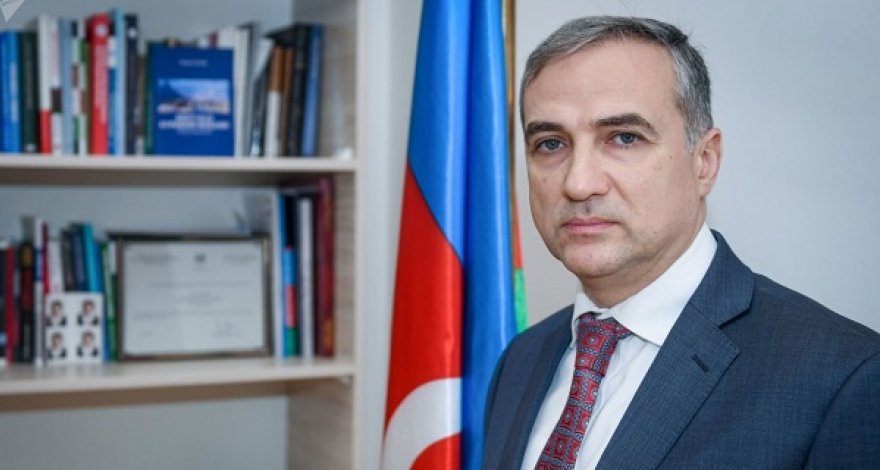
Dr. Farid Shafiyev is the chairman of the Center of Analysis of International Relations and Adjunct Lecturer at ADA University.
Israel Hayom