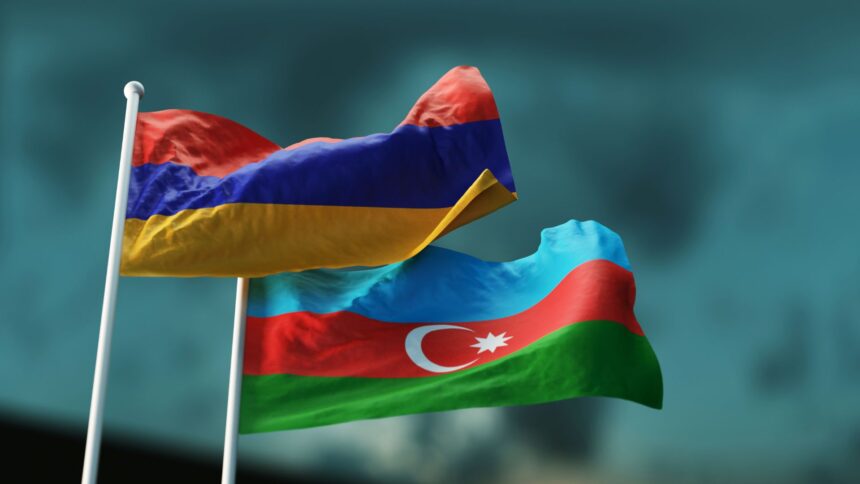
Although the new political realities that emerged after the conflict have created a conducive environment for a lasting peace agreement between Azerbaijan and Armenia, the process remains stalled for various reasons. In the contemporary international relations framework, the signing of a peace treaty will not only affect the two states involved but will also have implications for the geopolitical strategies of major powers with interests in the region. Therefore, the Azerbaijan-Armenia peace process should not be analyzed solely through the lens of bilateral relations but rather within the broader context of regional and global politics.
Progress in the Peace Process
Negotiations on the peace treaty have intensified in recent months. The foreign ministers of Azerbaijan and Armenia have held multiple meetings to discuss the key aspects of the agreement, resulting in a preliminary draft consisting of 17 agreed-upon provisions. Notably, Armenia appears to have accepted two crucial points that had previously been major sources of contention between the parties—renouncing mutual claims in international courts and excluding third-party involvement in border matters.
Another significant development concerns border delimitation. So far, the demarcation of a 13-kilometer section of the Armenia-Azerbaijan border has been agreed upon. This progress demonstrates that practical steps can be taken toward normalizing relations between the two countries. The successful continuation of the delimitation process is crucial for ensuring long-term stability in the region.
Furthermore, an important milestone in the negotiations is the decision to conduct talks in a direct bilateral format, without intermediaries. The failure of international mediation mechanisms in resolving the conflict is well-documented, particularly the ineffectiveness of the OSCE Minsk Group during the conflict and the counterproductive role played by some mediators in the post-conflict period. These experiences have reinforced the notion that the most effective approach to resolving outstanding issues is through direct dialogue between Baku and Yerevan.
Key Obstacles to the Peace Process
Despite these positive developments, several factors continue to hinder the successful conclusion of the peace process.
- Armenia’s Constitutional Territorial Claims
Azerbaijan’s stance is clear: Armenia must renounce any territorial claims against Azerbaijan in its constitution. The presence of such claims in Armenia’s legal framework raises concerns that Yerevan could use them as a basis for future escalatory actions. The Azerbaijani government has stated unequivocally that a peace agreement will only be signed once Armenia formally abandons these claims. This condition is not merely a diplomatic formality but a strategic necessity to ensure a durable and meaningful peace.
- The OSCE Minsk Group Should Be Dissolved
Azerbaijan maintains that since the conflict has been resolved, there is no justification for the continued existence of the OSCE Minsk Group. While Baku’s position is grounded in political logic, Armenia has yet to fully accept this reality. It is also worth noting that the Minsk Group has been largely inactive since the Second Karabakh War, making its continued existence redundant.
- Armenia’s Military Build-up and Revanchist Policies
Armenia has significantly increased its military expenditures in recent years. Following the Second Karabakh War, the Armenian government has consistently raised its defense budget. For instance, Armenia’s military budget was approximately $600 million in 2021, but by 2025, it is projected to exceed $1.7 billion. According to official data, Armenia allocates 4.2% of its GDP to military expenditures—one of the highest figures in the post-Soviet space. Moreover, it is well known that certain Western countries and regional powers support Armenia’s rearmament. This trend is not merely a matter of Armenia’s self-defense but represents an attempt to alter the regional balance. The rapid militarization of a country with a history of territorial aggression poses a serious threat to the peace process.
Simultaneously, the growing influence of revanchist forces within Armenia further undermines the prospects for peace. The rhetoric of former political elites—especially radical opposition leaders—who promote anti-peace narratives and incite street protests has pressured Prime Minister Nikol Pashinyan’s government to adopt a more cautious stance. The resurgence of revanchist sentiments in Armenian society, particularly slogans advocating for the “restoration of lost territories,” casts doubt on the long-term viability of peace efforts.
- International Influences and the Role of External Actors
The involvement of foreign powers in the peace process is another crucial factor. The United States and the European Union, instead of acting as neutral mediators, have largely sided with Armenia, thereby complicating the negotiations. Russia, on the other hand, remains hesitant to fully support the peace process, as it seeks to maintain its military-political presence in the region. These external influences create divisions within Armenia’s political landscape and make it more challenging to reach a final peace agreement.
Conclusion and Future Prospects
The current situation indicates that a realistic opportunity exists for the successful conclusion of the Azerbaijan-Armenia peace process. However, several challenges remain—Pashinyan’s government has adopted contradictory positions in negotiations, Armenia’s military expansion continues, domestic political instability in Yerevan persists, and external powers are pursuing their own geopolitical agendas in the region. These factors collectively make the swift signing of a peace agreement difficult.
Azerbaijan’s position remains unchanged: a peace treaty must be based on Armenia’s commitment to concrete legal and political obligations. Otherwise, the agreement will be merely symbolic and will increase the risk of future escalations.
Despite these obstacles, the continuation of peace talks and the progress made on key issues demonstrate that post-conflict reconciliation remains a viable prospect. The most sustainable path forward for the region lies in fostering mutual trust and Armenia’s commitment to a stable development trajectory.
This will not only benefit Azerbaijan and Armenia but will also serve as a decisive factor in ensuring the geopolitical stability of the entire South Caucasus region.
Dr. Matin Mammadli, senior advisor at the Baku-based Center of Analysis of International Relations.