By using this site, you agree to the Privacy Policy and Terms of Use.
Accept
Azemedia new logo
  • Home
  • Opinion
  • News
    • Economy
    • Energy
    • Climate and Ecology
  • Diaspora
  • Interview
  • Science
  • Logistics-Transport
  • History
  • Defense
Aze.MediaAze.Media
Font ResizerAa
Search
  • News
  • Economy
  • Climate and Ecology
  • Energy
  • Opinion
  • Culture
  • Gender
  • Interview
  • Science
  • Logistics-Transport
  • History
  • Defense
  • Karabakh
  • Diaspora
  • Who we are
Follow US
© 2021 Aze.Media – Daily Digest
Aze.Media > Opinion > Armenia and Azerbaijan’s court battle could damage hopes for peace
Opinion

Armenia and Azerbaijan’s court battle could damage hopes for peace

AzeMedia
By AzeMedia Published October 13, 2021 747 Views 8 Min Read
Bildschirmfoto 2021 10 12 um 20.35.39
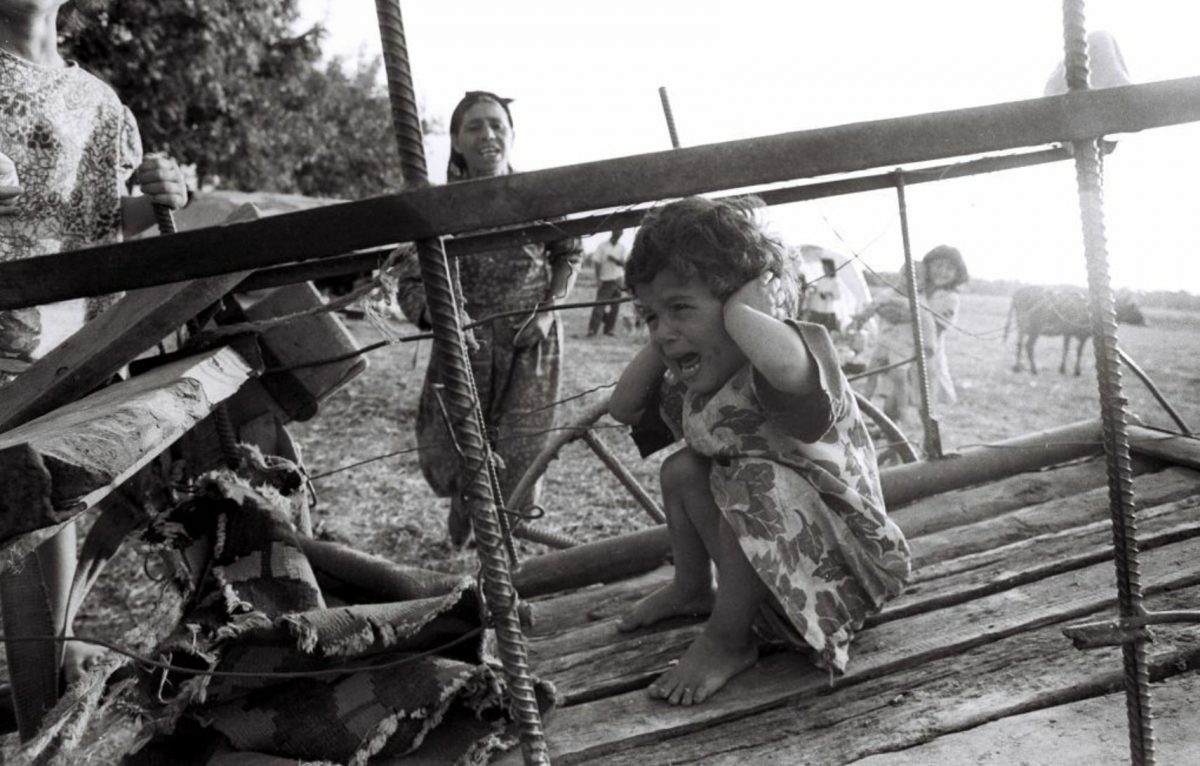
Evacuation of Azerbaijani refugees from Karabakh, who escaped imminent death at the hands of Armenian military forces.

It may be true that there can be no peace without justice. So too, however, can law frustrate peace processes. Unfortunately, proceedings at the world’s court today will likely fall into the latter.

The International Court of Justice (ICJ) will hear the first dispatch from the case of Armenia v. Azerbaijan. It follows a forty-four-day war between the two last Autumn. Less than a month ago, Armenia instituted proceedings against Azerbaijan. It argued that Azerbaijan was in breach of the Convention on the Elimination of Racial Discrimination (CERD). Inevitably, little over a week later, it prompted a counterclaim from Azerbaijan accusing Armenia of breaches of the same treaty. The two cases have been joined and will now be heard as one.

That there are deeply held hatreds is clear—and unsurprising. The two countries have been official enemies since the first Karabakh war in the 1990s. As the Soviet Union collapsed, the two went to war over Nagorno Karabakh—a province internationally recognized as Azerbaijan but with a significant Armenian population. The result of the six-year conflict was Yerevan’s occupation of Nagorno-Karabakh and seven of its surrounding districts.

A million refugees, mostly Azerbaijanis, were created in the tumult. Following an uneasy ceasefire, national borders were closed. Where once Armenians and Azerbaijanis worked and lived together, contacts between citizens ceased as the conflict froze. In this void, a distorted myth of the enemy formed on both sides of the line of contact.

Individual facts and incidents could support such a picture. As both submissions draw out in detail, heinous acts were committed both before and during last year’s conflict. But for every example of wrongdoing committed by one to the other, there is an equally damning counterexample—whether civilians killed in shelling or dehumanizing and hateful actions.

However, it is questionable if the ICJ is the right forum for two linked reasons. First, for Armenia, it must prove that state-directed policies affected Armenians in Azerbaijan. But this is limited only to areas over which Baku exercised effective control. In other words, it will exclude what Armenians once called Artsakh, the occupied territories of Azerbaijan. Given the 1990s churn of refugees, very few Armenians lived in other parts of Azerbaijan; few if any Azerbaijanis remained in Armenia.

A Russian-brokered ceasefire in November formally handed effective control of most of the occupied territory back to Azerbaijan. By then, all Armenians had fled the approaching forces. There have, therefore, been very few Armenians under Baku’s effective control either before last autumn’s conflict or after whom discriminatory evidence can be based.

Despite being the second mover, it may be that Azerbaijan has the better case in this regard. Azeris expelled during the first war were prevented from returning home by the occupying forces. Though Armenia will claim these to be the actions of an unrecognized and autonomous statelet, a 2015 European Court of Human Rights ruling established the so-called Republic of Artsakh was under the effective control of Yerevan.

Whatever the merits of either case, they will still be difficult to prove under the CERD. It raises the second objection to choosing the court: with the bar for success high, proceedings will likely turn into a forum to air grievances, throw mud at one another, and ultimately reinforce division between Armenians and Azerbaijanis. It is the exact opposite of what is currently needed; lawfare rather than diplomacy.

A ceasefire stopped the guns in November. But a peace treaty is yet to be signed. For that, reconciliation between the two peoples is ultimately essential. As befits legal proceedings, only evidence that supports each painting the other as the iniquitous party will be brought to bear. That will only play into the ultra-nationalists’ hands on both sides of the border. They have always argued that the fundamental incompatibility of Armenians and Azerbaijanis means any compromise or concessions toward a peace settlement is not worth it. The legal arguments will reinforce that worldview.

What shall be missed is the long period of peaceful coexistence and collaboration before the first Karabakh war. But it is these times that must be remembered to move forward into a more self-assured future.

It makes the timing of this case awkward. Leaders in both Azerbaijan and Armenia have been talking up the prospects of a peace settlement that would benefit all. The unlocking of borders and reconciliation within grasp. But arguments that buttress ideas of incompatibility are inimical to the demands of reconciliation. Against this background of din, it will be difficult to establish trust.

That makes the case an expensive demonstration of hatred, which could pose greater costs on a future peace.

Ben Keith is a leading barrister specializing in Extradition and International Crime in post-Soviet States.

The National Interest

You Might Also Like

Iran’s Caspian signaling and the boundaries of regional alignment

No talks with revanchists: what Armenians will have to pay for

Turkey-Azerbaijan alliance strained by opposing stances on Israel

Caspian escalation raises stakes for Central Asia

Dialogue amid escalation

AzeMedia October 13, 2021 October 13, 2021

New articles

148898 AAfileIranAzerbaijan
Iran’s Caspian signaling and the boundaries of regional alignment
Opinion April 1, 2026
Tumblr 7785d4993072edee15c5f76f97426150 cbc66783
No talks with revanchists: what Armenians will have to pay for
Opinion April 1, 2026
FzXmfsHpncSf7mjEilSDOohDU3PyMoxbiG63JOjQ
ING Group: Azerbaijan’s external economic position remains very strong
News April 1, 2026
69ca6321ec2b869ca6321ec2b9177487132969ca6321ec2b669ca6321ec2b7
Baku Initiative Group calls on UN member states to take practical steps on slavery resolution
News March 30, 2026
7YNXnb05zWpwunxmQWNmwxfqd6tq6osklTkNbHWo
Azerbaijan evacuated over 3,000 people from Iran to date
News March 30, 2026
Bildschirmfoto 2026 03 30 um 11.14.38
Turkey-Azerbaijan alliance strained by opposing stances on Israel
Opinion March 29, 2026
Screenshot
President Ilham Aliyev completely, directionally turned his country around – Steve Witkoff
News March 28, 2026
69c778d12350869c778d123509177468027369c778d12350669c778d123507
Azerbaijani oil price exceeds $124
News March 28, 2026
QJ9m9qaUTjKho4NQMQ4PTfRb7ykBAWVDMnL2UsSf
FAO offers Azerbaijan to develop five-year fisheries development plan
News March 28, 2026
577c9b7a tcxj78bkp11yulvvjs6gr
Türkiye and Azerbaijan sign media cooperation pact at STRATCOM summit
News March 28, 2026

You Might Also Like

148898 AAfileIranAzerbaijan

Iran’s Caspian signaling and the boundaries of regional alignment

April 1, 2026 6 Min Read
Tumblr 7785d4993072edee15c5f76f97426150 cbc66783

No talks with revanchists: what Armenians will have to pay for

April 1, 2026 7 Min Read
Bildschirmfoto 2026 03 30 um 11.14.38

Turkey-Azerbaijan alliance strained by opposing stances on Israel

March 29, 2026 7 Min Read
Image Mar 25 2026 02 25 03 PM

Caspian escalation raises stakes for Central Asia

March 25, 2026 9 Min Read
148898 AAfileIranAzerbaijan

Dialogue amid escalation

March 24, 2026 6 Min Read
Azerbaijan armenia border shootouts scaled e1717316787977 1536x862

Diaspora activism and the limits of external influence in the Armenia–Azerbaijan peace process

March 23, 2026 8 Min Read
655215

The ‘Azerbaijani Way’: Three lessons from Baku to Jerusalem

March 21, 2026 10 Min Read
BneGeneric Caspian Sea ariel

War reaches the Caspian: Central Asia faces growing regional risk

March 20, 2026 9 Min Read

Useful links

426082d1 a9e4 4ac5 95d4 4e84024eb314 pojkz91103g6zqfh8kiacu662b2tn9znit7ssu9ekg
Ab65ed96 2f4a 4220 91ac f70a6daaf659 pojkz67iflcc0wjkp1aencvsa5gq06ogif9cd0dl34
96e40a2b 5fed 4332 83c6 60e4a89fd4d0 pojkz836t9ewo4gue23nscepgx7gfkvx6okbbkasqo
759bde00 a375 4fa1 bedc f8e9580ceeca pq8mvb9kwubqf6bcadpkq5mz16nayr162k3j2084cg
aze-media-logo-ag1

We are a unique political and socio-cultural digest offering exclusive materials, translations from Azerbaijani media, and reprints of articles from around the world about Azerbaijan.

  • Privacy Policy
  • Terms and Conditions
  • Cookies Policy

Email: editor@aze.media

© 2021 Aze.Media – Daily Digest
aze-media-logo1 aze-media-logo-ag1
Welcome Back!

Sign in to your account

Lost your password?