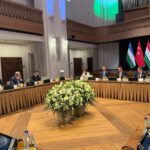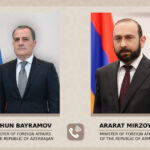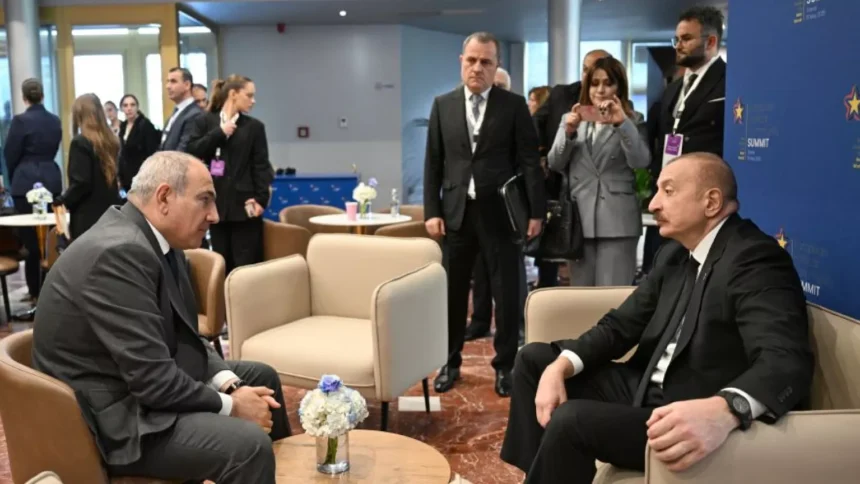
The latest European Political Community summit held in Tirana in May this year, featured Azerbaijan’s President Aliyev at the time when Baku’s period of bad blood with Brussels seems to be over and Europe once again is viewed as a constructive partner. It is not a coincidence that Aliyev briefly met Pashinyan in Tirana for the first time in months and even had a seemingly friendly conversation with French President Macron despite the two countries’ intense feud.
Since its inaugural Prague summit in 2022, the European Political Community as a platform assumed an important role in the peace process between Azerbaijan and Armenia. It was there in Prague that Armenian Prime Minister Pashinyan in a historic move formally recognised the territorial integrity of Azerbaijan within the confines of its Soviet-time borders, choosing the 1991 Almaty Declaration as a legal starting point for peace negotiations. In a more fundamental sense, the idea of the EPC and the format it created, have been very convenient for both Baku and Yerevan. This new European-wide political forum, masterminded by the French President Macron, was a direct reaction to the inability of traditional European institutions- EU, Council of Europe, and OSCE, to cope with the greatest security challenges Europe has faced since the World War II. While the EU, due to its nature, treats non-member states very differently from its members and the agenda of the Council of Europe is too legalistic and frameworks- rather than solutions-focused, the OSCE has been effectively paralysed by the principle of consensus it is based upon, and simply doesn’t fit today’s security architecture.
Hence, leading European states endorsed the idea to boost continental solidarity in the face of the threats posed by Russian aggression against Ukraine. Creating a platform without a bureaucracy and mechanisms of its own was meant to allow flexible and honest communication of the continental countries’ leaders, contributing to greater European security and geopolitical autonomy. This vision fit Baku’s expectations from Europe which it views as a key geopolitical and geoeconomic partner but at the same doesn’t want to be bound by the EU-associated rules and norms, preferring pragmatic high-level cooperation. For Yerevan, this new platform provided a new opportunity to signal rapprochement with the West and greater endorsement of European symbolic space in the circumstances when EU membership would be a much-desired but hardly attainable target.
For these reasons, Aliyev and Pashinyan willingly participated in the EPC summits, viewing them as a unique opportunity to talk and discuss the bilateral agenda while emphasizing their role in the European concert of states. However, later on their enthusiasm faded, and the three following summits didn’t see simultaneous participation of the two leaders. In October 2023, Azerbaijani president refused to attend the meeting in Granada after Baku’s lightning-speed military operation which did away with the Armenian military presence in Karabakh, triggered harsh criticism from the French officials and the then EU External Affairs Commissioner Josep Borrel, while Türkiye had been refused from taking part in a multilateral meeting planned in Granada to discuss developments around Karabakh. Next summer, it was Pashinyan’s turn to miss the following summit held in the United Kingdom for reasons not clear yet. However, speculations were that the Armenian side was unhappy with the perceived pro-Azerbaijani tilt of the British proposals. Finally, in November 2024 Aliyev didn’t attend the meeting in Budapest, possibly due to the lack of expected progress with Yerevan despite COP-related expectations.
Thus, a new dynamic made visible in Tirana, attests to a reinvigorated role of the EPC in assisting the normalisation process between the bitter rivals in the South Caucasus. There are a number of reasons which can explain this development. The visit of chief European diplomat, Kaja Kallas, to Azerbaijan shortly before the summit signalled a major thaw in the Baku-Brussels relations and paved the way for better trust between the parties. The Union’s new approach to the region showcases the belated arrival of the “geopolitical EU”, concerned first and foremost with containing Russia and building pragmatic relations with the countries critical for European security – and basically all the countries of South Caucasus and Central Asia, for a variety of reasons, fit this description.
A Europe determined to help them in keeping Moscow from encroaching on their sovereignty, can be a very good partner for Baku and Yerevan- and the EPC would be an ideal format to institutionalise this partnership. In this regard, the decision to hold the 2026 and 2028 summits in Yerevan and Baku respectively, mutually endorsed by both countries, is a good example how the EPC may bring South Caucasus into the spotlight as the inalienable part of the larger European space and by virtue of this contribute to a more cooperative environment between Armenia and Azerbaijan.
Azerbaijan may hope that a tighter geopolitical discipline envisioned in the idea of the EPC, will curtail France’s own international ambitions, at least when it comes to its attempts to bring the issue of Karabakh, that Baku (and increasingly so Yerevan) consider a closed one, back to the agenda. Macron’s conversation with Aliyev, the first one in more than two years, could be a harbinger of Azerbaijan’s broader normalisation with France, whose position has been significantly damaging Baku’s relations with the West at large. The EPC provides a good platform for both leaders to bury the hatchet without losing face. On a broader level, “geopoliticisation” of Europe can also trigger Brussels and major European capitals to be more ambitious on the important but expensive projects that require a lot of coordinated investment, such as for example Transcaspian pipeline which could bring plentiful natural gas from Turkmenistan through Azerbaijan to Europe.
For Armenia, this format can provide certain symbolic guarantees that it is not “left alone” with Azerbaijan. The sense of being “geopolitically lost” and left outside of Europe, with which it allegedly shares important historical foundations, has always been present in the Armenian thinking but became much more reinforced after the Second Karabakh war which Armenian public perceived as a major betrayal on behalf of Russia. The important role assigned to Türkiye in this newly forming configuration may at the same time sooth Baku’s fears and sensitivities.
Murad Muradov is the co-founder and deputy director of the Topchubashov Center in Baku, Azerbaijan.