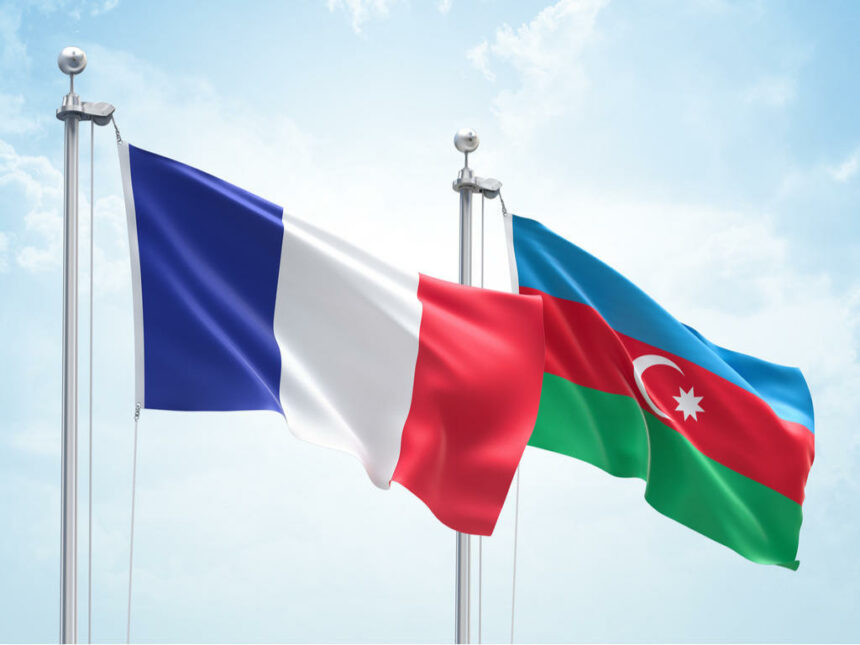
Already during the war, Azerbaijani MFA claimed that Paris “ceased to be an honest broker”, and this position only hardened over time. Since then, the bilateral ties have been progressively deteriorating, especially after Azerbaijan’s military operation in Karabakh in September 2023: France became the country where calls to sanction Baku for its “ethnic cleansing” were the most vocal, while Azerbaijan started to attack Paris over its “neo-colonial” policies, targeting continued French sovereignty over several overseas territories, primarily New Caledonia whose independence movement has been active for decades.
In July last year, the Baku Initiative Group against French colonialism was established at an international conference named “Towards the complete elimination of colonialism”, attended by the representatives of the French overseas territories of New Caledonia, French Polynesia, French Guiana and Martinique. By November 2023, Azerbaijan’s fulsome support for the separatists had reached the island, and pro-regime media gushed over the presence of Azerbaijani flags flying at a New Caledonian separatist rally. This April, the Quai d’Orsay even recalled its ambassador to Baku Anne Bouillon “for consultations” amid the dismal diplomatic state of relations, though she would return a few weeks later.
The things turned especially sour when major riots broke out on the island this May, with a few people dead and Paris introducing a state of emergency after a controversial bill had been voted in the French parliament which allows French residents having lived in New Caledonia for 10 years, the right to vote, a move which can undermine the aboriginal people’s electoral power. In response, the Baku Initiative Group condemned Paris, blaming violence on the “French colonialist doctrine” and expressed solidarity and support to the struggle of the people of Kanaky (the aboriginals’ self-appellation). Commenting on the situation, French Minister of Internal Affairs Gerald Darmanin accused Azerbaijan of interfering into French domestic politics and fomenting protests via social media, adding that some of the protest leaders “had entered a pact” with Baku.
But just a few days after this diplomatic spat, Ambassador Bouillon suddenly visited the town of Lachin in Karabakh. Thus, France became the last country whose diplomat paid a visit to the liberated territories after the U.S. Ambassador went to Shusha in early May. Though Lachin doesn’t have as great symbolic significance for Azerbaijan as Shusha does, this place, and precisely, the eponymous road connecting Armenia and Karabakh, has been a matter of contention between Baku and external powers, especially France. This very ambassador was summoned to the Azerbaijani MFA in August 2023 when Paris tried to send a humanitarian cargo via the Lachin road, which was declined by Azerbaijan. Thus, Ms. Bouillon’s appearance in Lachin, be it within the framework of a COP29-related event, was quite surprising. But does it mark a turning tide in the French-Azerbaijani relations and shall we expect a profound thaw?
In fact, the worsening of the ties to the current point has not been particularly logical. For many years, France used to be one of the most important Western partners of Azerbaijan. It was the first European country visited by President Heydar Aliyev in 1993, and President Holland was the only leader of a major Western state to pay an official visit to Baku (in 2014). In general, French-Azerbaijani relations had been at a very high point throughout the 2010’s, on political, economic and even security levels, and are best symbolized by the presence of the French hydrocarbon major Total, which is crucial for Azerbaijani gas exploration and production. However, strong French support to Armenia in 2020 and subsequent attempts to challenge Baku’s success, even though they were mostly rhetorical, considerably spoiled the bilateral ties. There are many reasons to believe President Macron’s personal attitude played an important role, as he felt excluded from the post-war recalibration in the South Caucasus and engaged in saber-rattling with President Aliyev, trying to secure French share in the process. It is symptomatic that French media, commenting on the latest events, are trying to be “more Catholic than the Pope” and still refer to the Karabakh conflict as an ongoing dispute between Baku and Yerevan, although the parties now clearly see it as a matter of the past. However, a recent piece in “Figaro”, known for its strong pro-Armenian bias, very surprisingly claimed that the conflict in Karabakh is over for good and even that the would-be Zangezur road may be a “win-win solution” for both sides.
In fact, dramatic progress in the normalization process between the old rivals has put Paris in an awkward situation whereby it started to behave as if it cares about Armenian interests more than the Armenian government itself. As the delimitation process finally started, the EU-Azerbaijan relations show a positive dynamic and proposals to sanction Baku turned out to be unrealistic, France is facing a choice whether to continue a fruitless confrontation that doesn’t yield any positive outcome for Paris or to quietly acquiesce to the changing realities. French public mostly ridiculed Mr. Darmanin’s comments; choosing Azerbaijan as an existential rival can further diminish the prestige of France as a power, already shattered by its failures in Africa. Some French politicians, including senators Georges Naturel and Raphaël Glucksmann, had to recognise that there is no direct evidence of Azerbaijan’s involvement into violent protests.
Yet another reason why Paris may be interested in restoring ties with Baku, may be its increased attention to Türkiye and Central Asia. Recently, France has been trying to improve its fraught relations with Ankara, as it needs Turkish participation to ensure greater European strategic autonomy, a cause championed by President Macron for a while which has now become even more salient in the light of possible changes in U.S. policy after this year’s election, particularly if Donald Trump returns to the White House. At the same time, Paris has been actively courting Central Asian states, primarily Kazakhstan, which is a crucial supplier of uranium to the nuclear energy-dependent France, and Uzbekistan, now viewed as a crucial partner on energy, security and connectivity. The growing integration and interdependence between Azerbaijan and Central Asian countries makes it expedient for those actors seeking to enter Central Asia, to have stable relations with Baku.
Although a certain détente in this strange standoff may be imminent, it is still premature to expect a profound normalization. Azerbaijan in its campaign actively resorted to ideological narratives, particularly heavy anti-colonial discourse. Rolling it back immediately would be unfeasible and undermines Baku’s prestige. We could rather witness the downscaling of the tone and less inflammatory rhetoric, while the parties may quietly agree not to raise the issue of sanctions and keep existing economic commitments intact. However, it will depend on the steadiness of the peace process between Azerbaijan and Armenia- the re-ignition of tensions may be too big a temptation for Paris to avoid any interference.
Murad Muradov is the co-founder and deputy director of the Topchubashov Center in Baku, Azerbaijan.