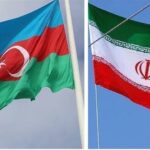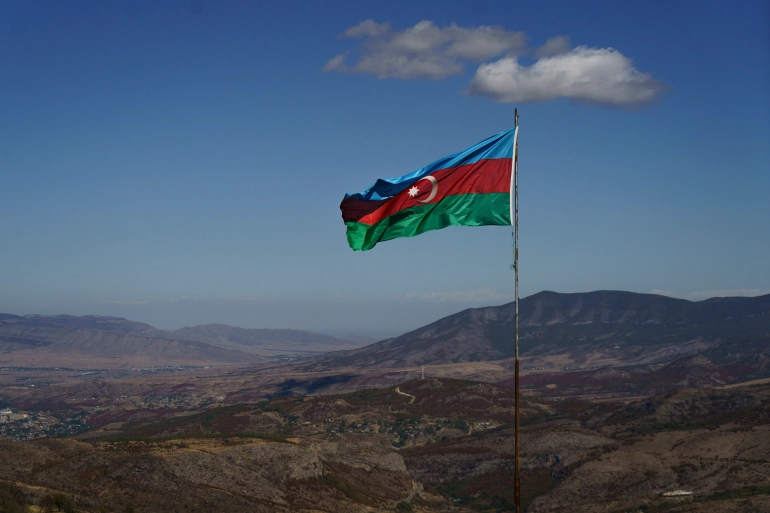
Azerbaijan’s deputy foreign minister, Elnur Mammadov, told Al Jazeera from his office in Baku that it is time for a fresh start for the two countries, which currently have no diplomatic relations.
“We believe the conflict should be put behind us and we should now look into confidence and trust building,” said Mammadov, adding that you “cannot live in a state of war forever”.
Relations between the former Soviet republics have been tense since the first Karabakh war in the early 1990s, which left the territory and seven adjacent regions – all of which are recognised internationally as part of Azerbaijan – in the hands of ethnic Armenians.
The conflict prompted neighbouring Turkey, which shares close cultural and linguistic ties with Azerbaijan, to sever relations and close its borders with Armenia in 1993.
In September last year, tensions spilled over again, resulting in a 44-day war that killed more than 6,000 mostly soldiers across the two sides. Turkey provided sophisticated weaponry such as drones that were thought to have helped sway the conflict.
However, despite a historically difficult relationship due to the mass killing of Armenians in the Ottoman Empire during World War I, Armenia’s Prime Minister Nikol Pashinyan and Turkish President Recep Tayyip Erdogan have signalled that they are ready to move towards restoring diplomatic relations following Azerbaijan’s victory.
Both sides stand to make economic and geopolitical gains as a result.
Mammadov said that for Azerbaijan, although conditions would have to be met along the way, normalisation also fits the overall long-term outlook.
“What’s happening with Turkey and Armenia fits into the big picture of normalisation and that’s exactly what we’re interested in. Nobody wants to live in this hostile environment,” he said.
“We have always said that it’s not a question of not liking Armenians. We did not establish diplomatic or other relations with Armenia before because they had occupied our land. As a result of the war, the territories have been liberated, and now we are ready to talk.”
Among the demands that would need to be met are the opening of a transport corridor with Nakhichevan, an Azerbaijan exclave bordering Armenia and Iran, which was agreed under last November’s ceasefire statement.
The corridor will allow direct access between Turkey and Azerbaijan, without using the far longer land routes through Georgia or Iran.
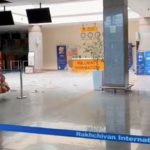
Recently, the first Azerbiajani passenger plane for seven years flew over Armenian airspace from Baku to the exclave, and the deputy prime ministers of both countries are set to meet later this month to discuss further opening up of the corridor via Russia.
For Azerbaijan, a comprehensive peace agreement would also need to be agreed to replace the tripartite ceasefire statement, co-signed by Russia, that ended the conflict last year.
Negotiations of which, should they go ahead, are expected to be a lengthy process.
Before the war, negotiations were mediated by the OSCE’s Minsk Group, led by France, Russia, and the United States, but Moscow has now taken a dominant role.
Alex Melikishvili, principal research analyst with IHS Country Risk focused on the Caucasus and Central Asia, said that Azerbaijan is keen to move on with the comprehensive peace agreement with Armenia, which will include provisions on the non-use of force.
“President [Ilham] Aliyev has said that the Karabakh conflict is over, as far as Azerbaijan is concerned. On the Armenian side, the situation is far more complicated for a number of reasons,” he said.
“President Aliyev has firmly rejected any type of autonomy for what’s left of the breakaway region, but you still have an Armenian population there, even though they only control one third of the territory they controlled before November 2020.”
Armenia’s ministry of foreign affairs, as well as its representatives, did not respond to Al Jazeera’s requests for comment.
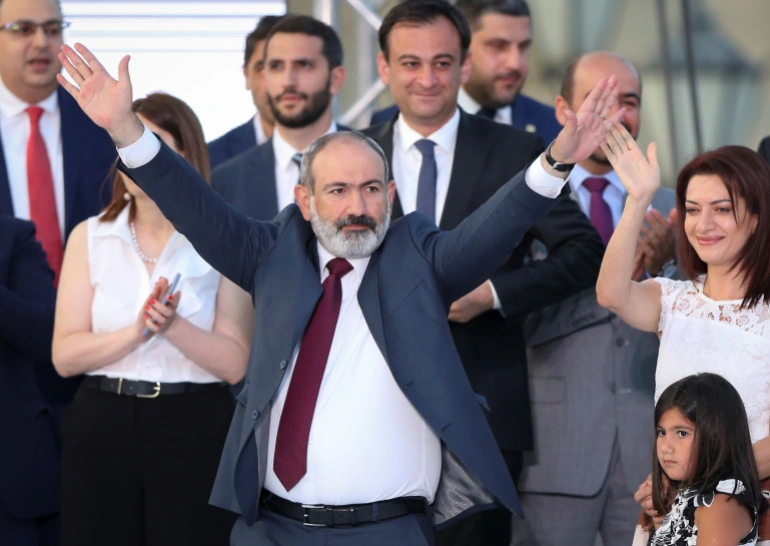
But despite the conciliatory tone, accusations of ceasefire breeches and unpunished war crimes are never far away from both sides. Both have filed international criminal cases against each other for, among other things, racial discrimination.
“A year after the war, life has returned to normal in Armenia, but there is an underlying sadness and incomprehension – people wonder ‘What happened in 2020? Why?’” said Vicken Cheterian, who teaches international relations at Webster University in Geneva and has written books about Armenia and its neighbours.
“Armenians are still struggling to understand the cause of the defeat after being victorious in the first Karabakh war.”
For Azerbaijan, and more specifically for its leader President Aliyev, who has been in power since 2003, victory has helped curry favour with a weary public, said analysts.
“It’s hard to overestimate the significance of winning the war for Azerbaijan as a nation. This has become a nation building exercise,” said Melikishvili.
“It has contributed to the revival of the national spirit, which was flagging for a really long time. A year on, I am not aware of any major anti-government rally that has taken place and that should tell you something.”
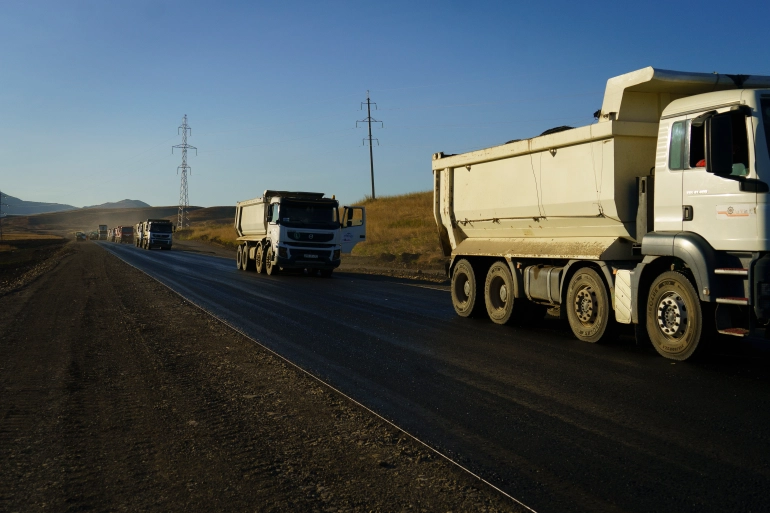
The aim is to reintegrate the newly-regained territories into Azerbaijan proper, also by reconnecting with Azerbaijani electricity supplies, making the gains of the last war irreversible.
Smart towns based around renewable energy are planned, with foreign investment expected to help build infrastructure from sources such as the British oil and gas company, BP.
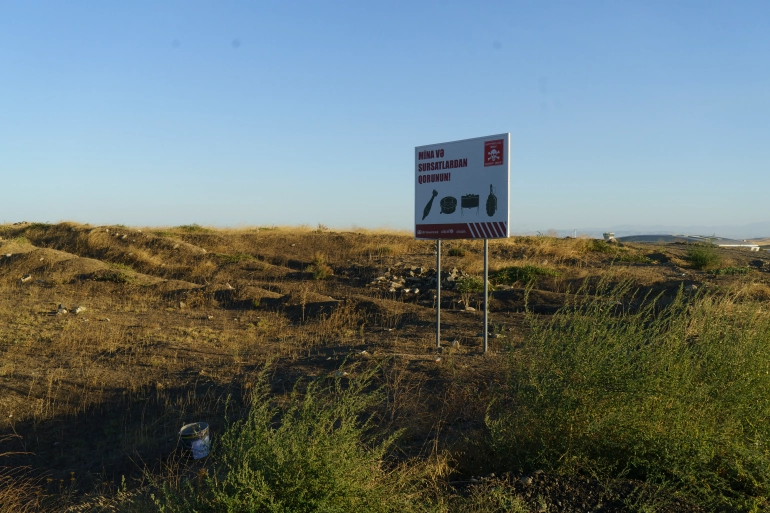
Development has been hampered, however, because much of the area is unsafe due to the presence of landmines and unexploded weaponry.
It is understood that Pashinyan would be willing to hand over all of his remaining minefield maps if Azerbaijan were to release its remaining Armenian detainees.
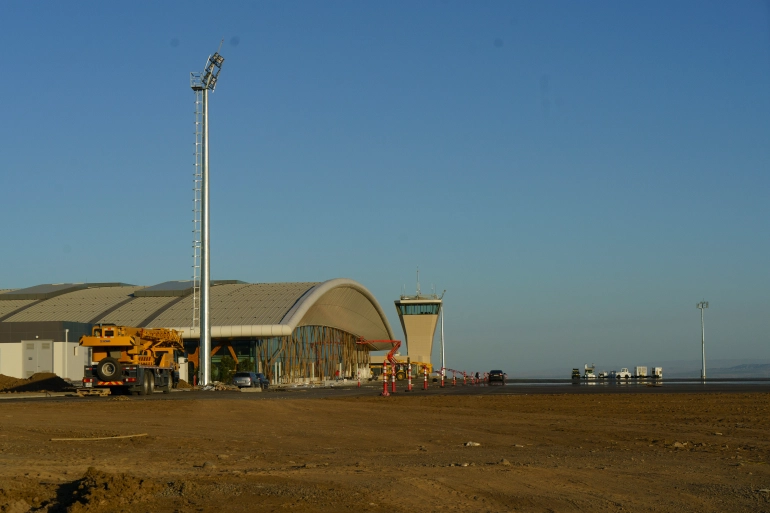
Baku maintains that they have between 40 and 50 Armenians in their care and that they are all being tried legitimately under criminal law, on either war crimes or terrorism charges.
According to Azerbaijani deputy foreign minister Mammadov, three Armenians are being tried for torture carried out during the first war, while the other men were detained for attacking Azerbaijani land after the peace statement was signed.
He said the International Committee of the Red Cross has been allowed to access the prisoners and that they will be released should they be found innocent.
However, Siranush Sahakyan, an Armenia lawyer who represents some of the families of the detained, said the criminal cases brought by Azerbaijan have no legal basis.
“On one hand, Azerbaijan grossly underestimates the number of PoWs. On the other, it has labelled the acknowledged PoWs as criminals to justify its deliberate delay to their repatriation,” she said.
“In reality, Azerbaijan is holding Armenian captives hostage to enforce political demands.”
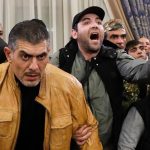
Meanwhile, residents on both sides are still grappling with huge losses, adjusting to life without their loved ones who died in the war.
The mental and physical trauma of war cuts deep and thousands remain displaced on both sides, with huge numbers of Azerbaijanis from Karabakh who were uprooted by the first war still without a permanent base. Their situations are unlikely to be resolved in the short term.
Al Jazeera