Right before our eyes, world powers are becoming pariahs of the world community overnight, while the leaders of small countries are turning into global-scale diplomats and peacemakers.
These days, the significance of a state requires, firstly, that it be self-sufficient and, secondly, that it pursue as independent a policy as possible. Azerbaijan has proven itself as such a self-sufficient state in recent years by resolving the Karabakh conflict after it smoldered for decades, defeating the occupation regime and restoring its territorial integrity with its own resources. Undoubtedly, the leadership qualities and political talent of Ilham Aliyev, who managed to save the country from regional cataclysms and economic turmoil, played an important, or rather, a defining role in securing this accomplishment.
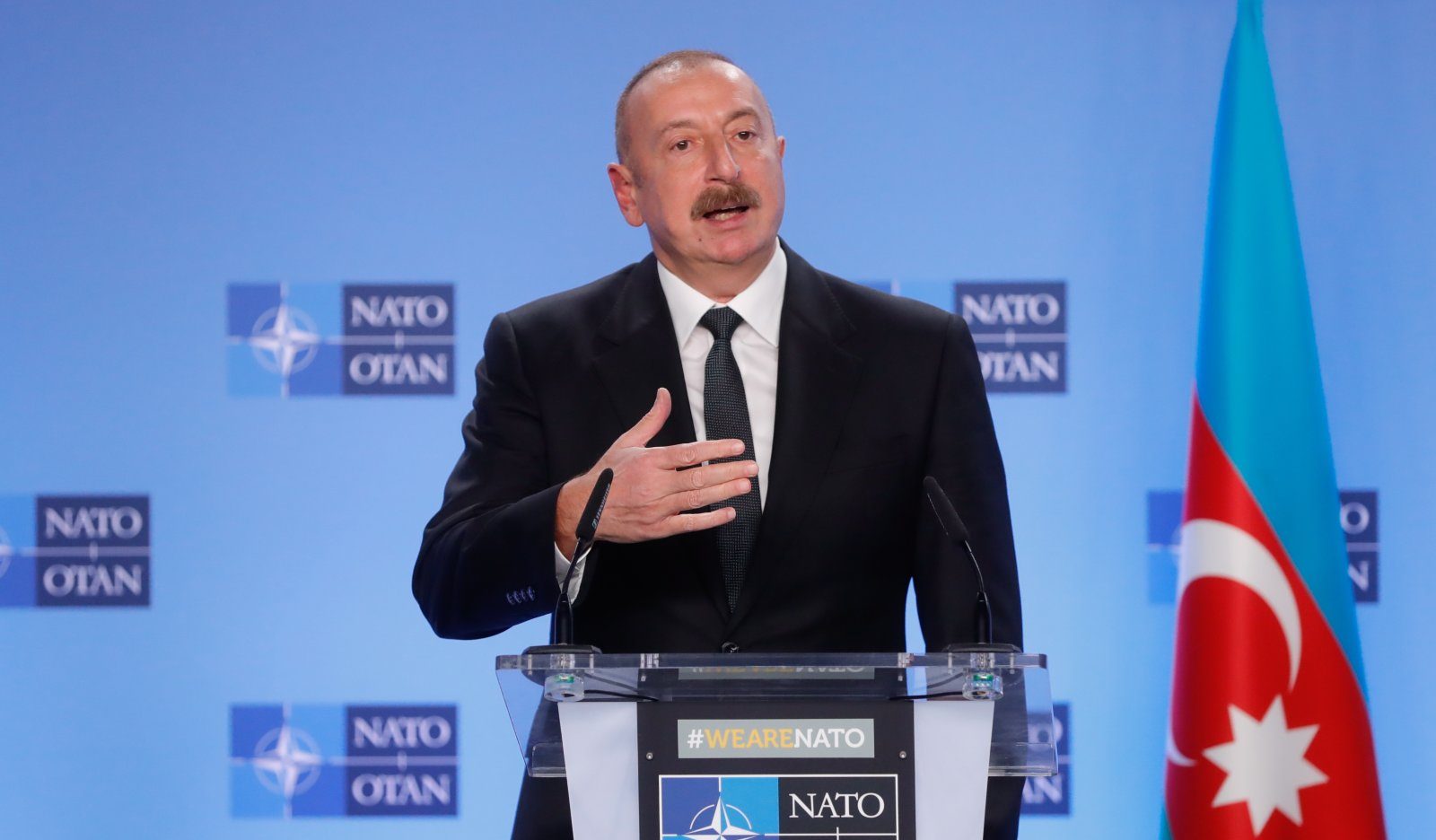
Today, when all international agreements have been violated, when international law has been flouted, and humanity is teetering on the brink of a third world war, Ilham Aliyev, president of a small country in the South Caucasus, continues to surprise the region with his diplomatic efforts.
Last week, the Azerbaijani President received a phone call from the US Secretary of State Anthony Blinken. The sides exchanged views on the post-war period in the South Caucasus region and the process of normalization of relations between Armenia and Azerbaijan, and discussed regional security issues. Later it became known that Anthony Blinken had thanked Azerbaijan for providing humanitarian aid to Ukraine.
Of course, it is unlikely that we will find out the details of the conversation between the Azerbaijani president and the US Secretary of State. However, the very fact that the chief diplomat of the world’s leading power is actively consulting with the president of a small country with a population of just over ten million speaks volumes when there is a real threat of a third world war.
The Azerbaijani leader’s diplomatic dexterity was especially evident at the beginning of the Ukrainian crisis, when Ilham Aliyev had a series of phone conversations with the presidents of Turkey, France and Russia with a few days in between. The press service of the Azerbaijani President, stingy with words to begin with, reported on those negotiations with literally one-line texts.
“In the course of the phone call, the parties discussed the situation around the escalation of events in Ukraine, as well as issues of Russian-Azerbaijani relations,” President Ilham Aliyev’s press service commented on the talks with Vladimir Putin.
And here is the official press release about Ilham Aliyev’s phone conversation with Emmanuel Macron: “During the conversation, the crisis situation in Ukraine and issues of humanitarian aid were discussed. The parties also exchanged views on energy issues”.
It is not so much the details of the talks that matter, but the fact that they are happening. It is pertinent to recall that the leaders of world powers hold talks with the president of a country the existence of which half of their citizens are barely aware of at a time when there is a full-blown war going on in the heart of Europe, threatening to escalate into a third world war at any moment.
This is truly a case of a leader outgrowing the scale of his country.
The official chronicle of President Ilham Aliyev’s visits and phone conversations illustrates the Azerbaijani leader’s diplomatic and peacemaking efforts quite comprehensively.
Ilham Aliyev receives phone calls from European Council President Charles Michel; Romanian President Klaus Iohannis and Moldovan President Maia Sandu consult with him. It should be noted that Romania and Moldova have found themselves in a difficult situation because of the influx of refugees from Ukraine, and Azerbaijan, as we know, is no stranger to the problem of refugees.
However, the primary efforts of the Azerbaijani leader are focused on stopping the bloodshed on Ukrainian soil as soon as possible. Both Russia and Ukraine are countries that are close to Azerbaijan, and Ilham Aliyev himself has close and trusting relations with their leaders.
There is another reason why Baku has been in the spotlight of the high-ranking officials of the Old World. Not only has the war in Ukraine created an atmosphere of political and economic turbulence, it also threatened Europe’s energy security system. In this situation, the EU leaders, who see the salvation of the economy in the diversification of energy supplies, make it clear to Ilham Aliyev that they count on the support of Azerbaijan, who has long proved itself as a committed and reliable partner.
Farid Isayev
Translated from Haqqin.az