However, obstacles have arisen in the path of progressive forces: the case of COVID corruption is the best testament to that. It is frustrating, too: in the vast majority of countries, governments have turned out to be unable to protect their own citizens and provide at least one type of vaccine. In Azerbaijan, the population can choose from a variety of vaccines, and yet, due to a number of factors, the people are in no hurry to get vaccinated.
On the other hand, many people are now voicing the pressing question: will the national healthcare system be able to cope with the new rapidly spreading wave of the pandemic?
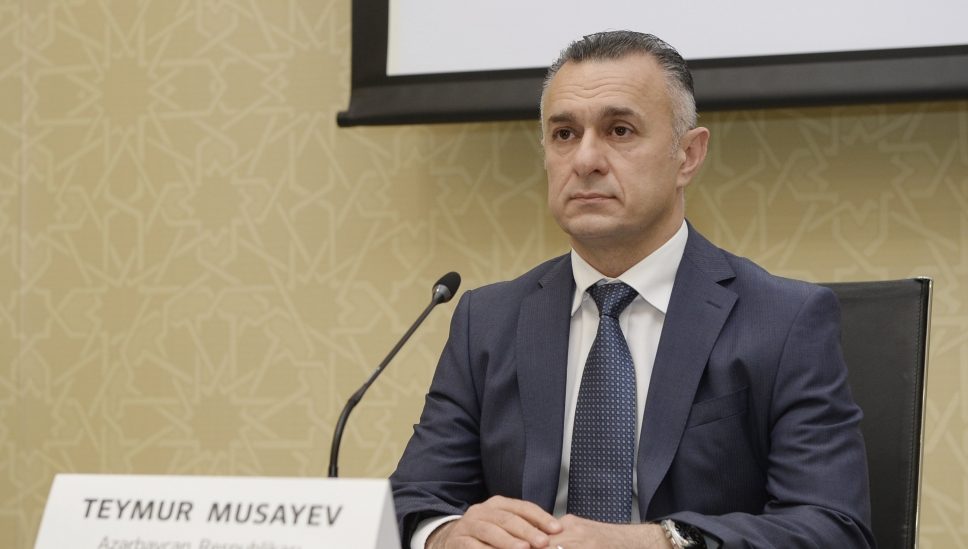
Director of Real TV Mirshahin Agayev interviews Teymur Musayev, First Deputy Minister of Health, acting Minister of Health of the Republic of Azerbaijan.
***
What is the current situation with the fight against COVID-19? I am not sure how appropriate this question is, but still, how do we rank in the world in terms of its effectiveness?
Indeed, people are constantly asking this question today: how do we rank, what is our situation in comparison with other countries, and so on. As you know, the world has been at war with this disaster for about two years now. Our country is one of the most successful fighters on this front. Thanks to the provident policy of the leader of our country, Mr. President Ilham Aliyev, and the preventive measures taken, Azerbaijan is prepared for any COVID-19-related situations. We have the sufficient reserve of hospital beds, preventive equipment, required drugs, other means and, most importantly, specialists. As a healthcare system, we have been ready to face the first, second, and the third wave of coronavirus we are experiencing today.
And yet, recently, after the easing of quarantine measures, the incidence rate has been growing exponentially. Do you think the situation is about to spiral out of control? Where does our “red line” lie?
There are certain WHO indicators, and in accordance with them, countries are included in the orange, green or red zones based on the number of cases per 100 people or the number of tests, as well as the number of positive results. However, each country has its own red line, which is directly related to the number of intensive care beds and the number of ventilators. As you said, there has been a surge in new cases due to the recent global spread of the Delta variant of SARS-CoV-2. Unlike other strains, this one spreads more rapidly, almost 30 percent faster. Nevertheless, there are no problems with the hospital bed capacity.
How many beds do we have at the moment?
The number of beds reserved specifically for COVID-19 cases in Azerbaijan is more than 10,000. A sufficient number of modular hospitals designed specifically for the pandemic period were set up in our country within a short time, on the instructions of the head of state and thanks to his authority in the world. The facilities and resources of other hospitals are also refitted for the pandemic situation, and our doctors, after a certain training, are involved in the fight against this disease. As you know, we have received international support as well. Groups of medical specialists came from abroad—from China, Russia, Cuba, Italy. They trained our doctors while working together with them.
You said that we have 10,000 beds, but the number of active cases has already exceeded 30,000. It is likely that by the time our interview is out, the number of active cases will have grown by 300 or 500. How can 30,000 patients be accommodated in 10,000 beds, if there are three times more patients than beds?
By active cases we mean not only patients undergoing treatment in hospitals. There are people with obvious symptoms, as well as asymptomatic patients staying at home under the supervision of doctors. Some are treated in hospitals, some in intensive care units of hospitals. So, we have enough beds. At the moment, the total bed occupancy is less than 50 percent.
The Delta variant is spreading very rapidly… Would you say it is even more dangerous? And my second question follows from the first one: to what extent are our medical facilities keeping up with the spread of the Delta variant? Can we keep up with it?
We can, without much effort. As for the dangers of the Delta variant and its rapid spread compared with other variants, the percentage of deteriorating patients and the death rate are slightly lower than with the other variants.
But there is an opinion that the drugs used on the traditional, if I may say so, COVID-19 variants, have no effect on Delta. How true is this?
There has been no known direct treatment for this disease since the beginning of the pandemic. And while fighting against it, studying its properties, experts, doctors, the entire medical world, have been testing certain drugs based on the latest discoveries of pharmaceutical companies. Some combinations have proven to be quite effective against all variants, but in the initial stage, that is, at the beginning of the disease. This is why I recommend that our citizens get tested at the first symptoms and consult a doctor. Do not wait, do not take advice from amateurs and do not self-medicate at home.
Since you have addressed the public, I would like you to talk about vaccination as well. I don’t know your view of the situation, but I, for one, am pessimistic. In my opinion, the level of our vaccination culture is subpar. What do you think?
The concept of “vaccination culture” is always relevant for humanity. Throughout history, people have struggled to accept progressive ideas and new discoveries. But it is emergency and crisis situations that push humanity to progress and, as is commonly believed, any crisis also means great opportunities. Within a short period of time, the pandemic has given a great impetus to the development of medicine and pharmacology, especially in the production of vaccines based on advanced technologies. Of course, it so happened that we have to use these vaccines in an emergency situation. Each country has its own history of vaccination. This history is quite rich in Azerbaijan. Unlike some others, we are not an anti-vaccination country. So, I can’t say I share your pessimism. If only because we all get vaccinated against various dangerous infections since childhood. There are so-called experts, social activists and personalities on social media today trying to discourage people from getting vaccinated. To them, I want to say bluntly that they are also responsible for the death of people in intensive care units. It is a crime.
What percentage of the country’s population is vaccinated today?
As you know, the vaccination campaign against COVID-19 in Azerbaijan began on January 18 this year. Medical professionals, people over 60 and chronic patients were the first to be vaccinated. Then, in line with the step-by-step strategy, other age groups began to get their shots. At the moment, the phrase “vaccinated person” means a person who received both doses of vaccine 14 days ago, that is, someone who has gone through all stages of vaccination. Currently, 35 percent of our population is fully vaccinated.
There is also the concept of “herd immunity”. What percentage should it be to achieve this immunity in every respect?
When the pandemic began, scientists made various assumptions, because we were barely familiar with this virus and did not fully understand the rate of its mutation. At first, everything was compared with other infectious diseases, and it was argued that herd immunity required 60-65 percent of people to be vaccinated, then, according to the latest statements, 82-85 percent. However, we should bear in mind that a certain part of our population, about 350,000 people, have already been infected and recovered. Adding here the vaccinated people, I think if we approach at least 60-70 percent, then we will stop the spread of the infection. On the other hand, this virus is mutating and weakening. So, when it all comes together, the population is protected.
How has the situation changed after the vaccination process was stepped up?
96 percent of the currently hospitalized patients are unvaccinated. 98 percent of those in intensive care are also unvaccinated. We also test the people who have been vaccinated but ended up in intensive care. As you know, we have had troubling incidents. Some of the patients in intensive care units had fake COVID passports, that is, fake vaccination certificates. Seven of these have already been identified. And I can say with confidence that none of the really vaccinated patients in intensive care units are on ventilators.
This is a very serious statement.
Yes, and I would like again to call the public to get vaccinated to avoid severe disease.
There is also another popular opinion concerning vaccination: people say that one vaccine is bad, the other vaccine is good, and some other vaccine is even worse or better. I won’t name the names. Does it really matter which vaccine to get, does it matter on which platform they are based?
First of all, there is no scientific evidence behind this kind of statements. I would like to emphasize that a sufficient supply of vaccines has been delivered to the country, with plenty to spare. In some countries people are forced to purchase vaccines on the black market, whereas every Azerbaijani citizen and even foreigners permanently or temporarily residing in the country can choose from a variety of vaccines. One might say that all types of vaccines available in the world are used in our country. Sinovac’s Coronovac—a traditional, that is, inactivated, Chinese vaccine, Sputnik V—the Russian viral vector-based vaccine, AstraZeneca’s Vaxzevria—another viral vector vaccine, Pfizer–BioNTech—an mRNA vaccine. That is, there is a variety of choices, and on average, the effectiveness of all vaccines is about the same. All of them fully protect vaccinated people from death and severe disease.
What other measures should be taken to prevent this kind of frivolous arguments and expand vaccination coverage?
I believe that professionals—infectious disease specialists, vaccine experts, microbiologists, virologists—should be the first to address the public with such messages. Of course, various campaigns can be organized. There are certain restrictive technologies that are already in use in some countries. I assure you, if no one tries to talk people out of it, everyone will come and get vaccinated. The recent dynamic shows that the majority have begun to realize this truth. As for the third wave and the spread of the Delta variant, all vaccination stations now register a large number of people every day. They come, get vaccinated and see the result.
How large is our vaccine reserve, will there be enough for everyone?
I can safely say that there will be enough vaccines even for a third dose, which has become relevant lately.
We are a very close-knit nation. We come together both for weddings and for funerals. So why can’t we show similar solidarity in the fight against this pandemic? As a medical professional, what do you think the reason is?
I believe we can band together and be united in any struggle. We have already proved that. If our army led by the Supreme Commander-in-Chief was able to give us a victory in the war, then we are united as a people. I am being sincere. Our people will overcome this ordeal.
Still, we have to bring up the incidents of crimes committed in the process of vaccination, in particular, the forging of documents. Do you believe that we need tougher and more effective methods of dealing with this phenomenon?
The fight against the virus is a war. And in a war, such incidents can be regarded as sabotage. Discouraging people from vaccination is an act of provocation and a crime. A citizen receiving a fake certificate and the healthcare worker issuing such a certificate are playing the death lottery. Anyone who buys a death lottery ticket endangers not only themselves but also the members of their household, their relatives and everyone around them. And this is no longer an issue for the healthcare system, but for law enforcement agencies. Their tough response will only help us.
The Operational Headquarters has had fewer briefings recently. A press conference was held last Friday after a long break. What is the reason for such a long pause?
At the beginning of the pandemic, people were poorly informed about this virus, about protection against it, the measures taken by the government to combat the pandemic. There was an urgent need to explain all this to people, and briefings were held regularly. But everyone has been living in a pandemic for almost two years now. People have already got used to it. They already understand the need for the measures to be taken, and there is no need for further explanations. Besides, the Ministry of Health, the Association for the Management of Medical Territorial Units (TƏBIB), the State Agency for Compulsory Health Insurance and independent experts regularly provide the public with the necessary information through the press and social media. Therefore, press conferences are held only when new measures are being put into action.
Right now, the fight against coronavirus is, of course, the main medical priority all over the world, including Azerbaijan. But recently, the war on drug trafficking has also become relevant. What is the role of the Ministry of Health in this war? What can you personally tell our public about it?
Yes, you are right. This issue has become very relevant recently. Perhaps this is because people have lived in a state of stress for the past two years. Our young people are already in a state of chronic stress. People with a weak psyche, those who do not have internal resources to resist certain circumstances, become victims of drug addiction. All our narcological dispensaries and rehabilitation centers work efficiently. On this issue, we are closely cooperating with other government agencies, introducing new methods of treatment, organizing outreach campaigns. There are new types of highly addictive drugs on the market now. They have more than serious effects on physical and mental health: disintegration of personality, physical decay and death. I would like to appeal to those who have a drug addict in their family: you should know that these people need support and treatment. This is not only a medical problem—it is a social problem, a family problem, and from this point of view, the addict’s immediate environment should help, force them to get treatment. All our institutions provide quality treatment. Hundreds of people got rid of addiction, recovered and are undergoing rehabilitation. One can do it with the support of family and friends.
For a long time, we have witnessed, so to speak, the monopoly of the Ministry of Health’s in the healthcare system. Then the system of compulsory medical insurance appeared, and the Association for the Management of Medical Territorial Units was established. What is currently within the competence of the ministry?
The main mission of the Ministry of Health is to protect the health of Azerbaijani citizens and promote a healthy lifestyle. In this context, the Ministry of Health is an executive body.
In this case, let’s break down the activities of the Ministry of Health into components.
I will list them, but I should warn you that it will be in no particular order: public health protection, access to quality medical services, protection of health of mothers and children, protection of health of disabled war veterans, war veterans in general and members of families of martyrs, establishing a system of medical services in the liberated areas and the digitization of our healthcare system. Another priority is to ensure constant access to strategically important medications and medical supplies and their continuous local production for our population, our state.
For many years we have been talking about the standards to which the President of Azerbaijan often refers. I know what this means in education, in road transport infrastructure, in the general sense, in the context of environmental protection. Are there such indicators in the healthcare system? I mean, compliance with standards. For example, you mentioned digital healthcare. Can you explain briefly what it is?
Digital healthcare is a very broad concept. It will be hard to explain in this particular conversation.
Give us at least some key details.
I can tell you about one of its components. I think it will be interesting. According to our strategy, a digital health profile should be set up for every citizen of Azerbaijan, and this profile is to begin to function not even at birth, but when the child is still in the womb. If the birth is successful, the profile is activated from the moment the child is assigned a special identification number. Throughout a person’s life, their digital health profile will include various medical information: past and chronic diseases, surgical procedures, vaccinations, lifestyle, physical activity, and so on. This information will form an invaluable database for the state. With its help, it will be possible to plan and develop the healthcare system for the next five, ten, fifteen or even twenty years.
In various areas of human activity, some aspects regularly become obsolete, and at the same time, innovations emerge. For example, the profession of a mail carrier, which was once in great demand, is gradually disappearing or changing its function. Is something similar happening in the medical field? How is it regulated and predicted?
As I said, the COVID-19 pandemic is a period of great crisis, but at the same time, a period of great opportunities and a momentum for progress for the healthcare system, which is at the forefront of the fight against the virus. Perhaps two or three years ago, if a doctor discussed something or gave recommendations based on a video sent by a patient, these recommendations were believed to have no legal basis, caution would be recommended, and so on. Now we are seeing the exact opposite. Education received the greatest impetus. A fully functional distance learning system was created, and the first graduates have already received their certificates via this system. This process also had a downside, as in backward countries, for example, education became completely inaccessible. Fortunately, this does not apply to Azerbaijan. Telemedicine is already widespread in healthcare. During the second wave of the pandemic, resuscitation teams and highly qualified specialists in our country consulted by means of this technology, reaching hundreds of people from one center, helping hundreds of doctors. This is an indicator of the progress made. Ten years ago, you probably had no idea that you would be holding a smartphone. Am I right? As a result of our work in the next couple of years, access to medical services will be only a few screen touches away. What will happen in ten years? This is a somewhat futuristic but also fascinating subject, and we must be open to it. Perhaps some young specialist who will be talking to you ten years from now will smile after listening to a recording of this conversation.
Really?!
Yes.
Sadly, no matter what we discuss, we keep circling back to the topic of COVID-19 and vaccines. I think we need to know vaccine prices so that people could understand how much their acquisition costs the state. There is already the concept of “vaccine nationalism”, even “vaccine chauvinism”. The Azerbaijani state has helped so many poor countries at our president’s initiative after the UN meetings. I would like to touch upon this matter as well.
Vaccine prices are a trade secret. There is a nondisclosure clause in the purchase contracts, so I cannot divulge this information.
But we are talking about a lot of money…
Of course, it is a lot of money. At one time, vaccines for medical tourism were even put up for sale in the UAE. The price was quite high. Anyone from abroad could come, choose a vaccine and get vaccinated. Then there was a vaccine shortage, and the commercial approach was off the agenda.
As you know, at the initiative of the head of state, Azerbaijan has provided assistance to a number of countries, supplying them with vaccines. Some countries have received hundreds of thousands of doses of vaccines as a gift, which attests to the humanitarian mission of our country and its leadership. You mentioned vaccine wars, chauvinism, economic struggle… Let me give you an example: in some countries, only citizens are eligible for vaccination. Even foreign students living in these countries are denied the opportunity to get vaccinated. Now look at our country. We vaccinate anyone who come to us from other countries, and they see and praise this as a great humanitarian campaign.
Aze.Media