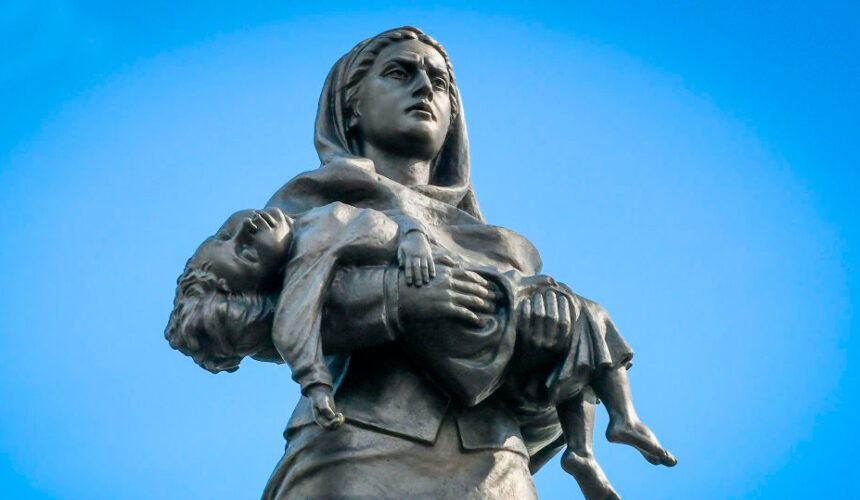
Years pass, generations change, international alliances evolve and political priorities shift, yet for Azerbaijan the tragedy of Khojaly remains far more than a historical episode — it is an unhealed wound that continues to shape perceptions of justice, security, and the role of international law.
Each anniversary returns society to questions that have remained unanswered for more than three decades: why a world that proclaims the universality of human rights failed to respond in time to the mass killing of civilians, and why the mechanisms of accountability so often invoked in global politics proved paralyzed precisely when they were needed most.
Khojaly entered national memory as a symbol of the suffering of civilians during war, but also as a symbol of the crisis of international institutions in the early 1990s. At a time when a new security architecture was being formed after the collapse of the Soviet Union, many conflicts remained on the periphery of global attention. Azerbaijan, facing a difficult internal political situation, found itself alone with the consequences of war, while attempts to secure a swift international legal assessment were met with geopolitical calculations, diplomatic caution, and the reluctance of major actors to become involved in complex regional disputes. It was then that a sense emerged that universal norms were applied selectively, and that the tragedies of different nations were evaluated differently depending on political context.
Over time, the memory of Khojaly became part of a broader discussion about double standards in international politics. For Azerbaijani society, preserving historical truth is inseparable from the recognition that crimes against civilians must not lose relevance due to shifting political circumstances. In this context, annual commemorations have acquired a dual meaning: on the one hand, they are acts of mourning and national unity; on the other, they serve as reminders to the world of the need for consistent application of international law. This is why, in public discourse, the tragedy is increasingly viewed not only as a national trauma but also as an example of systemic failure within the global human rights architecture.
The issue of accountability and justice occupies a central place in this discussion. Over the years, Azerbaijan has carried out extensive work to document events, gather testimonies, and legally classify the crimes committed. Yet the problem lies not only in legal procedures but also in the political will of states where suspects may reside. International practice has repeatedly shown that extradition and cooperation in investigations often depend less on legal arguments than on diplomatic interests. This reality reinforces perceptions of injustice and fuels the belief that the global security system continues to suffer from selectivity.
At the same time, the anniversary of Khojaly is increasingly viewed within the broader context of the region’s post-conflict reality. Following the restoration of its territorial integrity, Azerbaijan launched large-scale reconstruction programs, facilitated the return of residents, and initiated humanitarian rehabilitation across liberated territories. In this process, the memory of the tragedy acquires a new dimension: it becomes not only a reminder of the past but also a moral argument in favor of sustainable peace built on recognition of the suffering of all victims of war and the prevention of future atrocities. For Baku, demonstrating that the pursuit of justice does not contradict a peace agenda — but rather constitutes its essential foundation — remains a key objective.
In recent years, discussions surrounding the events of Khojaly have increasingly moved beyond historical remembrance and entered the realm of international information and political confrontation. Resolutions adopted by various political bodies, statements by parliamentarians, and positions voiced by human rights organizations are often perceived in Azerbaijan as attempts to reinterpret or soften the responsibility of certain participants in the conflict. This intensifies tensions in public perception and reinforces the feeling that the struggle over historical interpretation continues even decades later. Under such circumstances, the anniversary becomes not only a moment of remembrance but also a moment of political dialogue — at times difficult and confrontational.
Yet beyond political debates lies the most important dimension — the human one. The stories of families who lost loved ones, the fate of people forced to abandon their homes, and the decades-long wait for justice form the emotional foundation of national memory. For this reason, any attempts to reassess or relativize what happened are felt particularly acutely in Azerbaijan. For many, this is not a matter of diplomacy but of personal grief and historical responsibility.
Today, decades after the tragic events, Khojaly remains a point where memory, politics, and international law intersect. The anniversary once again prompts reflection on whether the world is truly prepared to defend universal values and capable of learning from the past. For Azerbaijan, this date is not only a day of mourning but also a reminder of the need for consistent efforts toward justice, the preservation of historical truth, and the construction of a future in which such tragedies will never be repeated.