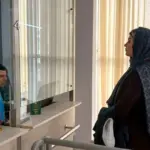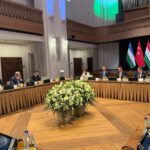
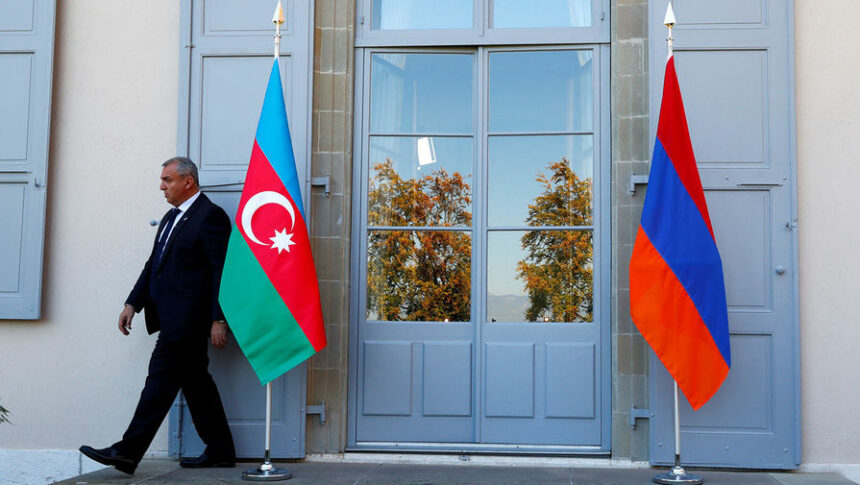
The peace process between Azerbaijan and Armenia is progressing — and at a rather fast pace. Another important stage was marked by a meeting of representatives of the two countries’ civil societies. Azerbaijani civic activists not only discussed a wide range of topics with their Armenian counterparts — the participants were also received by Armenia’s Secretary of the Security Council, Armen Grigoryan.
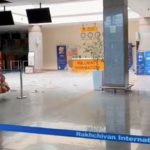
This new stage of the peace process carries several important aspects. For the first time in 35 years, an Azerbaijani aircraft landed in Yerevan’s Zvartnots Airport, bringing the Azerbaijani delegation to the Armenian capital. The peace process is no longer limited to political declarations — civil society has become part of it.
Another very significant factor: the dialogue between Azerbaijani and Armenian civil activists is taking place without the patronage of Western political institutions. It is being implemented on a bilateral basis. It should be recalled that the bilateral mechanism of the peace process without an intermediary was launched in the region precisely at Azerbaijan’s initiative. Within this format, the issue of returning four villages in the Gazakh district to Azerbaijan was resolved. The preparation of the peace agreement also proceeded in a largely bilateral manner — only at the final stage did the United States become involved.
Now, the same format is being applied in such a delicate sphere as dialogue between civil societies. A brief look back is useful here. In 1994, Azerbaijan and Armenia reached a ceasefire agreement. And already in 1996, the first attempts began to organize meetings of journalists, political scientists, experts, and NGO activists from both countries.
Over time, however, this process — with rare exceptions — became almost entirely monopolized by Western political institutions, usually operating under the supervision of foreign ministries. On paper and in project justifications, it all looked quite appealing: “breaking the ice,” “seeing each other not through a gunsight,” and generally “talking instead of shooting.”
But soon the hidden pitfalls emerged. The same individuals — NGO activists dependent on foreign grants — took part in these peacebuilding projects again and again. Many of these projects were monopolized by figures like Leyla Yunus. At best, such meetings involved a “picnic program” in some “third country” — from Georgia to Switzerland — with discussions on anything except Karabakh. From this, the conclusion was drawn: “the Azerbaijani society is not interested in Karabakh.”
At worst, participants proposed to “make peace here and now,” “take the first steps,” and so on — which naturally provoked legitimate outrage: how can one speak of reconciliation while 20% of Azerbaijani territory remains under Armenian occupation? While a million refugees and internally displaced persons — and that’s not a figure of speech but real numbers — cannot return to their homes? How should one regard attempts to engage in “cutesy dialogue across the frontline” and, while the war is still ongoing, end it privately for oneself?
In Armenia, such peace projects received broad support. In Azerbaijan, the reaction was understandably negative. As a result, the very idea of civil peacebuilding became discredited within Azerbaijani society.
Subsequent developments are well known. In 2020, Armenia launched a “new war for new territories” — and lost it. It would seem the right moment to initiate peacebuilding projects, to prepare both the Armenian and Azerbaijani communities of Karabakh for coexistence, and the peoples of both countries for lasting peace.
But in reality, in 2022, an appeal appeared from a group of “civil activists” who, in an ultimatum-like tone, demanded that all conflicts be resolved exclusively by “non-governmental peacebuilding communities” — while simultaneously accusing Azerbaijan of “attacking Armenia.” Naturally, in Azerbaijan, this provoked nothing but disgust and indignation.
After the anti-terrorist operations of 2023, another pause followed. And at that point, some uncomfortable questions had to be voiced: how should this be understood? Does it mean that all that “cutesy cross-frontline dialogue” was only needed and supported by “third-country” institutions while Azerbaijani territories were under occupation — in order to “persuade” Azerbaijan to accept the frontline as a new border? And as soon as Azerbaijan restored its territorial integrity, the need for “grant-funded peacebuilding” immediately vanished?
No answer was ever given. But now, a new mechanism of civil dialogue is being launched in the region — without Western patronage and with a completely different composition of participants, at least on the Azerbaijani side.
What is noteworthy is that this meeting has already caused an outright hysteria in the Armenian social media space among certain revanchist elements. They were clearly displeased that some participants in the Yerevan meeting hold pro-state positions in Azerbaijan, or that some had taken part in the eco-activists’ protest on the Lachin–Shusha road. Obviously, they would have preferred to see figures like Leyla Yunus instead.
Today, however, peace initiatives at the civil society level are being implemented with consideration for the new realities. This means that the previous form of peacebuilding — the kind that essentially meant “let’s fulfill all the wishes of Armenian nationalists and call it a road to peace” — is now a thing of the past.
Nurani