Hopefully, the relationship between these two neighbors in the South Caucasus is finally on the verge of changing for the better.
During the chaotic collapse of the Soviet Union, ethnic Armenians living in Azerbaijan’s Karabakh region attempted to secede using extraconstitutional methods. Soon after, Armenian military forces entered Azerbaijan, backing the ethnic Armenian militias, and a bloody war ensued. By 1994, a shaky ceasefire had been agreed.
This remained in place, for the most part, until the second Nagorno Karabakh war in September 2020. At this time, Azerbaijan launched a major military operation to take back the territory lost to Armenia in the early 1990s. By November, a Russia-led diplomatic effort brought an end to the fighting. Azerbaijan had taken back most, but not all, of the territory it had lost to Armenia, which was decisively defeated on the battlefield.
By the end of 2020 more than 2,000 Russian peacekeepers were deployed to the remaining parts of Karabakh that remained under the control of the de facto Armenian authorities.
In September last year, fighting once again broke out, as a result of which Azerbaijan took back the remainder of Karabakh. Fearing a genocide, which in the end did not happen, tens of thousands of ethnic Armenians fled across the border to Armenia. Interestingly, the Russian peacekeepers sat idly by and did nothing during the brief period of fighting.
Fast forward almost a year and peace between Azerbaijan and Armenia is closer than it has ever been. Last month the two sides opened negotiations in Almaty, Kazakhstan, to reach a lasting resolution to their decades-old conflict. The talks were notable because, for once, there was no Russian, American, or European involvement.
So far those talks have yielded positive results. For example, Armenia returned to Azerbaijan four villages along the border that had remained uninhabited but controlled by Yerevan since the fighting in the 1990s. Even though many Armenians were unhappy with the move, it was an important gesture of peace by Yerevan.
Since the meeting in Almaty there has also been a more positive and optimistic tone in the rhetoric used by both sides when discussing the prospects for peace. But there are still some major issues that need to be resolved.
The first is the final delineation of the border between the two countries. The return of the four Azerbaijani villages last month was a step in the right direction but led to the delineation of only 13 km of the border. While large sections will be easy to delineate, hundreds of kilometers remain disputed.
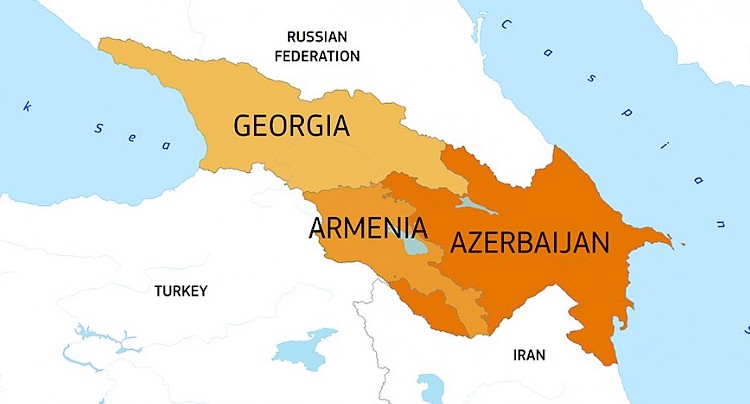
The border delineation process is also affected by the status of four remaining enclaves: the Armenian enclave of Artsvashen inside Azerbaijan, and the Azerbaijani enclaves of Barkhudarly, Yukhari Askipara, and Karki inside Armenia.
These are all small parcels of land that were once inhabited by their respective ethnic groups but are now uninhabited and under the de facto control of the other side. How this situation will be resolved remains to be seen but the enclaves will likely feature prominently in future talks.
The second issue that needs to be addressed is the Zangazur Corridor. As part of the November 2020 ceasefire agreement, Armenia pledged to “guarantee the security of transport connections” between Azerbaijan and its autonomous Nakhchivan region, an exclave nestled between Iran, Armenia and Turkiye.
Three and a half years later, a transport corridor connecting these two parts of Azerbaijan, via Armenia’s Syunik province, is no closer to reality. This is a very serious matter for Azerbaijan. Such a transport corridor would allow Baku to avoid using Iranian territory and airspace to reach Nakhchivan, which is something it desperately desires due to a complicated relationship with Tehran.
Finally, there is the issue of perceived territorial claims in neighboring countries as referenced in Armenia’s Constitution. The preamble of the current version of the document references the “pan-national aspirations” of ethnic Armenians. It also specifically cites Armenia’s 1990 Declaration of Independence from the Soviet Union that called for the unification of Armenia and ethnic Armenians living in Azerbaijan’s Karabakh region. Understandably, Azerbaijan has never liked this wording and wants it changed.
A peace agreement between Armenia and Azerbaijan, and the reestablishment of diplomatic relations between Armenia and Turkiye that would likely follow, could have positive effects beyond the South Caucasus.
For example, in recent years there has been an increase in relations between the Gulf Cooperation Council and Central Asia. Peace in the South Caucasus, and new transit routes such as the Zangazur Corridor, could improve trade connections between the Gulf and Central Asia. This is especially true if Turkiye’s proposed Iraq Development Road, also known as the Dry Canal corridor, linking Iraq’s southern Gulf coast to Turkiye, can be completed.
If the proposed Gulf Railway, connecting the six GCC states, ever becomes a reality the possibilities are even greater. In theory, it would be possible to transport goods by rail from the Gulf to markets in Central Asia, via the Dry Canal corridor and the South Caucasus.
The best thing that could happen to the South Caucasus would be a normalization of relations between Armenia and its neighbors. It is likely that billions of dollars of foreign investment have been denied to the region as a result of the ongoing conflict. A peace deal could change this.
Furthermore, the South Caucasus is becoming increasingly important for transit on the Eurasian landmass. The establishment of diplomatic relations between Armenia and its neighbors would only enhance this.
There is a golden window of opportunity to bring some much-needed stability to the South Caucasus. Let us hope that 2024 is a year of peace in the region, the benefits of which would be felt far beyond.
Luke Coffey is a senior fellow at the Hudson Institute